Iran's IRGC allegedly used Chinese satellite data to track US military assets in Middle East



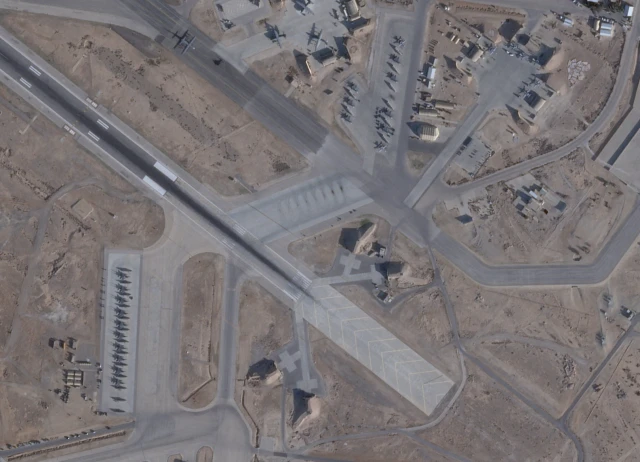
Iran's Islamic Revolutionary Guard Corps (IRGC) Aerospace Force allegedly obtained access to intelligence data from TEE-01B, a satellite developed and operated by the Chinese company Earth Eye, the Financial Times reported on Wednesday. The report is part of broader allegations involving Chinese satellite systems, Iranian operatives, and U.S. military assets in the Middle East.
The access the IRGC had to the images, radio signals and other digital data produced by the satellite and beamed back down to earth reportedly allowed them to target U.S. military assets in the Middle East, including high-end radar systems, communications nodes, and even airborne observation platforms. This led to casualties among American forces and the loss of several billion dollars' worth of difficult-to-replace equipment.
The Financial Times report has not been publicly confirmed by U.S. or Chinese officials, and Reuters said it had requested comment from relevant authorities without receiving a response.
However, the report indicated that the IRGC made a deal with Earth Eye to allow them to monitor data feeds from the satellite that fed into commercial ground stations operated by Emposat, a Beijing-based satellite services provider.
This reportedly included precise images of American aircraft and other assets deployed to Prince Sultan Air Base in Saudi Arabia. On March 14, several U.S. Air Force aircraft operating at this base were damaged, some heavily, by Iranian missile strikes.
Other military bases cited in the report as having been monitored using the Chinese-built satellite include Muwaffaq Salti Air Base in Jordan, sites near the U.S. Fifth Fleet headquarters in Manama, Bahrain, and Erbil Airport in Iraq. The report states that timestamps on some of the images suggest they may have been used to guide missile strikes on these locations, some of which resulted in casualties and damage.
The report holds geostrategic significance for several reasons, as they track with other reports about Chinese involvement in Iran’s military efforts against U.S. forces, Israel, and Iran’s Arab neighbors. One report noted that during the current ceasefire, China has been attempting to deliver new air defense systems and other weapons to Iran, including shoulder-fired anti-aircraft missile systems, which could be very effective against 4th-generation aircraft like the F-15 and F-16, and would be highly mobile and difficult for American or Israeli forces to counter.
A spokesperson for the Embassy of the People’s Republic of China in Washington was asked by a journalist about these reports and they insisted, “China has never provided weapons to any party in the conflict; the information in question is untrue.”
However, on March 27, 2021, a deal known as the "Comprehensive Strategic Partnership" was signed in Tehran by Chinese Foreign Minister Wang Yi and Iranian Foreign Minister Mohammad Javad Zarif.
The agreement formally covered economic and political ties, but statements from the meeting suggested that military and strategic cooperation were also included. China also reportedly supplies Iran with industrial machinery, chemicals, explosives, and other components used in its ballistic missile program, as well as various weapons systems.
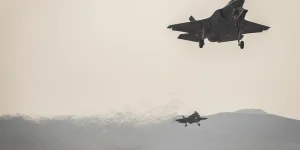
In the current conflict, Chinese-supplied air defense systems have proven unable to protect Iranian airspace from U.S.-built 5th -generation aircraft and cruise missiles.
The report also comes amid broader concerns raised by analysts about growing strategic ties between China and Iran, including past agreements such as the 2021 “Comprehensive Strategic Partnership,” which outlined expanded economic and political cooperation. Some analysts have suggested that aspects of the relationship may extend into defense-related areas, though both countries have publicly denied weapons transfers.
Military analysts quoted in the report described the alleged use of satellite-derived intelligence as a significant development in modern warfare.
“It’s a serious strategic setback for Beijing,” said one Jerusalem-based analyst. “Weapons sales are big business and they also give the producing country advantages in other areas, especially diplomacy. In this war, the whole world has seen that Chinese radar systems and interceptors are no match for American-built stealth aircraft and cruise missiles. That’s very good for America’s overall brand, and it’s very bad for China.”
However, analysts have also noted that Iran’s alleged use of a Chinese-built satellite to target American military assets carries mixed implications for China and the United States.
You might also like to read this: