Iranian regime operates 'secret plan' to escalate war despite MOU with US – report
Gulf states alarmed at US failure to contain Iran, reach binding agreement




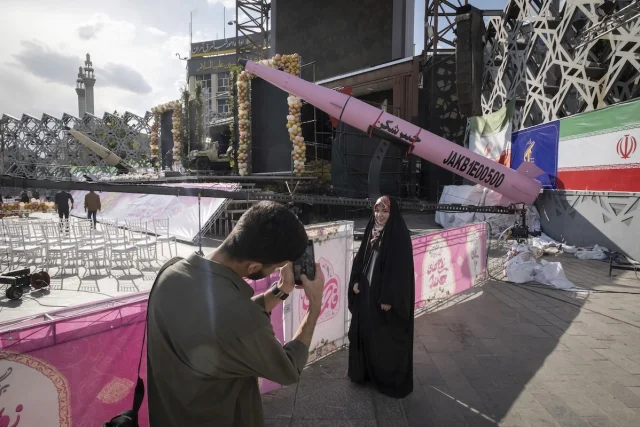
Despite engaging in negotiations with the United States, Iran has also been operating on a secret plan to escalate the war, The Wall Street Journal (WSJ) reports.
The report, said to be based on intercepted communications and other intelligence, says that hardline leaders within the Iranian regime have been working to increase costs for the United States and its regional allies in prolonging the conflict, including through the use of regional proxies.
According to the WSJ, after U.S. President Donald Trump signed the June Memorandum of Understanding (MOU) with Iran, administration officials began working on a deal to reopen the Strait of Hormuz and bring the war to an end.
However, “Iran's hard-line leaders gathered in Tehran and developed a different plan,” according to Iranian and Arab officials.
Under that plan, the MOU was not intended as an end to the war but as a two-month window to prepare for a possible continuation of the conflict. The regime signed the MOU to buy time but had no intention of abiding by the agreement, the WSJ reported: “In their view, the pact was likely merely an attempt by the United States and Israel to relieve pressure on the global economy and buy time for a larger attack in the future. Instead of believing in negotiations, they spent the past two months preparing for a bigger battle."
In the meeting, Iranian leaders made several decisions, including “giving the powerful Islamic Revolutionary Guard Corps (IRGC) greater control over the country's regular army, appointing battle-hardened veterans of the war with Iraq and past domestic crackdowns to key positions, expanding domestic counterintelligence operations, and ramping up missile and drone production.”
Israeli security officials have warned the United States about Iran's efforts to rehabilitate its missile and drone capabilities, along with its air defense systems, in preparation for renewed conflict.
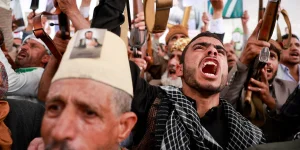
The regime “quickly seized the initiative,” attacking ships in the Strait of Hormuz to strengthen Iran's control over the vital waterway, while “expanding the battlefield to the Red Sea,” through its Houthi proxy. Saudi Arabia allegedly used an oil pipeline running to the Red Sea port of Yanbu to circumvent Iranian control over the Strait.
Arab intelligence officials gathered evidence of the plan to escalate the conflict across the region, “including communications between Iran and militia allies in countries such as Yemen and Iraq.”
The WSJ said the IRGC “used the calm created by the memorandum of understanding to lay the groundwork with allied militias around the region to step up attacks if needed.”
The hope is that by increasing the cost of further conflict for the U.S. and its regional allies, the regime can both deter a renewed operation such as Operation Rising Lion or Operation Roaring Lion and pressure the U.S. into making concessions in negotiations.
“Iran's leaders are increasingly talking about offensive operations on enemy territory,” the publication said, raising concerns among “weaker Gulf countries like Kuwait.”
Mohammad Hassan Sangtarash, a Tehran-based defense analyst close to the Iranian government, told the WSJ, “There is also a widespread view in Iran that the main war has not yet begun.”
At the same time, the Trump administration’s inability to either secure a binding agreement with Iran, or prevent attacks, has led to growing frustration among Gulf states, the Washington Post reported: “The governments of Saudi Arabia, the United Arab Emirates, Qatar, Kuwait and Bahrain are now united in their aggravation with the (U.S.) administration,” with some even questioning the usefulness of the U.S. bases in their territories.
“Trump started this war,” one Gulf official told the Washington Post, “and we are paying the price.”
That frustration has allegedly led to the pursuit of new alliances, as the Gulf states assess that the U.S. is either incapable or uninterested in protecting those host countries.
A senior European official said that a mutual defense agreement signed by Saudi Arabia, Turkey, and Pakistan earlier this month was “a signal to the U.S.”
“In their mind, the U.S. is not enough,” the official added.
The Mecca Joint Defense Agreement, described as a Sunni NATO, includes a clause similar to NATO’s Article 5, which states that an attack on one member will be considered an attack on all members.
On Sunday, President Trump praised the joint defense agreement in a post on his Truth Social account, calling it a “BIG, BOLD, AND IMPORTANT FIRST STEP.”
According to Anna Jacobs, a fellow with the Arab Gulf States Institute in Washington, the Trump administration’s “conduct in the region is making them [Gulf states] less safe, not more safe.”
The inconsistency and lack of “clear strategy” has alarmed the Gulf states, said Bader Al-Saif, an assistant professor of history at Kuwait University.
“Even before all this back and forth with Trump, there was no clear strategy,” Al-Saif told the Washington Post.
He also said the MoU did not address the greatest concerns of other nations in the region, including Iran’s ballistic missile program, its drone arsenal, or its support for regional proxies.
“The MOU was a joke,” Al-Saif said.
However, Trump’s support for the Mecca Joint Defense Agreement appears consistent with his previously stated desire for U.S. partners to invest more in their own defense rather than rely on U.S. funding and forces.
"Very happy to see that Saudi Arabia, Turkey, and Pakistan have recently, and finally, signed the Mecca Joint Defence Agreement," he wrote on Truth Social. "It shows how the Middle East is coming together, and how Countries will finally be able to defend themselves in a more meaningful way. Congratulations to the Great Leadership of the three Nations mentioned."
You might also like to read this: