Trump says Hormuz Strait could become US territory after Iran war





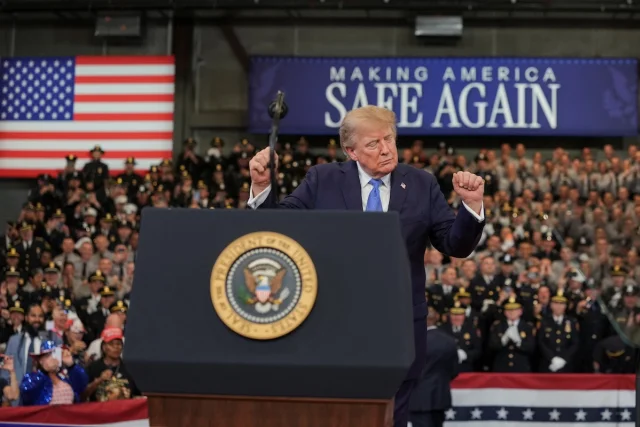
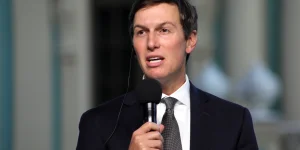
U.S. President Donald Trump said on Friday that he intends to soon declare the contested Strait of Hormuz a U.S. territory after the war with Iran ends, although a White House official later indicated that the president was joking and had not discussed such a move with his advisors.
"After we finish defeating Iran, which is being very badly defeated – pretty soon I'll be declaring the Hormuz Strait a territory of the United States," Trump said while addressing a police academy in Garden City, New York.
Trump also claimed that the United States effectively controls passage through the waterway, saying, “We have the blockade. No ships get through unless we want them to.”
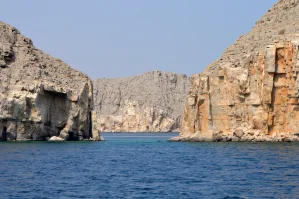
The Strait of Hormuz has become a central flashpoint in the ongoing conflict between the United States and Iran following U.S. and Israeli strikes on Iran that began on Feb. 28. The strategically important waterway connects the Persian Gulf with the Gulf of Oman and Arabian Sea, with roughly one-fifth of the world’s oil supply passing through the strait under normal conditions.
Iran has sought to restrict shipping through the waterway during the conflict, while the United States has established a naval blockade and demanded that commercial vessels be allowed to pass. Tehran disputes Washington’s assertion that the United States controls the strait and has continued to assert that Iran has authority over its operation. The Hormuz is not exclusively Iranian territory. Iran and Oman have territorial waters in and around the strait, while international maritime law provides for navigation rights through the waterway. Trump’s comments therefore raised questions about what he meant by declaring the strait U.S. territory and whether the remarks represented an actual policy proposal.
A White House official subsequently told The Wall Street Journal that Trump had been joking and had not discussed declaring the strait U.S. territory with his advisers.
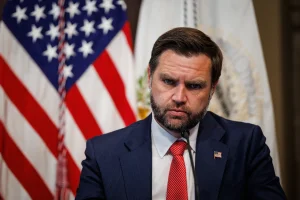
U.S. Vice President JD Vance told Fox News on Thursday that the Trump administration’s “goal number one, keep oil and gasoline cheap for Americans… and then, obviously, "goal number two" is ensure that Iran never gets a nuclear weapon.”
“I feel confident we’re accomplishing both of those goals, but it’s inherently an unpredictable thing, because the Iranians themselves are unpredictable, and they sometimes don’t honor the commitments they’ve made to us,” Vance added.
Trump, meanwhile, acknowledged that the conflict could result in higher gasoline prices for Americans, arguing that the economic cost was justified by the effort to prevent Iran from acquiring a nuclear weapon.
“What we’re doing is a great service for the world, not only for ourselves,” Trump said, adding that the United States was “really doing a great job.”
The president also dismissed concerns about conditions aboard U.S. military ships deployed in the Middle East during the conflict.
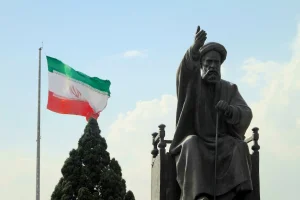
Iranian Deputy Foreign Minister Kazem Gharibabadi rejected Trump’s remarks on Saturday in a post on 𝕏: “The Strait of Hormuz has been Iranian, is Iranian, and will remain Iranian. This strait will only be closed and opened under Iran’s command.”
The comments come amid continued tensions over the future of commercial shipping through the strait. A preliminary understanding between Washington and Tehran had reportedly included provisions for restoring commercial passage through the waterway, but the arrangement subsequently broke down amid renewed hostilities and disputes over shipping.
The United States has accused Iran of attacking and threatening commercial vessels in the area, while Tehran has rejected Washington’s characterization of the conflict and maintained that it has the right to control access to the waterway.
With the Hormuz Strait remaining largely closed to normal commercial traffic, the dispute has become a major factor in global energy markets and in the broader U.S.-Iran confrontation.
You might also like to read this: