Hardline former IRGC chief Mohsen Rezaei to head Iran's National Security Council



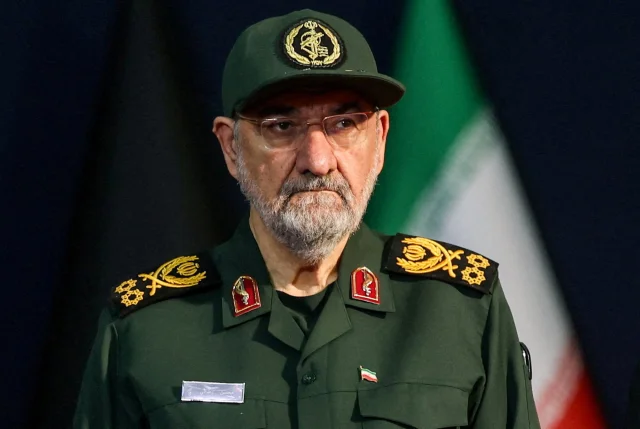
Iranian President Masoud Pezeshkian has appointed former Islamic Revolutionary Guard Corps (IRGC) commander Mohsen Rezaei as secretary of the country’s Supreme National Security Council, replacing Mohammad Bagher Zolghadr in the latest leadership shake-up following the war with Israel and the United States.
“In light of the resignation of Mohammad Bagher Zolghadr from his position as secretary of the Supreme National Security Council and his appointment to new functions, President Masoud Pezeshkian has named Mohsen Rezaei as the head of this body,” the president's spokesman, Mehdi Tabatabaei, wrote on 𝕏.
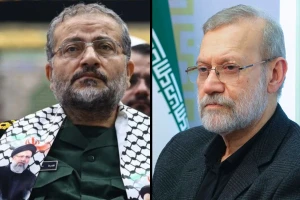
Rezaei (71) commanded the IRGC from 1981 to 1997, including throughout most of the Iran-Iraq War. His appointment makes him the second person to head the Supreme National Security Council (SNSC) since mid-March, when Ali Larijani was eliminated by Israeli forces, which described him (Larijani) at the time as Iran’s “de facto” leader since Feb. 28.
"Rezaei has long been a hardline actor in Tehran. During a presidential campaign in 2021, Rezaei said, 'We’ll take 1,000 Americans hostage. America will have to pay several billions to get every single one freed. This is how we can solve our economic problems'," wrote Jason Brodsky, Policy Director at the United Against Nuclear Iran (UANI) think tank.
He added that Rezaei, after a period on the sidelines, "has reentered the inner sanctum of decision-making since the war, first serving as a military advisor to Khamenei."
"Rezaei is subject to an INTERPOL Red Notice for the AMIA bombing, and his ascension to the SNSC, coupled with Ahmad Vahidi's SNSC membership, will continue the tradition of figures who are steeped in asymmetric warfare dominating the SNSC. Rezaei, a former IRGC commander-in-chief who oversaw a particularly active period of IRGC terror plots (Argentina 1992, Argentina 1994, Khobar Towers 1996, etc.) and Vahidi, a former Quds Force commander, will be key figures," Brodsky explained.
"This was a choice likely forced on Pezeshkian-just days ago he said he rejected Zolghadr's resignation-as was Zolghadr originally. It shows his weakness as president."
The latest change comes amid continued uncertainty and apparent power struggles within Iran’s leadership. Supreme Leader Mojtaba Khamenei has not appeared publicly since the Feb. 28 strikes that killed his father, then-Supreme Leader Ali Khamenei, along with other senior Iranian officials.
The leadership changes come amid several recent shifts within Iran’s Supreme National Security Council, which advises the supreme leader on national security matters. The succession of changes and conflicting statements from Tehran in recent weeks have raised questions about the balance of power within Iran’s leadership.
The newly appointed Rezaei has taken an uncompromising position on the Strait of Hormuz since the war began. He recently said Iran would not accept a return to the status quo in the waterway, declaring that control of the strait was “more important than dozens of atomic bombs.”
You might also like to read this: