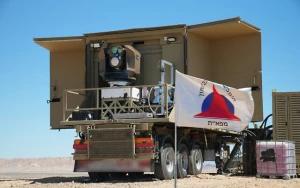
Israel’s Iron Beam laser defense system still not operational eight months after delivery




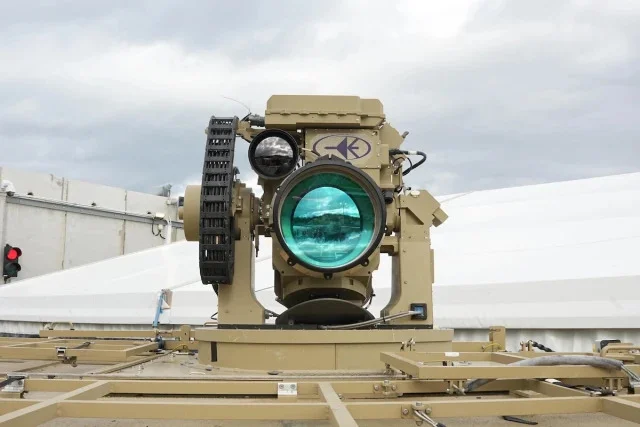
Israel’s much-anticipated Iron Beam laser-based air defense system was delivered to the Israel Defense Forces nearly eight months ago but has yet to become operational, raising questions about when the system will be ready for deployment as Israel continues to face threats from missiles, drones and other aerial weapons.
The delay is significant because Iron Beam has been promoted as a potential solution to the problem of “missile math” – the high cost of using missile interceptors to destroy incoming weapons that can be considerably cheaper to produce.
Unlike Israel’s existing missile-based systems, Iron Beam uses a high-powered laser to destroy targets at a fraction of the cost of a conventional interceptor.
The Iron Dome, for instance, fires an interceptor missile at incoming weapons that costs an estimated $100,000 apiece, while David’s Sling interceptors cost about $1 million apiece and Arrow-3 interceptors can cost more than $2 million each.
By contrast, Iron Beam uses the existing radar and computer infrastructure of the Iron Dome system and requires only about $2 worth of electricity for each shot used to destroy an incoming target.
However, Iron Beam is expected to complement, rather than replace, Israel’s existing missile-based air defense systems. The system has limitations, including a range of just 10 kilometers (6.2 miles), and does not perform as well under certain weather conditions, particularly rain.
The Defense Ministry also faces competing priorities, and some officials consider replenishing stocks of proven missile-based systems to be more urgent than purchasing large numbers of the expensive new laser systems.
The Iron Beam system did shoot down several incoming Hezbollah drones during the war, but questions remain about its reliability. Rafael Advanced Defense Systems, which developed the system, has acknowledged that some of its subsystems are still being modified as testing continues.
Rafael chairman Yuval Steinitz issued a statement earlier this year that he did not expect this process to take more than a few days, but so far his estimate is proving to be incorrect.
Another factor potentially slowing the system’s deployment is competition for soldiers within the IDF, which is under significant manpower pressure.
Existing air defense units are seeking as many new recruits as possible, while a new Iron Beam unit would require the IDF to establish an entirely new operational framework, including training soldiers and technicians to operate and maintain the systems.
Establishing such a unit would require significant time, funding and planning, resources that are already in short supply amid the constant threat of renewed hostilities. Any escalation would also require air defense units to be ready at a moment’s notice to return to full operational status.
Despite the challenges, Rafael continues to develop additional Iron Beam systems, along with other laser-based weapons and equipment.
The Defense Ministry is also investing heavily in new technological solutions for future battlefields, which are expected to feature increasing numbers of unmanned systems.
Rafael is also among the Israeli defense companies benefiting from a surge in international demand, with its products and technology being sought by defense ministries around the world, particularly in NATO countries.
According to a statement on Rafael's website, "Established in 1948, RAFAEL Advanced Defense Systems Ltd. develops, manufactures, and sustains combat-proven technologies, products, and systems-of-systems for air, land, naval, space and digital applications."
"Leveraging its technological ingenuity, operational experience, and unparalleled understanding of evolving combat requirements, RAFAEL provides global warfighters with today’s most advanced technologies and life-saving defense solutions that ensure operational superiority. RAFAEL's strategy includes strategic international partnerships and localization to ensure customer sovereignty," the statement concluded.
You might also like to read this: