Iraq: Conflict between Baghdad gov’t and Iranian-backed terror militias comes to a head
Iraqi PM intent on disarming Iranian proxies while preventing armed clashes



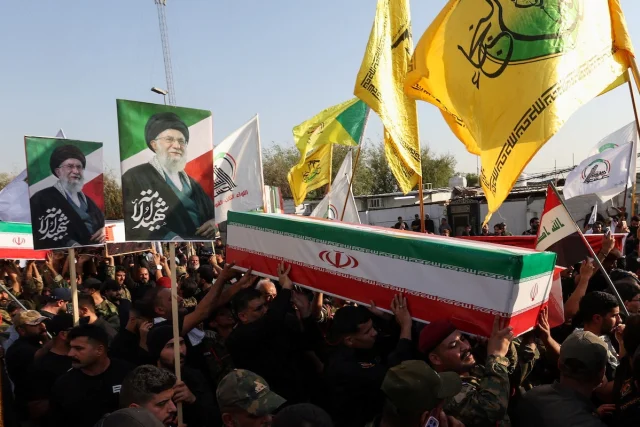
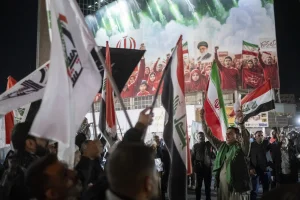
Flying somewhat under the radar, the Iraqi government is pursuing a project with a similar goal to that of the Beirut government in Lebanon and the Board of Peace in Gaza: shaking off the malign influence of the Iranian regime by disarming its proxy terror groups that are controlling large parts of its territory.
Iraq’s new Prime Minister Ali al-Zaidi affirmed that he would act to disarm the myriad of militias during a July 14 meeting with U.S. President Donald Trump at the White House, giving them a deadline until September 30, after which he vowed: “we will never accept any entity carrying weapons outside the control of the state.”
As they have done in Lebanon and Gaza, the Iranian proxy groups have vowed to disregard this process, even threatening to resist it violently.
In Iraq, the Iranian Revolutionary Guards (IRGC) decades ago set up or supported several dozen armed groups, most of them made up of Shia Muslims. With the fight against ISIS starting in 2014, many of them coalesced into the Popular Mobilization Forces (PMF), which have been semi-integrated into the state’s official military.
However, their true allegiance lies in Tehran, and the PMF-affiliated groups have repeatedly participated in the fighting against Israel since 2023, while also carrying out strikes against U.S. forces, Kurdish militias, and even Saudi oil infrastructure.
Their disarmament would deprive the ayatollah regime of a significant amount of control over a key country, after it has already lost Syria, and its crown jewel Hezbollah is also under heavy pressure to disarm.
Speaking to the Lebanese Hezbollah-affiliated newspaper Al-Akhbar, a senior Iraqi militia leader said that “a large part of the militias does not care about or pay attention to the September 30 ultimatum to hand over the weapons and has no intention of handing over the weapons,” emphasizing that “the external threats have not stopped.”
Prime Minister al-Zaidi is a political newcomer who was appointed as a compromise candidate after the U.S. vetoed the reappointment of Nouri al-Maliki, who is seen as being pro-Iranian. Nevertheless, he appears intent on going along with the disarmament under U.S. pressure.
Two Iraqi political sources told media outlets that al-Zaidi affirmed to several political leaders that he is ready to “confront” and “clash” with the militias, if they refuse to cooperate.
Last week, Iraqi security forces announced that they had raised their alert level to establish “security and order in the country and protect its residents and the public interest.”
Security sources told the Saudi Al-Hadath channel that this was part of an effort to monitor the movements of the militias to prevent escalatory steps in the conflict between Iran and the U.S.
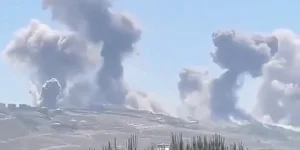
Several weeks ago, the U.S. had carried out a series of airstrikes against PMF targets together with the Saudi air force, in response to attacks on Saudi oil infrastructure. The strikes also killed several Houthi operatives, highlighting the close cooperation among Iran’s “Axis of Resistance” militias.
Last Friday, a video message by the leader of one of the militias, the Badr Organization, appeared to have averted imminent strikes planned in response to the U.S.-Saudi strikes.
A senior Saudi official told Reuters that the kingdom expected coordinated attacks from Iraqi militias and the Houthis under the coordination of the IRGC.
However, Badr chief Hadi Al-Ameri appealed to the other militias to “postpone” a reaction and to “endure the pain” of the recent strikes, for the sake of Iraq’s “higher interest.”
In response to this near-crisis, an Iraqi military spokesman expressed the Iraqi government’s “hope” that the militias would “refrain” from attacking Saudi Arabia, highlighting the powerlessness of the central government.
The Saudi newspaper Asharq Al-Awsat reported that, to implement the Sept. 30 disarmament deadline, the government plans to prevent direct clashes, instead setting up sieges on their headquarters by cutting off access, transportation and supply routes while creating checkpoints to monitor the movement of weapons and confiscate them.
According to Asharq Al-Awsat, the operation will focus on two towns south of Baghdad, which serve as strongholds for two of the most powerful militias, Kataeb Hezbollah and al-Nujaba.
You might also like to read this: