US, Saudi Arabia strike Iranian proxy militias in Iraq after surprise attack on US forces in Jordan
Heavy airstrikes hit numerous bases, kill dozens of operatives



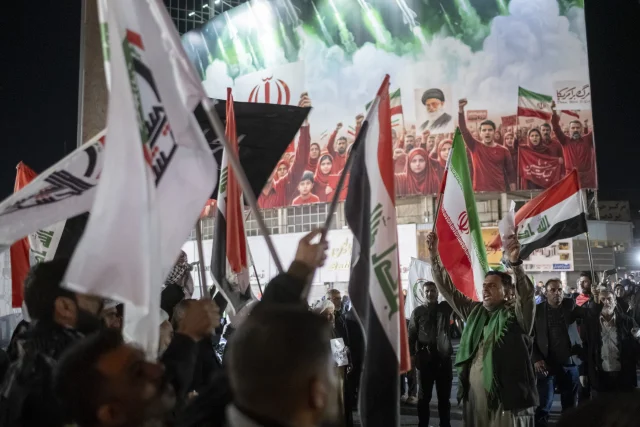
After several days of quiet, fighting between the U.S. and the Iranian regime erupted again overnight, triggered by a surprise Iranian missile attack on American troops in Jordan on Tuesday.
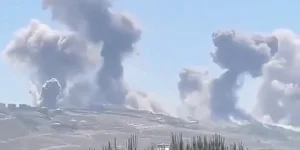
In response, U.S. and Saudi forces carried out extensive airstrikes against Iranian-backed militias based in Iraq. The groups had launched several drone attacks in recent days, including strikes targeting Saudi infrastructure, and were also reportedly responsible for drones intercepted near the Israeli border.
U.S. Central Command (CENTCOM) announced that the United States “and the Saudi Arabian Armed Forces conducted precision strikes in Iraq, July 28, against Iran-aligned terrorists that the Islamic Revolutionary Guard Corps (IRGC) directed to attack U.S. forces and Saudi energy infrastructure.”
“U.S. and Saudi fighter aircraft struck multiple terrorist logistics and weapons sites across eastern Iraq in a strong response to over 30 IRGC-directed aerial drone attacks in the last 72 hours. The unwarranted attacks against U.S. forces were not successful,” CENTCOM noted.
Iraq’s Popular Mobilization Forces (PMF), the umbrella group that includes several Iranian-backed militias, that several of its headquarters in different parts of Iraq were targeted in the strikes. The group reported that at least 20 of its members were killed and 32 others were wounded.
PMF later added that strikes hit sites in Baghdad, Kirkuk, Ninveh, Diyala and other cities. The Lebanese, Hezbollah-affiliated channel Al Mayadeen also reported strikes in the northern Mosul area, as well as the southern city of Karbala, a holy city for Shiite Muslims.
The spokesman for the Saudi armed forces, Turki al-Maliki, confirmed that the Kingdom carried out strikes against targets belonging to militias linked to the recent attacks on Saudi oil facilities, stressing that “it does not seek escalation but will respond to any aggression it faces.”
"Significant step by the Saudis to jointly strike militia sites in Iraq. A sign that Gulf states are growing impatient with the Iraqi government's inability to rein in these groups, who remain a security threat to the region (as well as to Iraq)," Victoria Taylor, Iraq expert at the Atlantic Council and former U.S. State Department official, posted on 𝕏.
Over the past 24 hours, the Israeli and Jordanian armies announced the interception of several drones from an unknown origin. A security source told Walla News that initial indications suggest one of the Iraqi militias launched the drones at Iran’s direction.
Earlier on Tuesday, CENTCOM reported that “Islamic Revolutionary Guard Corps forces launched multiple ballistic missiles from Iran in an attempted surprise attack on U.S. forces based in the Middle East. All Iranian missiles were successfully intercepted.”
“The IRGC and its terrorist proxies must cease these attacks to avoid further U.S. military response,” CENTCOM warned.
However, on Wednesday morning, the Jordanian military said it shot down five additional missiles “coming from Iran targeting the kingdom’s territory.”
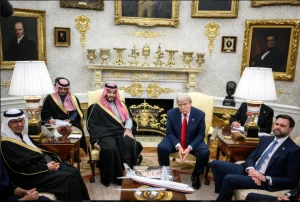
The escalation came shortly after a meeting between U.S. President Donald Trump and Prime Minister Benjamin Netanyahu in the White House.
Netanyahu described the meeting as “excellent” and “one of the best we’ve ever had,” while a senior official close to him told The Times of Israel that they “talked about all arenas – primarily Iran.”
Earlier on Tuesday, Trump told Fox News that the regime knows he will order new military strikes “if they don’t make a deal."
"The bridges are going to be gone, literally in less than – I would say in two hours, most of the bridges, the major bridges will all be gone, and the power plants in one day,” Trump warned.
The latest escalation also followed a Wall Street Journal report that a recent mediation effort between Iran and Oman had failed. The talks reportedly focused on reaching an agreement over the management of the Strait of Hormuz, including a proposal for Iran and Oman to share control of the strategic waterway.
Iran’s deputy foreign minister, Kazem Gharibabadi, reportedly stressed that Tehran would only allow progress in the negotiations if Oman accepted Iran’s Hormuz proposal. He dismissed the Omani proposal as failing to address Iran’s “security concerns.”
“The inbound shipping lane must be entirely under Iran’s control, while part of the outbound lane may remain under Oman’s control,” Gharibabadi said.
A senior Iranian official told Reuters that the regime had ruled out the Omani proposal, adding that the United States and Saudi Arabia are trying to push the Sultanate to advance their “unrealistic plans.”
You might also like to read this: