Israeli youth highly motivated to serve in IDF but lack trust in leadership, new survey finds





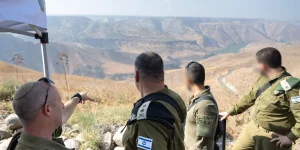
A new survey of Israeli teenagers found that 77% are “highly motivated” to serve in the IDF, with 57% saying they would like to serve in a combat unit. At the same time, only 30% said they have high levels of trust in senior IDF leadership.
The survey, published this week by the Israel Defense and Security Forum (IDSF), highlights a striking contrast between Israeli youth’s willingness to serve in the military and their confidence in the senior officers who lead it. The IDSF, an organization of retired senior officials from the IDF, Mossad, the Israel Security Agency (Shin Bet) and the police, conducts research and analysis for decision-makers, the Defense Ministry and the general public.
Among those surveyed, 40% said they would prefer to serve in the infantry, while 14% expressed a preference for the Armored Corps. Others said they would like to serve in the Border Police, Air Force, and Education and Youth Corps. The Home Front Command was among the least popular choices.
The survey also found that 75% of respondents believe Israel should retain its traditional model of mandatory military conscription, while 60% agreed with describing the IDF as a “victorious army.”
However, confidence in the military's senior leadership was considerably lower. Only 30% of those surveyed said they had high levels of trust in senior IDF leadership, while 41% said they had “low” or “very low” levels of trust in the generals and admirals.
A longtime IDF reservist who has fought in several wars, beginning with the Second Lebanon War in 2006 and including multiple rounds of conflict in Gaza and elsewhere, told ALL ISRAEL NEWS on condition of anonymity that he understands the tension between the high level of motivation to serve and the low level of trust in the leadership, but he chalks this up to inexperience.
“After now serving more than 1,030 days (in the current Swords of Iron War), I have seen many different situations on the ground,” he said. “Some decisions make perfect sense in the moment. Others, when you look back later, you can see things differently. Hindsight is always 20/20, but a real soldier cannot live in hindsight while the situation is unfolding."
The reservist acknowledged that soldiers may not always understand or agree with their commanders’ decisions, but said maintaining trust in the chain of command is essential to the functioning of an army.
“A commander can be wrong. Every commander is human,” he said. “But there is still something absolutely essential in an army: you have to trust the chain of command and honor the rank.”
He added that such trust should not prevent soldiers from thinking critically, learning from mistakes or asking difficult questions.
“Trust does not mean that we stop thinking, learning, or asking difficult questions.”
For the reservist, however, the survey’s findings about low trust in senior leadership do not necessarily reflect a loss of faith in the IDF itself. Instead, he said, many soldiers remain confident in what the military and its troops are capable of accomplishing but are frustrated by what they perceive as a lack of decisive progress.
“For many of us serving, I think the greatest frustration is not that we have lost faith in the IDF. Quite the opposite. We know what our soldiers are capable of,” he said. “The frustration is often that we do not feel we are moving forward decisively enough.”
He added that frustration can sometimes leave soldiers feeling that the military is simply managing the conflict rather than moving toward a clear conclusion.
“Sometimes it feels like we are crawling forward, holding positions and managing the conflict, when many soldiers instinctively want to see a clearer, bolder drive toward victory...and finish what needs to be finished.”
The reservist acknowledged that there will always be disagreements over military strategy and the appropriate balance between military action and diplomacy.
There will always be different strategic approaches. There will always be debates about timing, pressure, restraint, diplomacy, and military necessity, but ultimately, we must remain one army and one people.
Despite the concerns reflected in the survey, he said its findings ultimately give him reason for optimism about Israel’s younger generation.
“We can demand accountability without destroying trust,” he said.
He pointed to the high level of willingness among Israeli teenagers to serve, particularly in combat roles, as evidence that the next generation has not lost its commitment to the IDF.
“The survey gives me tremendous hope. Israel's next generation has not lost its willingness to serve. In fact, the desire for combat service is reportedly at its highest level in a decade,” he said.
The challenge, he said, is to preserve that motivation while rebuilding trust in military leadership.
“Our responsibility now is to preserve that courage, strengthen trust, learn from mistakes, honor those carrying responsibility, and remain united in pursuing something Israelis desperately need to see.”
You might also like to read this: