Saudi-Turkish-Pakistani defense pact triggers concern in Israel, skepticism across the region
The pact already failed a first test just days after it was established





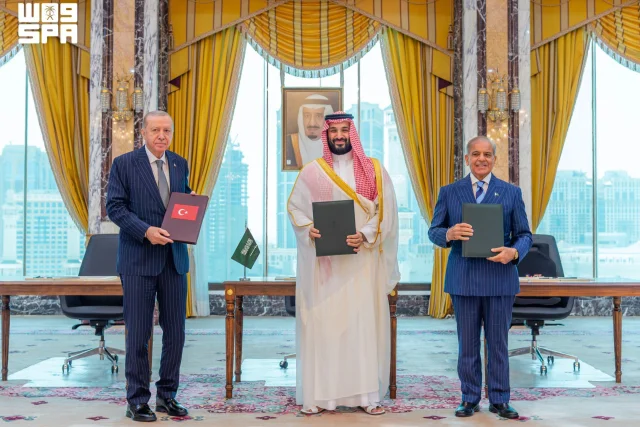
The announcement of a new defense alliance between regional powerhouses Saudi Arabia and Turkey, as well as the nuclear power Pakistan, initially raised eyebrows across the Middle East.
On paper, this alliance unites the largest military in NATO and a leading military tech producer (Turkey), one of the richest countries on earth with a Top-10 defense budget (Saudi Arabia), and the only Muslim nuclear power (Pakistan).
It particularly sparked concern in Israel and Iran, the two countries widely seen as the targets of the move.
But while officials expressed concern about potential harm to Israel’s security, many experts assessed that, as with other such defense agreements in the past, the alliance will remain a paper tiger with only negligible immediate influence.
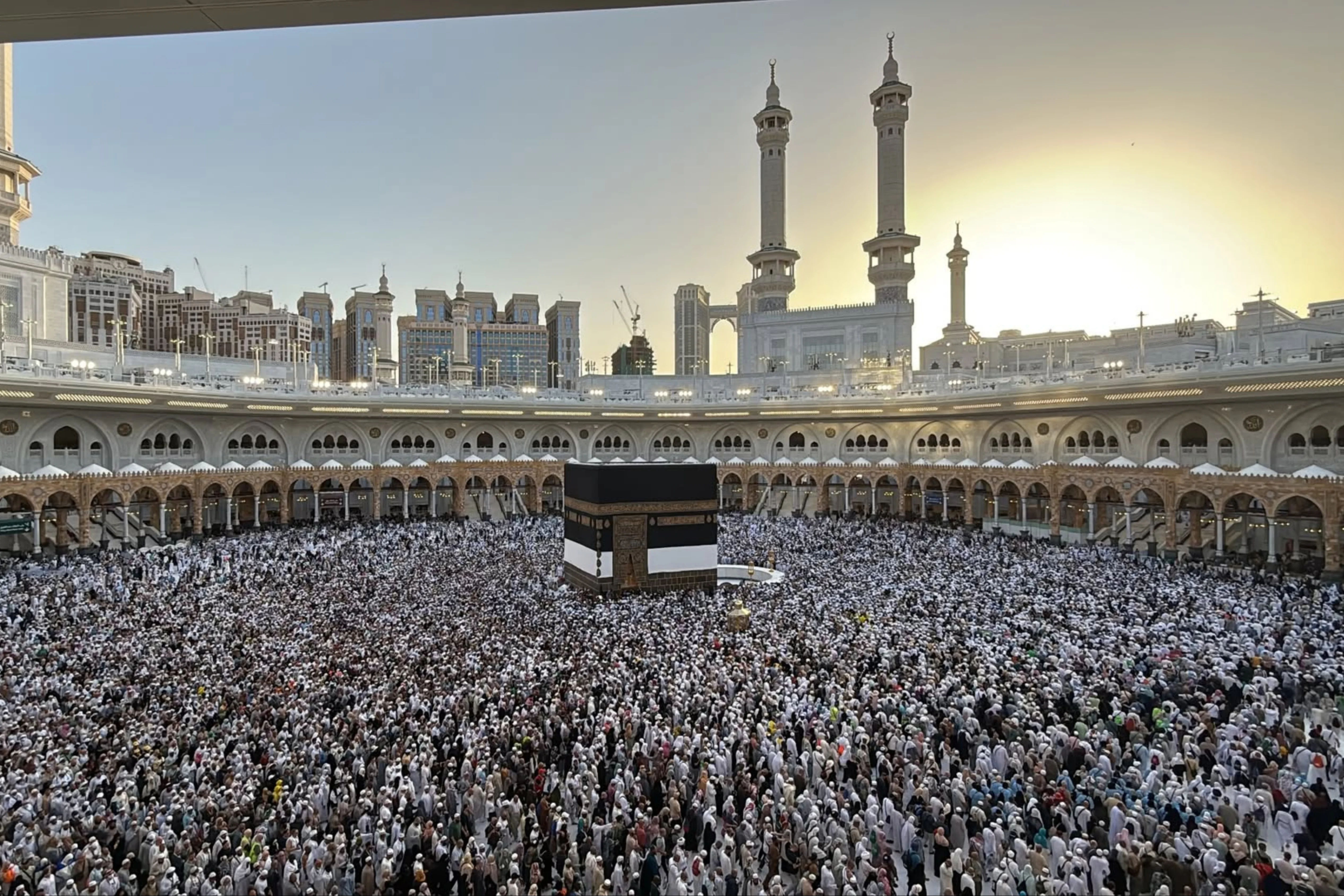
This is despite claims like those presented by Turkey’s Foreign Minister, Hakan Fidan, who likened the alliance, also dubbed the “Mecca Pact,” to NATO’s Article 5, stipulating that an attack on one member state is considered an attack on all member states.
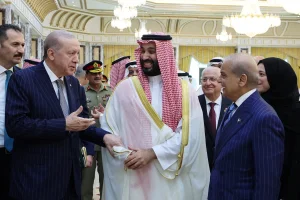
📹 | HRH the Crown Prince meets in Makkah with the President of the Republic of Türkiye. pic.twitter.com/vDSZxGsl20
— Foreign Ministry 🇸🇦 (@KSAmofaEN) August 7, 2026
“I'm not that disturbed by it because as an actual collective security organization, I don't expect it to have a lot of influence,” Michael Doran, Senior Fellow at the Hudson Institute, assessed on his weekly Israel Update podcast with Gadi Taub.
“As a diplomatic instrument, though it's not without its uses, particularly in negotiating with Donald Trump because they are presenting themselves as a more or less unified block on the question of whether to escalate now against Iran,” Doran added.
Officials from the three alliance members stressed its defensive nature, with Fidan saying that they “are not countries with expansionist ambitions.” However, he quickly added, “our president’s vision is not to limit the agreement to these three countries alone, but to expand it and, if necessary, bring all nations under its umbrella.”
Israeli concerns and potential dangers
Nevertheless, statements by Israeli officials suggested that the Jewish state sees itself, at least theoretically, threatened by an alliance between three of the major Sunni Muslim states in the region – who could potentially be joined by Israel’s neighbor Egypt in the future.
“This agreement concerns us; this is an alliance directed against Israel,” a senior Israeli official told Ynet News.
“The Shiite axis has weakened, and for a long time we have been seeing that the Sunni axis is strengthening. The State of Israel needs to create alternative alliances, mainly with the Hellenic axis [Greece and Cyprus], plus India and the United Arab Emirates – and to be very, very strong and cause countries to need us. Israel needs a plan for enormous force-building.”
The official added, “The story of Turkey and Erdoğan is dangerous. We will not be surprised if the Egyptians join the ‘Mecca alliance.’ This alliance is directed against Israel. Against whom do you think they are doing this? Allow me to be skeptical when they say that it is actually directed against Iran.”
Meanwhile, reactions from the Iranian regime were cautiously dismissive. Writing for Israel’s Institute for National Security Studies (INSS), Iran expert Raz Zimmt said most Iranian commentators “do not view the agreement as a cohesive anti-Iranian military alliance or an ‘Islamic NATO’ capable of shifting the regional balance of power.”
Notably, relations between Pakistan and Iran have been very close recently, as the country has touted its role as a mediator between Tehran and Washington.
Zimmt also noted that other Iranian commentators interpreted the move as a “transition from near-exclusive reliance on the U.S. toward more diversified regional security networks,” which also isn’t in Israel’s interest.
“Hardline circles present the agreement as proof of the failure of American deterrence and Iran’s success in undermining the old regional order. By contrast, more pragmatic circles warn of the strategic costs of continuing Iran’s current policy, which could encourage the formation of a regional security framework that would challenge Iran,” Zimmt concluded.
Another negative aspect from Israel’s perspective is that Hamas and other Jihadist movements in the region are touting the pact “as another ‘achievement’ of Hamas's ‘Al-Aqsa Flood’ terror attack on October 7,” according to Ahmad Fouad Alkhatib, a Gaza-born Hamas critic and the director of the Realign For Palestine (RFP) project at the Atlantic Council.
“Even if the battle for Gaza winds down, the worldwide narrative warfare against Islamist Jihadism is far from over,” he warned.
In an op-ed in Al Jazeera, an Arab analyst confirmed this symbolic interpretation of the pact: “It is the prevention of (Israeli or Iranian) hegemony,” assessed Khalid al-Jaber, director of the Doha-based Middle East Council on Global Affairs.
“Diminished American weight could leave the region inside an order whose rules are set by two actors alone: Israel and Iran,” he continued. “The Mecca pact is best understood as an early attempt to build a third pole – a bloc that does not need to fight either power, but one that has enough weight to deny either a monopoly over the region.”
Widespread skepticism
Despite these potential dangers, many experts belittled the defense pact as yet another in a long list of similar failed projects in the region, estimating that it will ultimately not achieve any significant impact on the region.
Hussein Aboubakr Mansour, an Egyptian-born Fellow at the Jewish Institute for National Security of America (JINSA), counseled American policymakers to see the pact “as a piece of diplomatic theater designed to leverage security concessions from Washington,” rather than a full-blown transition away from the U.S.
“Riyadh’s search for alternatives arises partly from a shortage of defensive capacity and partly from uncertainty about the conditions under which American power will actually be used to defend the Kingdom,” he explained.
He pointed out that the pact was only possible because its members all interpret it differently. It “joins three military powers whose principal security problems lie in different theaters and arise from different adversaries: Saudi Arabia faces Iran and its Arab proxies; Pakistan remains organized around its rivalry with India; Turkey must reconcile its regional ambitions with its obligations and interests as a NATO member.”
Summing up this line of argument, Aaron Zelin, Senior Fellow at the Washington Institute, quipped on 𝕏: “So Turkey and Pakistan are going to attack Iran, [the Iraqi] Hashd al-Shaabi, and the Houthis when they attack Saudi? I’ll believe it when I see it. Seems a lot more like messaging than an actual real ‘defense pact’.”
Alliance already failed Houthi test
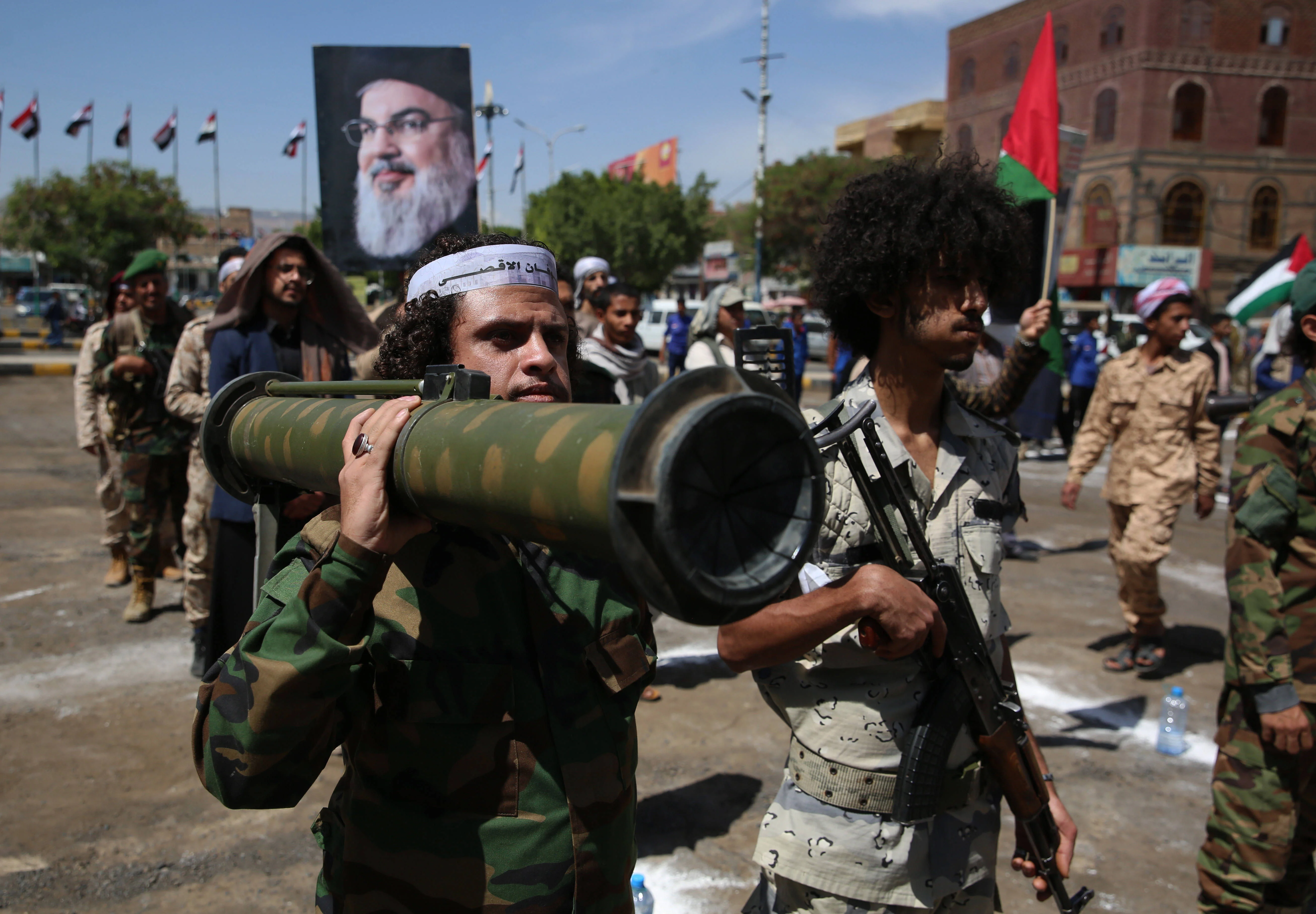
And indeed, the pact already failed a first test just days after it was established, when the Yemeni Houthis announced they had struck the Saudi Aramco refinery in Jizan with a drone, less than 48 hours after the alliance was sealed.
“Yet Turkey said nothing. Pakistan said nothing. There was never any reason to think otherwise,” wrote Jerusalem Post Editor-in-Chief, Zvika Klein.
He also recalled that “Riyadh has run this experiment once already. Its defense agreement with Pakistan was signed in September 2025, days after the Israeli strike on Hamas figures in Doha… When the U.S. and Israel began striking Iran on February 28, Riyadh called it in.”
According to Reuters, Pakistan fulfilled its commitment, sending some 8,000 troops and 16 aircraft.
Klein continued, “Iran spent the months that followed hitting Saudi refineries and American aircraft parked at Prince Sultan Air Base. Two Saudi civilians were killed. The Pakistani squadron stayed where it was, and Islamabad carried on hosting talks between Washington and Tehran.”
Writing on Ynet News, Israeli journalist Ben-Dror Yemini presented a balanced take on the pact, cautioning that it “should not be dismissed. It has the potential to cause damage both to the U.S. and to Israel.”
Despite its immediate real-life failure to respond to the Houthi attack, Yemini warned that “this is a coalition with strategic significance.”
For the U.S., it constitutes “a kind of official declaration of disappointment,” Yemini wrote, as the U.S. hasn’t managed to remove the Iranian regime or to defend its Gulf allies, who were left “wounded and bleeding.”
“Iran suffered unprecedented bombardments by the world’s strongest power and not only did it not blink, it also exposed the weakness of the U.S. and its Gulf allies,” he wrote.
For Israel, Yemeni assessed, the pact demonstrates that “instead of normalization with Saudi Arabia and an expansion of the Abraham Accords, the current direction is away from normalization.”
Support our independent, on-the-ground reporting from Israel. Become a $5/month Ally.
You might also like to read this: