Turkey says Egypt could join emerging Middle East defense alliance



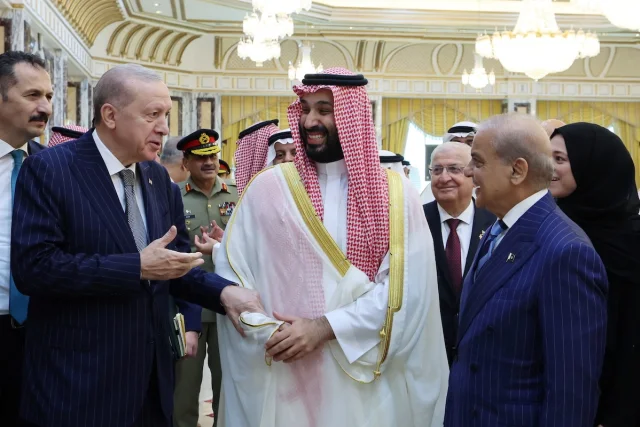
The Turkish Foreign Minister Hakan Fidan signaled on Saturday that Egypt could potentially join the new Middle East defense alliance signed on Friday in Mecca between Turkey, Saudi Arabia and Pakistan.
Turkey’s top diplomat believes Egypt could join the alliance “after certain technical issues are resolved.” While the details of the trilateral defense pact have not been publicly revealed, Fidan signaled that it is identical to NATO’s Article 5, meaning that an attack on one member state is considered an attack on all allied states.
Known as the “Mecca Joint Defense Agreement,” the defense agreement was signed by Saudi Crown Prince Mohammed bin Salman, Turkish President Recep Tayyip Erdoğan and Pakistani Prime Minister Shehbaz Sharif.
Speaking to the state-controlled Turkish news agency Anadolu, Fidan stressed that the alliance is not directed against the Islamic Republic of Iran.
“Iran is not the target of the defense alliance. No one is a target as long as they do not attack member states of the alliance,” the Turkish foreign minister said, adding that “the safety of navigation in the Red Sea concerns our interests, and therefore Turkey must be involved in Saudi Arabia’s international coalition.”
During the U.S. and Israeli strikes on Iran during Operation Epic Fury, the Iranian regime launched unprovoked missile and drone attacks on Saudi Arabia and several other Arab states. Saudi officials warned at the time that they would respond if Tehran’s attacks continued or struck critical Saudi infrastructure.
The Turkish foreign minister claimed that the member states of the new security alliance have peaceful intentions.
“Saudi Arabia, Pakistan and Turkey are not countries with expansionist ambitions. Our president’s vision is not to limit the agreement to these three countries alone, but to expand it and, if necessary, bring all nations under its umbrella.”
Turkey and Israel once maintained close security relations. However, under Erdoğan, Turkey has adopted increasingly hostile policies toward Israel and the Jewish state. In June, Turkish Interior Minister Mustafa Çiftçi said that Jerusalem “will be ours again,” apparently referring to the period when Jerusalem was under Ottoman rule.
Fidan argued that “cooperation in the defense industry and defense technology is the most important clause in the defense agreement. Talks on the defense agreement in Mecca have been underway for two years and eight months with our partners and with the regional countries with which we signed agreements.”
Turkey, a NATO member state, has an advanced defense industry and one of the most modern militaries in the Middle East. Saudi Arabia has vast financial resources, while Pakistan possesses nuclear weapons.
The trilateral Mecca Pact was preceded by a September 2025 bilateral defense agreement between Saudi Arabia and Pakistan. While avoiding publicly criticizing Tehran, Turkey, Saudi Arabia and Pakistan are reportedly concerned about the Iranian regime’s expansionist policies and Iranian-backed regional proxies such as Hezbollah and the Houthis.
The Iranian-backed Houthis in Yemen have begun attacking Saudi Arabia in recent days. Furthermore, the three Muslim-majority countries are reportedly concerned about Israel’s military operations against the Iranian-led axis.
There are also growing doubts about whether the United States is still willing and capable of containing military escalation in the Middle East.
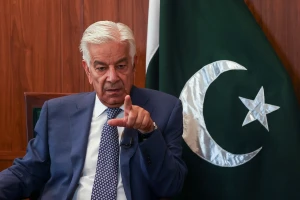
On Saturday, Pakistani Defense Minister Khawaja Muhammad Asif urged the Muslim world to unite against Israel, which he termed a “common threat.”
"The Islamic world must unite to confront the common threat posed by Israel," Asif said. “Israel poses a threat to all of us. Islamic countries must adopt a coordinated approach to confront this threat,”
During the Iran war in June, Tehran attacked multiple Muslim countries. In contrast, Israel provided aerial defense assistance to the United Arab Emirates to counter Iranian missiles and drones.
Iranian lawmaker Ebrahim Rezaei, a member of the National Security Commission, criticized Saudi Arabia for signing the defense agreement with Turkey and Pakistan.
"The Saudis should know that a paper agreement with Turkey and Pakistan does not bring them security, just as years of unilateral milking of the Americans did not bring them security," Rezaei wrote on 𝕏.
You might also like to read this: