IDF widens strikes against Hezbollah to include bridges, gas stations while deepening ground offensive in southern Lebanon
IDF reportedly plans to capture and hold buffer zone 'indefinitely'





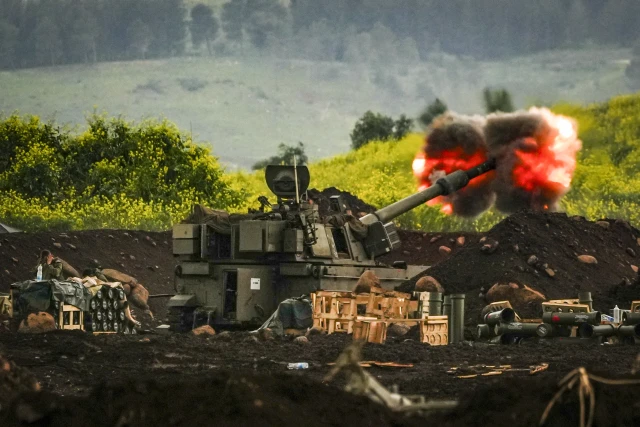
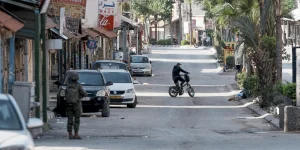
The IDF struck bridges across the Litani River on Wednesday, expanding its attacks against Hezbollah to include Lebanese state infrastructure for the first time in this round of fighting, while the terror group continued firing rockets at northern and even central Israel.
Israel has previously threatened to strike infrastructure that is critical to Hezbollah's operations, but has so far refrained from doing so out of concern to avoid more international criticism. This is the first time since the 2006 Lebanon War that Israel has struck state infrastructure in Lebanon.
The ongoing ground operation in southern Lebanon has already been roundly condemned by several European nations, as well as the United Nations.
The IDF confirms bombing two bridges on the Litani River today, saying they were used by Hezbollah to move operatives and weapons into southern Lebanon.
— Emanuel (Mannie) Fabian (@manniefabian) March 18, 2026
"The Hezbollah terrorist organization uses these crossings to transfer thousands of weapons, rockets, and rocket launchers,… https://t.co/mrZreYZ37G pic.twitter.com/9cjjAu3LEw
The IDF said the bridges are used by Hezbollah terrorists and commanders to move from northern to southern Lebanon. “Hezbollah used these crossings to transfer thousands of weapons, including rockets, and rocket launchers,” the Israeli military said.
The IDF has repeatedly urged residents of southern Lebanon to flee to the north of the River Zahrani, which is even further north than the Litani.
🚨 IDF DESTROYS KEY HEZBOLLAH CROSSING
— Mossad Commentary (@MOSSADil) March 13, 2026
The IDF struck the Al-Zarariya Bridge over the Litani River, a major route used by Hezbollah to move fighters and weapons.
• Hezbollah used the crossing to shift forces south and prepare attacks on Israel
• Rocket launchers were recently… pic.twitter.com/nkHbHUKLRA
Meanwhile, the IDF released some more information about the ground operation in southern Lebanon. According to Israeli media reports, security officials say that the current goal is to create a buffer zone by capturing the first ridge of hills and its villages on the Lebanese side, as well as other high hills enabling direct fire into Israel, and to hold it “indefinitely.”
On Wednesday, the IDF said that its troops killed 20 Hezbollah terrorists in direct engagements and destroyed dozens of military structures.
More than 20 Hezbollah operatives were killed amid ground operations in southern Lebanon yesterday, the military says.
— Emanuel (Mannie) Fabian (@manniefabian) March 19, 2026
According to the IDF, the operatives were killed by troops of the 36th Division and in strikes carried out by the Israeli Air Force.
In one incident, soldiers… pic.twitter.com/vwqUx2XJt8
“In one incident, the terrorists attempted to fire an anti-tank missile toward the troops. With a rapid operational response, the soldiers eliminated five terrorists. In the second incident, the Israeli Air Force eliminated two additional terrorists in an aerial strike,” the IDF said.
“In addition, the troops confiscated numerous weapons, including RPGs, anti-tank rockets, ammunition, a hunting rifle and additional military equipment.”
🎥WATCH: IDF troops identified a Hezbollah terrorist cell unloading weapons, including an RPG, from a vehicle in southern Lebanon, with the intent of attacking IDF soldiers. pic.twitter.com/FOCfTVZdm3
— Israel Defense Forces (@IDF) March 18, 2026
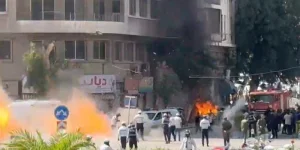
Other sites targeted by the IDF over the past day included gas stations of the Al-Amana Fuel Company, which is “controlled by Hezbollah and constitutes fundamental economic infrastructure that supports Hezbollah's military capabilities,” according to the IDF.
“The targeted assets generate millions of dollars of profits for the terror organization. These funds are funneled through accounts owned by Hezbollah’s Al-Qard Al-Hassan Association, and fund Hezbollah's terror activity. The abuse of these gas stations is another example of Hezbollah’s exploitation of Lebanese civilians to advance terror attacks against IDF troops and the State of Israel.”
🇱🇧🇮🇱 Destruction and plumes of smoke were reported following an airstrike on the Al-Amana station in Deir Qanoun. pic.twitter.com/uQAooEWBIZ
— 🇧🇷🇮🇹 Gabriel Ferrigno | Geopolitics (@bielferrigno) March 18, 2026
The day before, another wave of airstrikes had targeted sites of the Al-Qard Al-Hassan Association in Beirut.
The Israeli military also announced it had killed the commander of the Iranian Imam Hossein Division, after his predecessor was eliminated approximately a week ago.
Hassan Ali Marwan “was previously responsible for the division’s operations and was appointed as the division’s commander following the elimination of Ali Maslam Tabajeh, the former commander… during Operation ‘Northern Arrows’ [in 2024], Dhu al-Fiqar, who had commanded the division before Tabajeh, was also eliminated. Marwan is thus the third commander of the division to be eliminated,” the IDF stated.
🔴ELIMINATED: Hassan Ali Marwan, the commander of the “Imam Hussein Division” within a week of eliminating his predecessor
— Israel Defense Forces (@IDF) March 18, 2026
The “Imam Hussein Division” is a military force used by the Iranian Quds Force to advance the interests of the Iranian terror regime and to carry out… pic.twitter.com/1iMY4Hsgx8
The commander of this Iranian militia is responsible “for coordinating between the division and senior military officials in both the Hezbollah terrorist organization and the Quds Force,” as well as launching its own rockets and drones at Israel.
“The damage inflicted on the ‘Imam Hussein Division’ significantly degrades the military capabilities of the Iranian terror regime and the Hezbollah terrorist organization in Lebanon and across the broader Middle East,” the Israeli military stressed.
Meanwhile, the IDF concluded an investigation into claims that its tank fire had wounded Ghanaian peacekeepers of UNIFIL on March 6, acknowledging its mistake and expressing “regret.”
The IDF told Reuters that Israeli troops were responding to anti-tank missile fire from Hezbollah nearby, which had wounded two Israeli soldiers.
“A comprehensive investigation concluded in recent days determined that the fire that hit the UNIFIL personnel was mistakenly carried out by the IDF troops that misidentified the UNIFIL troops as the source of the anti-tank fire moments earlier,” it said.
“The IDF regrets the incident and has conveyed its apologies through the appropriate channels to Ghana and the United Nations. The findings of the investigations have been disseminated within the IDF to prevent recurrence of similar incidents.”
You might also like to read this: