IDF strikes 4 border crossings between Syria and Lebanon used by Hezbollah for weapons smuggling
Lebanese President accuses Israel of 'systematic aggression', targeting civilians





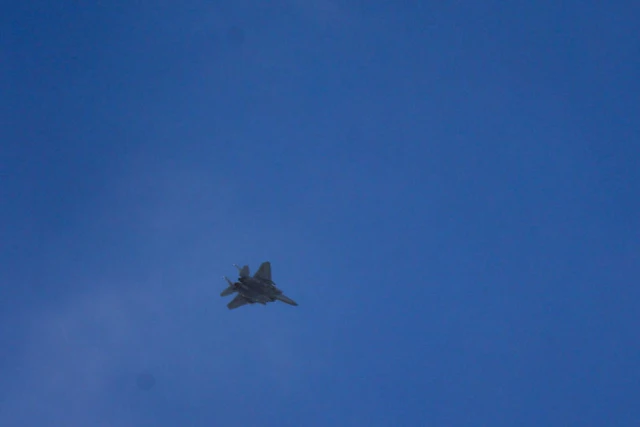
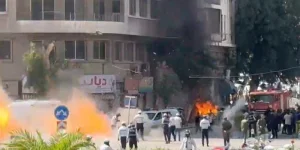
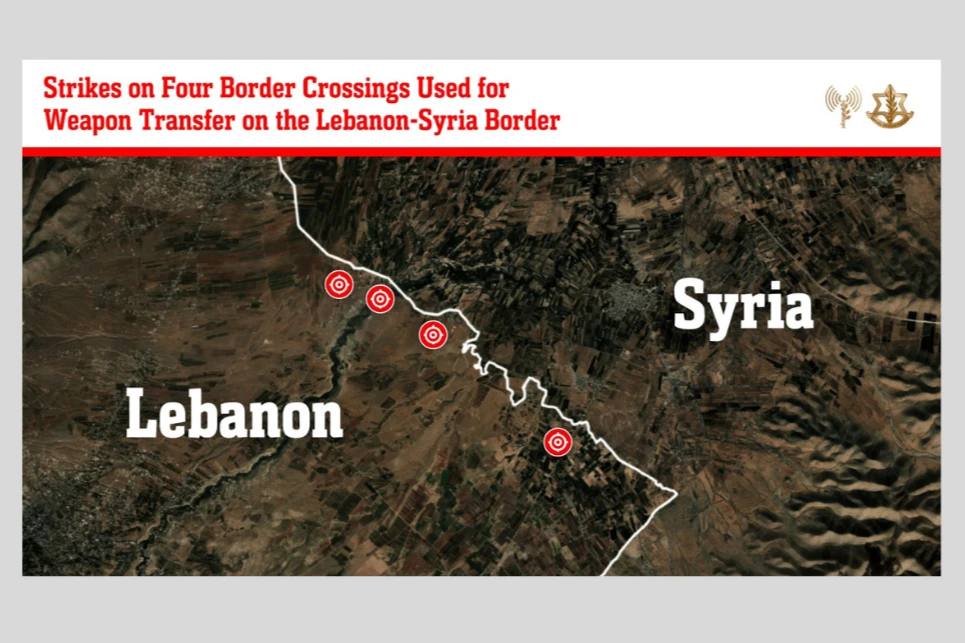
The Israel Defense Forces (IDF) continued on Wednesday its efforts to stop the terror organization Hezbollah from rearming itself, launching an unusually broad wave of air strikes targeting four crossings on the Syria-Lebanon border used for the transfer of weapons, as well as key terror operatives and other targets in Lebanon.
The Israeli military noted that four crossings on the Syria-Lebanon border in the al-Hermel area are known to have been used by Hezbollah to transfer weapons into Lebanon.
The strikes came as the Lebanese government claimed that the dismantlement of Hezbollah's terror infrastructure south of the Litani River has been completed, and that the Lebanese Armed Forces (LAF) had deployed its forces there.
Despite this, the IDF struck several targets in southern Lebanon, including a key operative, in addition to the strikes in al-Hermel and Sidon, which are located north of the Litani.
The strike in the Sidon region eliminated terrorist Muhammad Awacha, a key Hezbollah arms dealer and smuggler, the Israeli military said.
Awacha advanced and managed arms transfers to Hezbollah through a shell company that ordered and transported prohibited goods from various countries, including Iraq, Syria, and Gulf states, the military said.
Awacha also supervised many smugglers responsible for transferring arms from Iraq to Syria and Lebanon.
The IDF said it “continues to monitor attempts by the terrorist organization Hezbollah to strengthen its presence along all arms transfer routes and will act against any violation of the understandings between Israel and Lebanon.”
غارة مشاريع القاع كما وثقتها كاميرا مراقبة أحد المنازلhttps://t.co/1dDja2BIBW pic.twitter.com/ep5qzyEyUA
— Annahar النهار (@Annahar) January 21, 2026
Later on Wednesday, the IDF said it struck additional Hezbollah terror infrastructure in southern Lebanon, hitting weapons depots and an underground site used by Hezbollah to store weapons.
Noting that the infrastructure struck was located in civilian areas, the military stressed that “this is another example of the terrorist organization Hezbollah's cynical use of Lebanese citizens as human shields.”
The IDF said that prior to the attacks, it took many steps to reduce civilian harm, including the use of precision weapons, advance warnings to people in the area, and aerial observations.
#عاجل 🔸للمرة الثانية خلال الأسبوع؛ جيش الدفاع استهدف بنى تحتية ارهابية تابعة لحزب الله وضعت في قلب السكان المدنيين بجنوب لبنان
— افيخاي ادرعي (@AvichayAdraee) January 21, 2026
🔸أغار جيش الدفاع قبل قليل على بنى تحتية ارهابية تابعة لحزب الله في عدة مناطق بجنوب لبنان. خلال الغارات تم استهداف مستودعات اسلحة وموقع تحت الارض تم… pic.twitter.com/TYAWnD1why
Israel said that the activity of Hezbollah at these sites is part of an attempt to rehabilitate the organization, which “constitutes a violation of the understandings between Israel and Lebanon and a threat to the State of Israel.”
Also on Wednesday, the IDF said it killed the terrorist Abu Ali Salameh, who served as a Hezbollah liaison officer in the village of Yanouh in southern Lebanon. The military said that Salameh “managed Hezbollah's activities in the village of Yanouh, with the aim of enabling Hezbollah to operate in civilian areas and on private property,” in violation of the ceasefire.
The military said it forwarded a request to the ceasefire enforcement mechanism on Dec. 13, 2025, to remove the Hezbollah weapons warehouse in the village of Yanouh. It also said that Salameh was warned of the report by the Lebanese Army, which allowed Hezbollah time to move the weapons from the property.
Salameh later allowed the Lebanese Army to document the property without the weapons, claiming that the compound was empty. The IDF further said that during the Lebanese Army operation, several suspicious boxes were removed from the compound through the back door of the property.
Lebanese President Joseph Aoun had harsh words regarding the Israeli strikes, which, according to the Lebanese newspaper Al-Akhbar, took place without any warning to the committee supervising the Lebanon ceasefire.
“Once again, Israel is pursuing a policy of systematic aggression by carrying out air strikes on inhabited Lebanese villages, in a dangerous escalation that directly targets civilians,” President Aoun said, before accusing Israel of refusing to abide by the ceasefire terms.
“This repeated aggressive behavior reaffirms Israel’s refusal to abide by its obligations arising from the cessation of hostilities agreement,” he claimed.
Meanwhile, Hezbollah continues to reject calls to hand over its weapons. In recent days, the terror group even threatened another civil war if the Lebanese government attempts to disarm it. Senior Hezbollah political official Mahmoud Qamati told Russian state media outlet RT, “The path being taken by the Lebanese government and state institutions will lead Lebanon to instability, chaos, and perhaps even a civil war.”
Hezbollah leader Naim Qassem reiterated the group’s opposition to disarmament in a recent speech, saying, “We will not surrender; we will not accept the continuation of attacks on the country without doing anything – everything has a limit.”
Nevertheless, Lebanese Prime Minister Nawaf Salam claimed in Davos that “For the first time since 1969, that is, for over fifty years, the State of Lebanon has full, practical control over the area south of the Litani.”
In an interview with Bloomberg, Salam also said that the government is “moving forward to the area north of the Litani, to the second phase of the Lebanese Army's plan for the Lebanese government.”
The Lebanese newspaper Al-Akhbar claimed that Israel did not notify the committee supervising the ceasefire in Lebanon before striking the four sites on Wednesday, citing a security source, who claimed the sites were not included among the places the Lebanese army was asked to inspect.
The Lebanese source claimed the purpose of the Israeli strikes is to exert direct pressure on the Lebanese government to approve the plan to disarm Hezbollah in the area north of the Litani River.
The source also claimed that the escalation in Lebanon is meant to pressure Lebanon to reach a new agreement regarding the Lebanon ceasefire, which would see Lebanon and Israel hold direct negotiations under American auspices.
You might also like to read this: