Hamas fighters selling weapons, military equipment, amid severe financial crisis in the Gaza Strip - report
Leadership says terror group will not disarm, claims it will transfer weapons only to Palestinian state



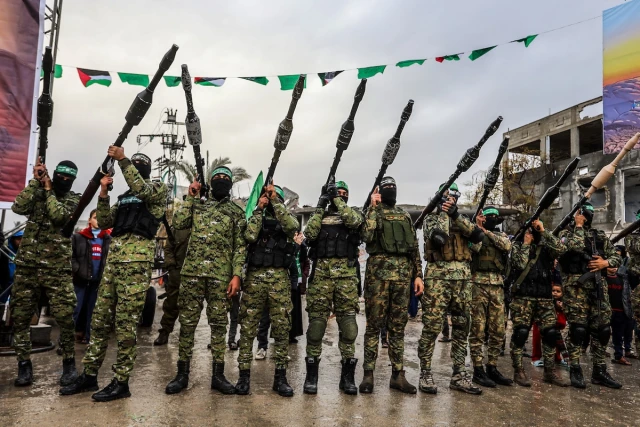
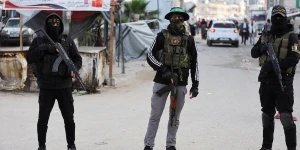
Some Hamas members have begun to sell personal weapons due to the significant financial crisis facing the terror organization, according to reports in Arab media.
The political and military threats are no longer the primary threat facing the terror organization, Arab news site Middle East Online (MEO) reported on Sunday. Hamas is now facing a serious challenge in paying its members, which has led some of them to sell off weapons and military equipment, the site reported.
Mounting economic and political pressure from the United States, Israel, and other nations involved in the Gaza Peace Plan has begun to affect the terror organization, as Washington and Jerusalem continue to insist that Hamas be disarmed under the terms of the agreement.
Reports from Gaza, including social media posts by residents in the Strip, indicate that the terror organization is having difficulty paying all of its members after some of its funding streams in Gaza were interrupted. The reports cite a combination of reduced external funding, disruptions in the transfer of money into the Gaza Strip due to increased international scrutiny, and the territory’s depressed postwar economy as causes of Hamas’ financial troubles.
According to MEO, Hamas’ failure to build a sustainable economic model during its years of control over the Gaza Strip are partially to blame for the current crisis. “Hamas was more preoccupied with managing the conflict than managing society,” the report claimed. The terror group also focused more on strengthening its military capabilities than on developing economic institutions capable of sustaining the Gaza Strip.
Additionally, MEO said that Hamas relied overwhelmingly on “the emergency economy,” funding from international aid, redirected funds from NGOs, and other such external sources to support the economy of Gaza.
MEO assesses that the restricted funding could impact Hamas’ ability to recruit, train, and maintain the forces it already has.
It is not clear if the U.S. and its Board of Peace partners will attempt to capitalize on the crisis by implementing a weapon buy-back program, which has been previously reported.
However, it appears that the financial crisis of the terror group in Gaza is not affecting the leadership outside the Strip.
Hamas’s senior leader, Usama Hamdan, made several statements today to news outlets, declaring:
— Ahmed Fouad Alkhatib (@afalkhatib) February 11, 2026
1. Hamas has not adopted any decision to “freeze” its arms, let alone get rid of them.
2. The group received no disarmament proposals from mediators.
3. Our position is steadfast… pic.twitter.com/ILdrqaPa8F
Hamas senior official Osama Hamdan said earlier this week that the group has not made any decision, either to “freeze” its weapons, or to give them to any external party. Hamdan also claimed that Hamas had not even received any disarmament proposals.
Hamdan reaffirmed previous statements, saying the terror group would possibly agree to a hudna, an Arabic term for a temporary ceasefire for the purpose of regrouping and rebuilding, but rejected any plans for disarmament. He said the group would only hand over its weapons to a Palestinian state.
Senior Hamas Official Osama Hamdan: We Won’t Lay Our Weapons Down Until the Occupation Is Eliminated; We Might Agree to a Hudna While a Palestinian State Is Being Established – Then It Will Have Its Own Army pic.twitter.com/8ArhdDapuj
— MEMRI (@MEMRIReports) February 12, 2026
This position was echoed by other Hamas senior officials, such as Mohammed Mardawi, who told the Qatari Al-Arab channel that Hamas will only agree to hand over its weapons to the Palestinian state after Israel withdraws from the Gaza Strip.
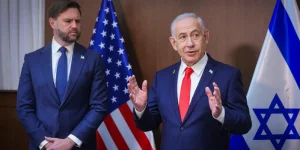
The New York Times recently reported that the U.S. is considering the idea of letting Hamas keep its small arms, to include weapons like the Kalashnikov rifles used by most members, along with handguns. In his recent meeting with President Donald Trump, Prime Minister Benjamin Netanyahu reportedly said that Hamas’ refusal to disarm is hindering the progress of the Gaza Peace Plan, and reaffirmed Israel’s commitment to see the group disarmed, even if it means a renewal of fighting.
Senior Hamas official Mohammed Mardawi, in an interview with Qatar’s Al-Arab channel:
— Open Source Intel (@Osint613) February 12, 2026
“Israel must withdraw from the Gaza Strip, stop the killings, and commit to the agreement. In the first and second phases, they should bring us onto the political track that will lead to the… pic.twitter.com/GDXBeTRfAW
However, a senior official on the Board of Peace contradicted claims that the peace plan is being delayed.
“It's not something sterile, there are clearly a lot of problems. It's not a pharmacy, but everything we set as a goal has happened as planned,” he told Ynet News. According to him, “There is no feeling that Israel is piling up difficulties or delaying. Everything is progressing.”
“The hostages have been released. The Rafah crossing has been opened and is in place. The technocratic committee was appointed by consensus of everyone and will soon enter Gaza,” the board member said. “We are ignoring the background noise and working on the merits. What is happening now is the closing of the small details of the demobilization. It is a process that is happening. Disarmament will begin in March. As soon as the demobilization begins, the stabilization force, the ISF, will also gain momentum.”
He also offered a roadmap for the disarmament of Hamas, which has not been shared before.
“Naturally, Hamas is not willing to return all the weapons in one fell swoop because they claim that there are clans in Gaza that will kill them, and therefore they demand that the return of light weapons be postponed until an agreed security force is established in Gaza that will have one government and one weapon [sic],” the board member explained. “Therefore, what was agreed upon was that they would start first with the tunnels, then move on to the weapons production facilities, then to RPGs and mortars, and finally to the small arms. That will be the last thing.”
You might also like to read this: