Bearing witness: King’s College London becomes first university to screen Oct 7 footage of Hamas atrocities





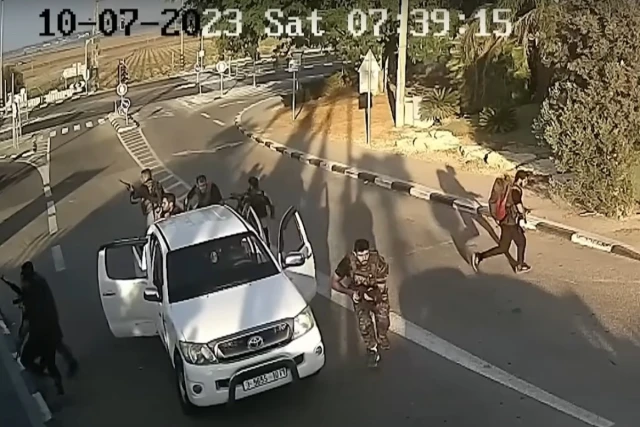
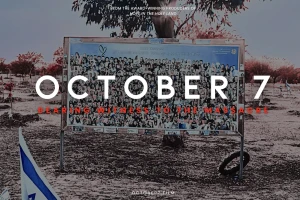
In a world first, “Stop the Hate,” in collaboration with the campus Israeli society, has arranged for the film “Bearing Witness to the October 7th Massacre” to be screened at King’s College London. The film includes raw footage filmed by Hamas terrorists themselves.
The footage, captured using GoPro body cameras during the massacre, was first shown to a group of journalists in November 2023 but has not been made widely available due to its graphic content.
A small group of 20 students and five staff members went to the film screening at King’s College. ”The audience included people from a wide range of faiths, backgrounds and professional communities,” said Communications graduate Yael Di Castro.
While an earlier attempt to show the film had been planned, security concerns led to the screening being canceled. When the event finally took place, thanks in part to the efforts and initiative of Di Castro, police were present to prevent disruption.
She told Jewish News, “Reactions were deeply emotional and varied. Many found the footage extremely difficult but important to witness, and some attendees chose to leave the room during the screening due to the distressing nature of the material.”
Research has shown that a surprisingly high number of Western students have a very limited understanding of what happened on Oct. 7, 2023, and without that critical context, have been made vulnerable to manipulation and propaganda. Studies conducted in the United States and Australia have found concerning numbers who were unsure of what happened, or even denied that the massacre took place.
Andrew Fox, a former paratrooper in the British Army and lecturer in War Studies, is now a frontline researcher in conflict zones, and shared his conviction that seeing the footage of the massacre is important in order to understand the conflict.
“The vast majority of those criticizing Israel, globally, have not seen firsthand evidence,” said Fox. “People do not understand the true depth of the horror of October 7, nor do they understand what a war looks like when fought against a terrorist state on your own border.”
He added, “This near-total lack of understanding has made it very easy for Hamas and their allies to take the usual appalling imagery of war and spin it into something it is not.”
The Crossroads25 research report (an Australian survey of attitudes concerning Jews, Israel and antisemitism) confirmed Fox’s conclusions, stating, “Central to the understanding of the Hamas-Israel war are the attacks launched from Gaza on 7 October 2023.”
They found that less than half of the respondents believe the reports of what happened on Oct. 7 to be “broadly true” (48%), and 44% said they were “not sure.” While 3% preferred not to respond, only 5% opted for denial, saying they thought the reports were “broadly untrue.”
However, the number of deniers more than doubled among university students, with 12%-13% considering the reports “broadly untrue.” Conversely, the study found that those who more readily believed the events of Oct. 7 were also more likely to support Israel’s right to defend itself.
Similarly, a recent survey conducted by Dr. Irwin Mansdorf of the Jerusalem Center for Public Affairs (JCPA) indicated that Hamas-driven denial of the Oct. 7 attack poses a threat to historical memory, warning that the weaponized denial and distortion of the events were accepted by many as "fact."
The JCPA pointed out the parallels with Holocaust denial and even denial of the historical existence of the Jewish temples in Jerusalem, insisting that “October 7 denialism must be countered with evidence,” suggesting written documents, eyewitness testimonies, photographs, video recordings, social media posts, and all forms of technological record-keeping, along with the preservation of the sites of the massacres.
Following the event at King’s College, Di Castro said that all universities “have a responsibility to engage with complex realities through factual and unfiltered evidence.”
“Bringing this footage into the academic sphere is not about politics. It is about bearing witness, accountability and the role of higher education in shaping informed discourse. The screening forms part of a broader commitment to responsible academic engagement, historical testimony and constructive dialogue,” she said.
You might also like to read this: