Gadi Eisenkot, Yashar! leader, proposes plan to bring 2 million Jews to Israel by 2048



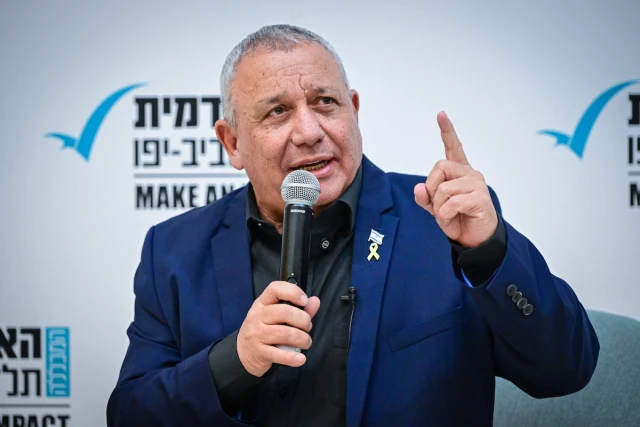
Gadi Eisenkot, former IDF chief of staff and leader of the Yashar! party presented an ambitious plan on Thursday to bring two million Jewish immigrants (olim) and Israeli expats to Israel by 2048, when the modern state celebrates its 100th anniversary.
Eisenkot joined Israel's emergency government just days after Hamas' Oct. 7 attacks and served as a minister in the war cabinet as part of the Blue and White party. He later left the government amid political disagreements and subsequently departed from Blue and White as well in July 2025.
Eisenkot has emerged as a vocal critic of Prime Minister Benjamin Netanyahu, and his new party seeks to facilitate large-scale immigration to the Jewish state by cutting existing bureaucracy and increasing financial incentives for new immigrants and Israeli nationals living abroad.
The initiative, which he presented to The Jerusalem Post, was reportedly developed by a team of individuals from the Israeli tech sector and academia, two areas that frequently intersect within Israeli society. The plan envisions a family “one-stop shop” with crucial services like employment assistance, licensing and community integration offered at a single location.
While critical of the Netanyahu government’s policies, Eisenkot argued that he prefers to focus on positive issues, including bringing more Jews to their homeland Israel and strengthening Israeli society.
“A political campaigner might advise me to say that fear motivates people – that if this government is re-elected, hundreds of thousands of young people will leave, but I don’t want to say that,” he said. “I want to focus on the positive and say what we can do. If we create the right atmosphere and hope, hundreds of thousands of Israelis will return.”
“Every oleh will be welcomed and will make a strategic contribution for generations to come,” he added.
Realizing the importance of integration of immigrant children, the new plan envisions accelerated education tracks with language support. Furthermore, there will be an “employment safety net” with financial assistance and job placement for immigrants during their first years in Israel.
“Coming Home” is a second component of the plan, aimed at offering financial incentives to new immigrants, including tax adjustments and long-term benefits. The plan also calls for the expedited recognition of international professional and academic degrees. Israeli bureaucracy has previously made it difficult for those with foreign qualifications to work in their fields, posing a barrier to large-scale immigration of professionals.
Meanwhile, it remains unclear which countries Eisenkot envisions as the primary sources of the proposed large-scale Jewish immigration to Israel. The total global Jewish population is estimated at around 15.8 million, according to data from Israel’s Central Bureau of Statistics. Approximately 85% of Jews live in Israel and the United States. Most of the Diaspora resides in the U.S., followed by France, with sizable communities also in Canada, the United Kingdom, Russia, Germany, Argentina, South Africa, Australia and Brazil.
In September, Eisenkot announced the establishment of his new party, Yashar!, which means straight, as well as having a meaning of honest, in Hebrew. The former IDF chief has blamed Netanyahu and his coalition partners for rising tensions within Israeli society, including the controversial judicial reform and military exemptions for ultra-Orthodox men. At the time, the new party said it “will work for repair, healing, and hope for Israeli society.”
Yashar! has reportedly been gaining support in the polls and was projected to earn 16 seats if elections were held now, according to a poll released on Friday. Netanyahu’s Likud party was projected to receive 28 seats, but is currently far from securing the minimum 61 seats required to form a new government.
Eisenkot has sought to unite the fractured opposition in an effort to defeat the Netanyahu-led bloc in the upcoming elections, scheduled for October.
Former Israeli Prime Minister Naftali Bennett, who is also running against Netanyahu, reportedly offered to merge their parties. While Eisenkot said he is open to cooperation, he allegedly declined the offer, telling Channel 12 News, “I believe in myself, I know the kind of leadership I bring, and I see myself as a very strong candidate.”
You might also like to read this: