Enough is enough: Trump administration launches 15-city 'combat antisemitism' tour across America



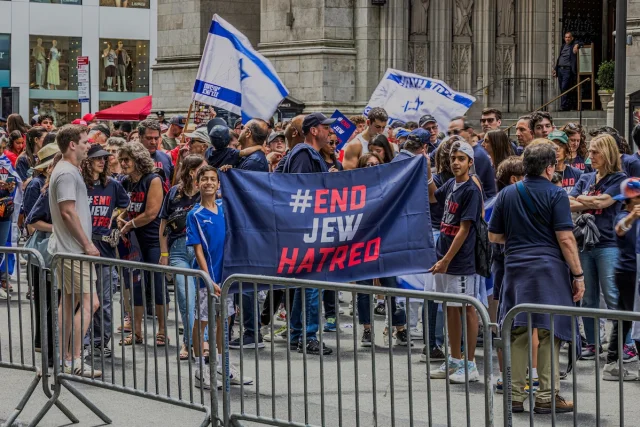
The Trump administration has always taken combating antisemitism seriously and now officials are getting ready to hit the road to make an even bigger difference.
The Department of Justice has announced a new 15-city National Awareness & Action Tour led by civil rights attorney and Task Force Chairman Leo Terrell as part of a broader effort to confront antisemitism in communities across America. The initiative will include meetings with local leaders, law enforcement, faith communities and individuals directly impacted by anti-Jewish hatred. The goal is practical: improve reporting, strengthen local partnerships and confront antisemitism where many Jewish leaders say it is increasingly being felt – at the community level.
The Justice Department says the tour will focus on building relationships between local law enforcement and Jewish communities while also encouraging cooperation among Jewish, Christian and Muslim leaders. Federal officials specifically mentioned schools, teacher organizations and student protections as areas of concern.
In essence, the administration of U.S. President Donald Trump is sending a signal: the federal government stands ready to respond and that Jewish Americans should be able to worship, work and attend school without fear.
Unfortunately, the opposite scenarios are becoming far too commonplace. For many Jewish Americans, antisemitism is no longer something found primarily in history books, Holocaust museums or lessons about Europe in the 1930s. Today, it’s ever-present in a growing number of towns and cities across United States, taking place outside synagogues, on college campuses, in neighborhoods, at demonstrations, in local school systems, etc.
One of the questions at this point is where exactly the task force will go. Sadly, there are no shortage of places to choose from.
Take New York City. Jewish neighborhoods there have repeatedly become flashpoints amid demonstrations connected to Israel and the Gaza conflict. Protests outside Jewish institutions, Israeli-linked events and religious locations have sparked fierce debate. Supporters call them political demonstrations. Many Jewish residents view them as intimidation tactics aimed directly at their communities.
NYC Mayor Zohran Mamdani’s words denouncing antisemitism haven’t matched his actions while in office. The scenes have become familiar: police barricades, shouting matches, counter-protesters carrying Israeli flags, rising tensions and growing concerns from Jewish leaders who believe anti-Israel activism sometimes crosses into antisemitism.
But New York is hardly alone. Nearby Teaneck, New Jersey, a heavily Jewish suburb outside New York, has increasingly found itself at the center of tensions involving demonstrations tied to Israeli events and protests near Jewish institutions. Residents there have openly discussed increased security concerns and the emotional impact these confrontations have had locally.
A few months ago, a Jewish pedestrian was shot with gel pellets after someone from a passing vehicle asked whether he supported Israel or Palestine.
As for other locations, the task force could definitely make a stop in Dearborn, Michigan and the larger Detroit metro area. That city has emerged as one of America’s most closely watched cities regarding Israel and Gaza activism because of its large Arab-American population and highly engaged political community. Demonstrations there have generated national headlines and intense emotions. Jewish organizations have expressed concerns that some rhetoric surrounding the conflict has contributed to anxiety among nearby Jewish residents and communities.
Then there is Los Angeles, California. The Pico-Robertson area, home to a large Orthodox Jewish population, has seen confrontations and heightened concern surrounding demonstrations and incidents near synagogues. For many Jewish residents there, threats that once felt distant now feel far closer to home.
In April, a Judaic studies teacher was choked with a window breaker outside an Orthodox synagogue in that area. The suspect allegedly yelled "Free Palestine" during the attack. Police are investigating the incident as a hate crime.
Further west in communities around Boulder, Colorado, Jewish organizations have repeatedly discussed threats, harassment concerns and the challenge of maintaining security in smaller communities outside the traditional East Coast centers of Jewish life. Last year, an assailant attacked rallygoers during their event in support of Israeli hostages. It made big national news at the time. The attacker used Molotov cocktails and other devices. More than a dozen people were injured.
Then there are college campuses across America that represent another major battlefield. Actually, the Justice Department Task Force itself grew partly out of those concerns. Campuses like Columbia University and UCLA became symbols of the national debate as protests, encampments and confrontations dominated headlines.
In reality, this Department of Justice Task Force is not going to be able to visit every community in America that has been affected by the scourge of antisemitism. It’s just not possible. Of course, many Jewish institutions are not waiting around for recommendations and actions from the federal government.
Synagogues are increasing security budgets. Jewish schools are upgrading entrances. Congregations are adding cameras, guards and emergency procedures. Task Force Chairman Leo Terrell himself has described these moves as a type of “Jewish tax,” arguing that many communities feel forced to spend additional money simply to worship safely.
The Trump administration is now making a big push to change that.
You might also like to read this: