Could boots on the ground be the only way to fully eliminate Iran’s nuclear threat?
.jpg "Maayan Hoffman")




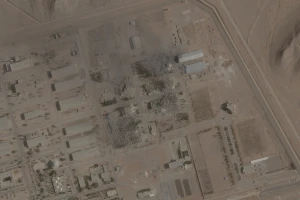
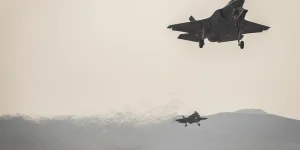
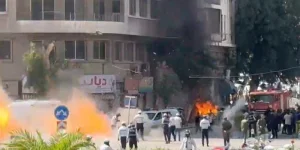
For weeks, the war against Iran has been defined by what can be seen: explosions, airstrikes, and the steady dismantling of Iran’s visible military and political power. But there is still one threat that no airstrike can reach, buried deep underground.
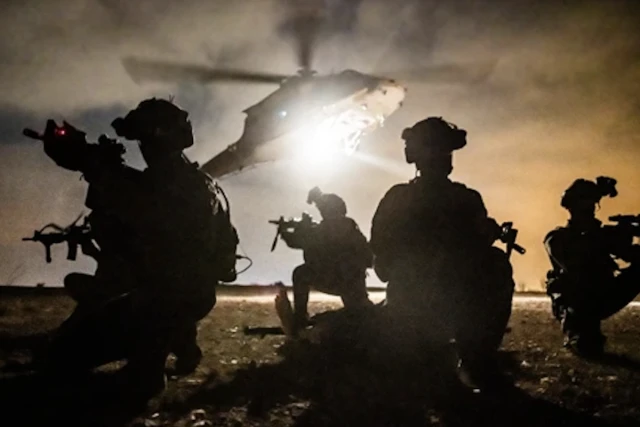
Israel and the United States may ultimately need to put boots on the ground in Iran to locate and remove the regime’s 60% enriched uranium, the exact location of which remains unverified, according to Dr. Dan Diker, President of the Jerusalem Center for Security and Foreign Affairs.
This need to tackle underground threats constitutes a potential turning point in the conflict.
The warning comes as leaders in Jerusalem and Washington project confidence in the success of recent strikes, even as critical questions remain about what Iran still has hidden.
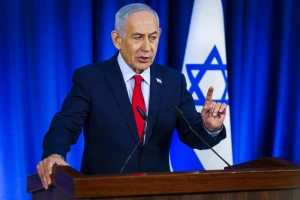
On Thursday, Prime Minister Benjamin Netanyahu told the foreign press in Israel that Iran no longer has the ability to enrich the uranium needed for weapons and can no longer produce ballistic missiles. However, that does not mean the regime cannot use what it already possesses, as demonstrated by the continuing barrage of missiles fired at Israel and neighboring Gulf states.
U.S. President Donald Trump has not ruled out the possibility of deploying ground forces, and both leaders have made clear that the war will end only once all of its objectives are achieved.
Diker said locating the enriched uranium, which is nearing weapons-grade and believed to be stored either beneath the Isfahan nuclear site or a similar facility, could prove difficult to eliminate, remove, or secure without troops on the ground.
“You can't bomb it into smithereens,” Diker said. “You've got to locate it. It's only the size of a refrigerator, but it can actually fuel numerous nuclear devices. We know that we haven’t destroyed it yet.”
In addition to locating the uranium, Diker said that another area where troops could assume a crucial role is Kharg Island.
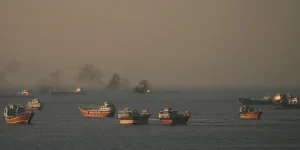
Roughly 90% of Iranian oil exports pass through the island on their way to global markets, primarily China, as well as through the Strait of Hormuz. He noted there is a “very strong possibility” of deploying forces either to the strait or to Kharg Island, especially after the United States and Israel have already struck many of the key military targets there.
There is precedent for such an operation. In 2007, when Israel sought to destroy the Syrian nuclear reactor, it deployed its Shaldag ("Kingfisher") Unit, a special forces unit under the command of the Israeli Air Force.
“Shaldag was on the ground in Syria killing the North Korean scientists and security people and destroying the nuclear reactor,” Diker pointed out.
Still, not everyone in Washington is signaling support for ground involvement. This week, Republican Senator Lindsey Graham said in an interview with American TV personality Sean Hannity that “No, we're not going to invade Iran. There's no reason to.”
However, Diker said Trump has not ruled out using forces for targeted, limited missions. Instead, he is seeking to avoid a prolonged military campaign like those seen in Iraq or Afghanistan, which he knows many Americans are anxious to avoid.
“Americans will never forget the image of the transport plane with all the Afghans hanging on the wings,” Diker said. “Trump knows the ultimate picture of defeat, and Trump wants to correct that and reassure the American people.”
Moreover, if the United States does decide to send troops into Iran, it is unlikely to act alone.
Israel would likely join as part of the strategic partnership between the two countries. In addition, there are numerous minority communities inside Iran, some of which can field fighters, prepared to resist the regime. Iranian Kurdish groups based in Iraq have also recently said that if they were given arms, they would enter Iran and join the fight.
Recent military movements are adding to the sense that escalation remains possible. Last week, it was reported that additional U.S. Marines and warships are heading to the region, including roughly 5,000 sailors and Marines deployed across several vessels. This raises the possibility that a ground operation could take shape within weeks.
Such a move would follow Israel’s recent ground operation in Lebanon targeting Hezbollah and establishing a buffer zone after weeks of airstrikes. It would also come as Israel continues its more than two-year war against Hamas in Gaza.
Diker acknowledged that sending troops would come with a cost, including the risk of Israeli and American casualties. So far, no Israeli soldiers have been killed in Iran since the start of the war. At least 13 American service members, however, have been killed in the wider conflict with Iran.
At the same time, Israel has been directing the battlefield in ways that could make such an operation more feasible. The targeted assassinations of senior Iranian officials, including leaders within the Iranian government, the Revolutionary Guards, and the Basij, are aimed not only at weakening the regime but also at creating conditions for internal unrest.
According to Diker, removing leadership figures responsible for cracking down on previous uprisings – including the January protests – could trigger renewed public resistance.
He added that once Iranians believe change is possible, they may once again take to the streets and push to bring down the regime. Netanyahu expressed this sentiment in his speech on Thursday, saying one of the goals of the operation is “creating the conditions for the Iranian people to grasp their freedom, to control their destiny.”
“For the first time in 47 years, there's a real prospect of getting rid of this messianic, murderous, jihadistic regime,” Diker said.
Yet even as that victory comes into view, the most dangerous threat may still remain hidden. And what cannot be destroyed from the air may ultimately have to be secured on the ground.
You might also like to read this: