No ceasefire in the Islamic Republic’s war against women



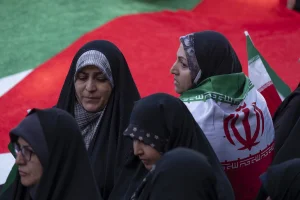
For nearly half a century, the Islamic Republic of Iran has attempted to convince the world that it represents justice, morality, and the will of the Iranian people. But behind the propaganda lies a brutal reality that millions of Iranians know all too well. The regime’s systematic oppression of women remains one of the clearest examples of its cruelty and fear. For as little as showing a strand of hair, Iranian women are met with intimidation, imprisonment, torture, or worse.
Today, the world is once again witnessing the Islamic Republic’s relentless assault on the dignity and freedom of women.
Recently, reports emerged from Armenia that customs officials intercepted 143 bundles of natural hair weighing approximately 26 kilograms at the Agarak border crossing with Iran. The “best” case is that the hair belonged to impoverished Iranian women selling their hair simply to survive in an economy devastated by corruption, sanctions, and government mismanagement. The “good news” is that women may be seeking ways other than the religiously sanctioned prostitution racket of “temporary marriages” to earn money.
The worst case is that the hair came from women who have been gunned down or executed by the Islamic Republic in one of the most inhuman forms of human trafficking possible: profiting from women’s bodies after they have been murdered.
Either way, the discovery is deeply symbolic. The Islamic Republic has spent decades subjugating women by forcing them to cover their hair, arresting and torturing them for showing a single misplaced strand. Now, as economic desperation deepens, the very symbol of control over Iranian women has become a commodity.
Whether Iranian women are driven to such severe poverty that they must sell parts of themselves to feed their families, or the regime chops off the emblem of freedom for Iranian women from the corpses of their victims, the bottom line is that a woman showing her hair has never been morality. It’s always been about control.
Another shocking example of this oppression has captured international attention. Iranian singer Parastoo Ahmadi was sentenced to 74 lashes after performing without a hijab during a livestreamed concert. In addition to the flogging sentence, she and members of her production team reportedly received travel bans and restrictions on their artistic activities.
Think about what this means.
In the twenty-first century, a woman can be sentenced to brutal whipping simply because she sang a song with her hair showing. I witnessed such torture of my husband who was forced to confess to the “crime” of drinking wine, which he never did. Neither the physical nor psychological scars of his 80 lashes ever healed and led to his death at the hands of the Islamic Republic.
The Islamic Republic fears music because music inspires hope. It fears artists because artists tell the truth. It fears women because women have become the strongest voice of resistance against tyranny.
Parastoo Ahmadi’s case is not an isolated incident. It is part of a broader campaign against women who refuse to submit. Women have been arrested for removing their hijabs, imprisoned for posting photographs online, and physically assaulted for challenging discriminatory laws. The regime’s “morality police” and basij militia have become instruments of terror directed primarily at women and girls.
I witnessed this firsthand during my nine-month imprisonment and death sentence for the “crime” of becoming a Christian. Numerous cellmates shared harrowing stories of all kinds of physical and sexual abuse, judges and prosecutors demanding sex in order to receive a favorable verdict, and misogyny so deep seeded in Iranian society that it’s passed off as normal.
No story illustrates this reality more painfully than the death of Mahsa Amini.
In September 2022, Mahsa Amini, a 22-year-old Kurdish Iranian woman, was arrested by Iran’s “morality police” for allegedly violating the country’s mandatory hijab regulations. She was brutally tortured and within days, she was dead. Her death ignited nationwide protests under the powerful slogan “Woman, Life, Freedom.”
Millions of Iranians recognized what had happened. Mahsa Amini was not simply one victim among many. She became a symbol of every woman humiliated, threatened, beaten, or silenced by the regime.
The protests that followed demonstrated the courage of the Iranian people, especially Iranian women. Young women publicly removed their hijabs. Students challenged government officials. Mothers demanded justice. Despite brutal crackdowns, arrests, executions, and intimidation, the spirit of resistance did not disappear.
While I was saved from physical torture, I still bear many scars of my experiences and what I witnessed. My closest friend, Shirin Alamhooli, suffered such severe torture, for days on end she could not walk and every day suffered debilitating headaches because her torturers brutally beat her on the head. Knowing that she was savagely raped according to Islamic doctrine of not permitting a virgin woman to be executed, is a pain and indignity that Iranian women deal with still, on top of these grotesque news reports, causes widespread pain and suffering to survivors like me, as well as the victims.
The Islamic Republic may imprison individuals, but it cannot imprison an idea whose time has come: freedom and the end of the regime.
As someone who personally experienced persecution under the Islamic Republic, I understand the regime’s tactics. Fear is its primary weapon. It sets men in the position of controlling women, and seeks to convince citizens that resistance is futile and that freedom is impossible. Yet history repeatedly proves otherwise.
The courage of Iranian women continues to expose the weakness of the regime. Every woman who walks without a mandatory hijab, every artist who continues to sing, every activist who speaks out, and every family that demands justice for victims like Mahsa Amini represents a challenge to a government built upon coercion.
The discovery of smuggled women’s hair at the Armenian border and the sentencing of Parastoo Ahmadi to 74 lashes may appear to be unconnected. In reality, they are inseparable. Both reveal a regime that exploits, controls, and punishes women while claiming to defend their dignity.
The international community must not look away.
Governments, human rights organizations, churches, and freedom-loving people everywhere should continue to amplify the voices of Iranian women. Silence only emboldens oppressors.
The women of Iran constantly show extraordinary courage. They risk everything for freedom, dignity, and equality. Their struggle is not merely an Iranian issue. It is a human rights issue.
One day, the women of Iran will no longer fear arrest for showing their hair, imprisonment for speaking their minds, or lashes for singing their songs. One day, the slogan “Woman, Life, Freedom” will no longer be a protest cry but a lived reality.
Until that day arrives, the world must stand with them.
You might also like to read this: