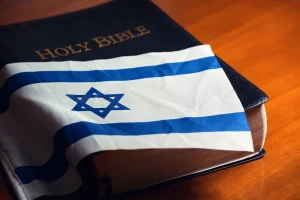
Why are many Jews still hesitant to embrace their Christian allies?
.jpg "Maayan Hoffman")





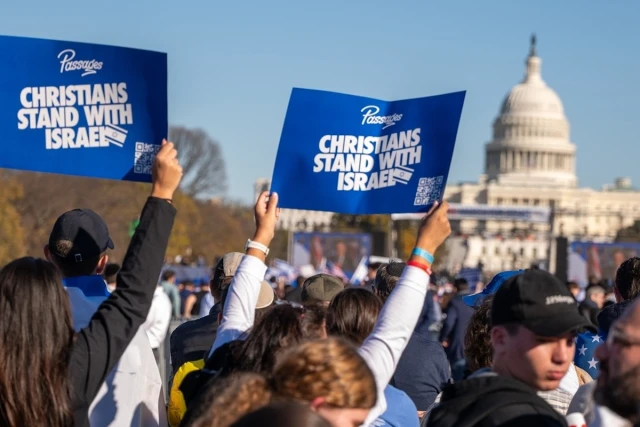
It has been nearly 10 years since Prime Minister Benjamin Netanyahu declared that “Christians are Israel’s best friends” while speaking at the Christians United for Israel conference in Washington, D.C.
Yet, while many in the Israeli government, including Strategic Affairs Minister Ron Dermer, who came under fire for suggesting that Israel should prioritize outreach to evangelical Christians over American Jews critical of the Jewish state, have long recognized the importance of this alliance, much of American Jewry has still not fully embraced it.
This recognition of Christian support inspired the creation of the Christian Media Summit, which took place in Jerusalem last week for the seventh consecutive year.
However, just one week earlier at the World Zionist Congress, multiple resolutions calling for expressions of appreciation for Christian support of Israel and the Jewish people were rejected by a landslide.
And with the election of Zohran Mamdani, a known anti-Zionist, as New York City’s next mayor, it seems that Jews in the United States need this partnership more than ever.
So, the question remains: Why are they still failing to recognize it?
According to David Nekrutman, executive director of The Isaiah Projects, the challenge comes down to history, theology, and politics.
First, “Jews live in memory,” Nekrutman explained. Although, for example, the Catholic Church explicitly revoked its antisemitic policies with the promulgation of the Declaration on the Relation of the Church to Non-Christian Religions in 1965, and although there has been a significant shift in Christian thought from “replacement theology” (supersessionism) to a focus on the restoration of Israel – particularly within specific Protestant evangelical and dispensationalist movements since the founding of the State of Israel – Jews continue to remember their long history of persecution.
This enduring memory continues to shape Jewish attitudes toward Christians even today. Many Jews remain wary of Christian connections and find it difficult to fully trust the motivations of individual Christians, despite genuine gestures of reconciliation.
Second, although Judaism, Christianity, and Islam are considered the world’s monotheistic religions, many Jews are raised to reject Christianity as idol worship because it believes in Jesus as God or the Son of God.
Moreover, Nekrutman said that “the word Jesus is radioactive” for many Jews, especially Western Jews who grew up during the height of the Jews for Jesus proselytizing campaigns. This makes the relationship difficult, considering that many devout Christians support Israel precisely because they believe in Jesus.
Relatedly, many Jews remain skeptical that Christian support for Israel is genuine. This stems from the perception that many Christians back Israel primarily to fulfill a theological prophecy – that by bringing Jews to the Holy Land, they will hasten the Rapture and the return of Jesus as the Messiah, an event that, according to some interpretations, would require Jews to either convert to Christianity or face destruction.
Yet, in recent years, prominent evangelical leaders, including those behind Christians United for Israel and The International Christian Embassy Jerusalem, have explicitly rejected conversionary motives, calling their support “a biblical mandate to bless Israel, not to change it.”

Finally, there is the issue of politics. Most devout Christians in the United States are conservative, while most Jews, even more so before October 7, have identified as liberal or progressive. This is particularly true of organized Jewish institutions.
“So the only thing that binds them is Israel,” Nekrutman added. “The question is whether or not a local Jewish organization that is on the left side would be willing to work with Christians on the right side just for Israel alone, if it means compromising or looking like they are compromising on domestic policy.”
This liberal-versus-conservative divide helps explain why, when you do see organized Christian and Jewish groups working together, they tend to come from the Religious Zionist sector. These communities are more conservative and deeply connected to Israel.
However, the Jewish people, who just fought a war on seven fronts and essentially won tactically against terror organizations and hostile regimes, should not be afraid of Christianity. The Jewish nation today lives in its sovereign state, protected by a powerful army and governed by a functioning democracy.
At the same time, Jews are dangerously losing on the eighth front, the public relations front, as antisemitism and anti-Zionism surge worldwide at unprecedented levels and in almost all places and spaces.
A 2024 Pew Research Center survey found that antisemitic incidents in the U.S. more than doubled since October 7, while the Anti-Defamation League recorded over 8,800 antisemitic incidents worldwide in 2024 – the highest since tracking began.
Last week, at least six anti-Israel protesters were arrested in Birmingham’s Villa Park after chanting “Death to the IDF” and refusing to comply with police orders to remove their masks and disperse, according to local reports. In the United States, Nick Fuentes and Tucker Carlson continue to make headlines with antisemitic rhetoric; Fuentes has even praised Adolf Hitler and denied the Holocaust.
For nearly two years, violent anti-Israel protests have flooded streets across the world, and since the ceasefire, little has changed.
There are fewer than 16 million Jews in the world, but more than 660 million evangelical Christians, according to Lifeway Research, which accounts for roughly a quarter of the global Christian population. In total, there are between 2.3 and 2.6 billion Christians worldwide.
If even 1% of Evangelicals actively support Israel, as Nekrutman estimates, that equals 6.6 million allies. Suppose the same percentage of all Christians support Israel. In that case, that’s roughly 25 million people praying for Israel, donating to Israeli causes, visiting the country, and – perhaps most crucially – defending Israel in the public sphere.
These supporters can also influence their governments. Evangelicals, for example, were instrumental in convincing former U.S. President Donald Trump to move the American embassy to Jerusalem and enact other pro-Israel policies.
One resolution proposed at the World Zionist Congress by the Israel365 Action platform sought to “express profound gratitude to Christian Zionists for their steadfast friendship and solidarity with the Jewish people and the State of Israel.” It also called for strengthening bonds with Christians worldwide and potentially establishing a department within the World Zionist Organization dedicated to this cooperation.
That resolution was rejected – a missed opportunity.
The World Zionist Congress could have embraced the small but mighty percentage of Christians who stand with Israel, most with no ulterior motive. But psychological hesitations, historical fears, and political divides held them back.
If history has taught the Jewish people anything, it’s that waiting for perfect allies is a luxury they cannot afford. The truth is undeniable: Israel cannot afford to turn away its best friends.
In a world where Jewish voices are outnumbered and often silenced, it’s time to say thank you – because Christians are, quite simply, the strongest allies the Jewish people have.
Is All Israel News’ faithf-based reporting important to you? Be part of it—help us continue by becoming a $5/month supporting partner.
You might also like to read this: