Israel commemorates mass expulsion of nearly one million Jews from Arab and Muslim lands after 1948




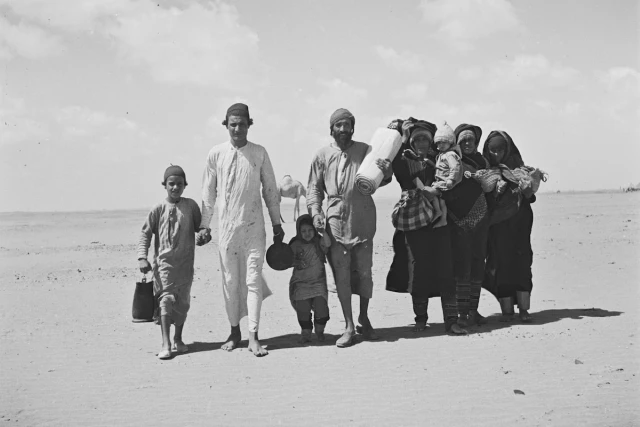
Israel on Sunday marked the annual Day of Departure and Expulsion of Jews from Arab countries and Iran, commemorating the uprooting of ancient Jewish communities after 1948.
Close to one million Jews from pre-Islamic-era communities were expelled, from Morocco in the west to Iran in the east, following the rebirth of the Jewish state in May 1948. Some 850,000 Jews fled antisemitic pogroms or were expelled from Arab countries, while an additional 100,000 Jews fled Iran.
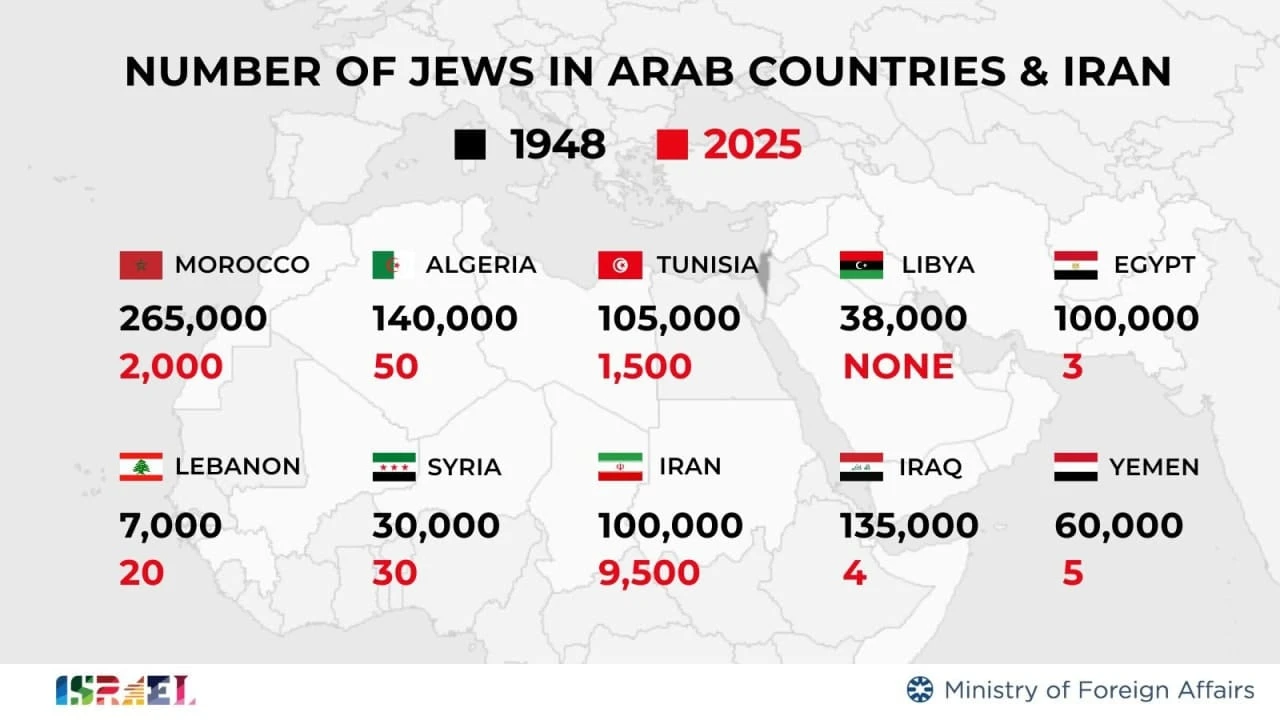
According to estimates by the Israeli Foreign Ministry, around 265,000 Jews lived in Morocco in 1948, 140,000 in Algeria, 105,000 in Tunisia, 38,000 in Libya and 100,000 in Egypt. In the broader Middle East, there were some 135,000 Jews in Iraq, 60,000 in Yemen, 30,000 in Syria and 7,000 in Lebanon.
The vast majority of Jews from North Africa and the Middle East relocated primarily to the nascent Jewish state, as well as to France, the United Kingdom, Italy and the United States.
Today, fewer than 10,000 Jews remain in the entire Arab world, following what amounted to a de facto ethnic cleansing and the mass seizure of Jewish property, valued in the billions of dollars.
Israel designated November 30, the day after the historic UN Partition Plan vote, as the annual day to mark the expulsion of Middle Eastern Jews.
“It is not for nothing that this day is marked on the day after November 29. The Arab countries, which never accepted the UN declaration on the establishment of a Jewish state, compelled the Jews living in their territories to leave their homes while leaving their assets behind,” Israeli Prime Minister Benjamin Netanyahu said.
“In several instances, the deportations were accompanied by pogroms and violence against Jews. We have acted—and will continue to act—so that they and their claims are not forgotten,” he added.
The Muslim Arab world overwhelmingly rejected the UN partition plan to divide the British Mandate of Palestine into separate Jewish and Arab states. The Jewish leadership accepted the plan despite reservations, particularly the exclusion of Jerusalem’s Jewish-majority areas from the proposed Jewish state.
Anti-Jewish pogroms erupted across the Arab and Muslim world following the November 29, 1947 vote.
In Yemen, for example, 82 Jews were murdered during the Aden Pogrom (November 30–December 2, 1947). In Aleppo, Syria, hundreds of Jewish homes were burned, and ancient synagogues and Torah scrolls were destroyed by mobs.
Omri Schwartz described the expulsion of his grandparents from Iraq.
“My grandparents, along with the entire Jewish community of Iraq, were expelled after 2,000 years of presence. After Israel’s victory in 1948, the population took its revenge against the Jews of the Arab world, their neighbors. The Jews had to flee and, in the vast majority of cases, with nothing,” he wrote on X.
“It’s barely imaginable, but the Jews made up 20% of Baghdad; today, only four Jews remain in all of Iraq,” he noted.
While the international community has long focused on the plight of Arab refugees from the 1948 Arab–Israeli war, Jewish refugees from the Arab world and Iran have been largely ignored.
During a Human Rights Council meeting in 2017, UN Watch Director Hillel Neuer highlighted the neglected history of Middle Eastern Jewish refugees, who today represent at least half of Israel’s Jewish population.
“How many Jews live in your countries? How many Jews lived in Egypt, Iraq, Jordan, Kuwait, Lebanon, Libya, Morocco?” Neuer asked.
“Once upon a time, the Middle East was full of Jews. Algeria had 140,000 Jews. Algeria, where are your Jews? Egypt used to have 75,000 Jews. Where are your Jews? Syria had tens of thousands of Jews. Where are your Jews? Iraq had over 135,000 Jews. Where are your Jews?”
Despite the trauma of expulsion, some Middle Eastern Jews have maintained cultural ties to their countries of origin. Following the establishment of diplomatic relations between Morocco and Israel in 2020, Moroccan Jews have emerged as an important cultural bridge between the two nations.
Want to help more people find our reporting from Israel? Leave a quick Google review of our website here.
You might also like to read this: