Israel doesn’t need US approval to defend itself, says new US ambassador to Lebanon
US ups rhetorical pressure on Lebanon to confront Hezbollah



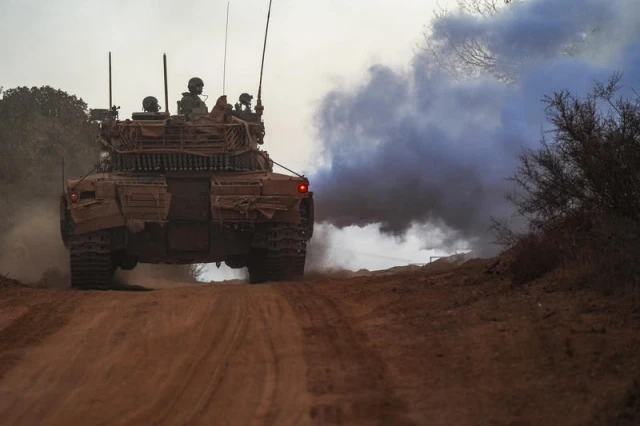
The United States’ new ambassador to Lebanon, Michel Issa, told the Israeli newspaper Haaretz on Thursday that Israel “does not require the permission of the United States” to defend itself.
“Israel assesses its own security needs and will take whatever measures it deems necessary to protect its citizens,” he continued.
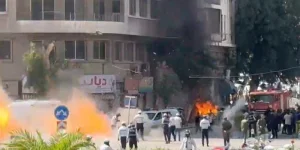
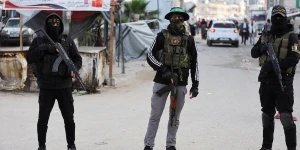
The Lebanese government, which continues to struggle in its efforts to disarm the terror group, has strongly criticized Israel’s recently escalating strikes in the country, including the elimination of Hezbollah’s military chief, Haytham Tabatabai, last week.
Issa noted that the Trump administration is in constant contact with the Lebanese government and is “strongly urging them to implement their own historic decision to disarm Hezbollah,” adding that U.S. commitment to this decision is “essential for restoring the authority of the Lebanese state and safeguarding the country's future.”
“Disarming Hezbollah and other terrorist organizations in Lebanon, as well as ending Iran's proxy activities more broadly, is a key step to ensuring peace in Lebanon and across the region,” Issa said.
The Lebanese-born former banker took up his post as special envoy for Lebanon and Syria two weeks ago, replacing Tom Barrack, the U.S. ambassador to Turkey.
Morgan Ortagus has reportedly also returned to a significant role on the Lebanese file after serving in the U.S. Mission to the United Nations for several months, and is set to visit Lebanon this week.
According to the Lebanese newspaper Al-Akhbar, Ortagus is expected to push the Lebanese government to escalate its operations against the terror group, including carrying out home searches instead of raids on unmanned weapons caches, as the Lebanese military has reportedly been doing so far.
Meanwhile, Lebanese Prime Minister Nawaf Salam reported on the progress of the disarmament drive on the Lebanese television channel Al-Jadeed.
Asked whether the terror group is cooperating, Salam responded that the real test will come in the plan’s advanced stages, after the Lebanese army finishes its deployment south of the Litani River.
As part of the ceasefire agreement, the group agreed to withdraw from southern Lebanon and allow the Lebanese army to increase its presence there, but has made no promises regarding the rest of the country. Its strategic assets are hidden mainly in the capital, Beirut, and in the northern Bekaa Valley.
However, Salam claimed to have received agreement from Hezbollah’s members of parliament to allow the state to establish its monopoly on arms throughout the country, and to leave the decision on war and peace solely at the discretion of the government.
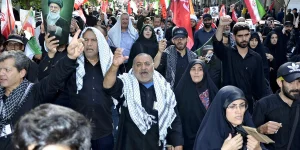
Meanwhile, Hezbollah officials continue to accuse the U.S. and Israel of trying to push Lebanon “to completely surrender to Israel’s conditions.”
Hezbollah’s parliament member Ali Fayyad said in a speech that the U.S. and Israel “are placing the Lebanese state before two options: either surrender, or that Lebanon yields to the international and Israeli pressures and clashes with Hezbollah’s military wing.”
“Lebanon will not surrender, and there will be no clash between the Lebanese Army and the military wing of Hezbollah,” said Fayyad.
Commenting on recent developments in Lebanon, Col. (res.) Dr. Jacques Neriah, a researcher at the Jerusalem Center for Public Affairs, warned that the American warnings would not change the situation.
“They told the Lebanese – if you don’t do the job, Israel has the power to do it. But despite our daily strikes, Hezbollah has rebuilt its strength. The units have recovered, the factories for producing missiles and UAVs have reopened, and weapons are flowing in from Syria,” said Neriah.
Hezbollah “decides – no negotiations with Israel, no touching its weapons, no change to the electoral rules, and don’t touch its bank. That’s the situation,” he added.
“The illusion that the Lebanese Army would act has remained nothing more than an illusion. Even the army commander, Heikal, meets regularly with Hezbollah’s strongman. The cooperation there is very deep.”
Neriah concluded, “We are not in a campaign against Hezbollah – we are in a campaign against Iran. It is building the chokehold around Israel, rebuilding capabilities, and preparing itself for the next round.”
You might also like to read this: