Turkey, Egypt, Oman & Pakistan work to convince Tehran to restore talks with US as regime continues uncompromising stance
Regime shows no signs of readiness for talks, continues to threaten neighbors




Senior officials from Turkey, Egypt, Oman and Pakistan have tried unsuccessfully to convince the Iranian regime to restore a dialogue with the Trump administration, according to The Jerusalem Post.
This is meant as a first step toward reaching a ceasefire; however, statements by Iranian officials recently have made clear the regime has no intention of making any concessions and, instead, has continued to threaten neighboring countries.
A source told the Post that Iran has flatly refused to return to the negotiating table. Iran’s President Masoud Pezeshkian, who is seen as a moderate within the regime and is said to have been stripped of most responsibilities amid the war, wrote on 𝕏 that the regime has several preconditions for any agreement.
Following a phone call with Russian President Vladimir Putin, Pezeshkian said that these include the “recognition of Iran’s legitimate rights, payment of compensation, and significant international guarantees against future aggression.”
Parliament Speaker Mohammed-Bagher Ghalibaf, a former senior IRGC officer who has reportedly assumed a key role in the regime over the past weeks, continued to threaten Iran’s neighbors, particularly the UAE, after media reports suggested the emirate could exploit the war to capture disputed islands in the Gulf.
“Homeland or Death! Any aggression against the soil of the Iranian islands will shatter all restraint. We will abandon all restraint and make the Persian Gulf run with the blood of invaders. The blood of American soldiers is Trump's personal responsibility,” Ghalibaf wrote on 𝕏.
Iran’s parliament speaker warned on Thursday that Tehran would abandon all restraint if its islands were attacked.
— Iran International English (@IranIntl_En) March 12, 2026
“Any aggression against soil of Iranian islands will shatter all restraint. We will abandon all restraint and make the Persian Gulf run with the blood of invaders,”… pic.twitter.com/mQ2kSZh3M2
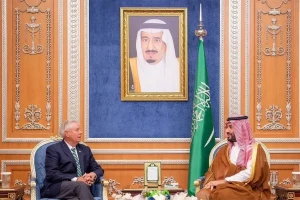
Badr al-Busaidi, Oman's foreign minister who had led mediation efforts before the war, told newspaper editors in the sultanate that he estimates the war will end soon but that there is still a need to prepare for further escalation.
He also claimed that the U.S. launched the war in order to renew momentum toward normalization with Israel and to weaken support for a Palestinian state.
Al-Busaidi also repeated his claims that the talks had been at an advanced stage when U.S. President Donald Trump decided to launch the war, including the claim that Iran had agreed to concede the right to enriched nuclear material, an account that has been strongly contradicted by U.S. officials.
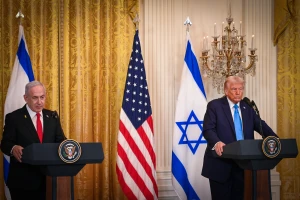
U.S. Special Envoy Steve Witkoff said Tuesday that Iran had begun the talks by asserting an “inalienable right to enrich” nuclear fuel. He told Fox News that the U.S. even offered help to convert the regime’s nuclear program into a civil program, and, “as a little extra, we suggested to them that we would provide (nuclear) fuel to them for free for a long period of time.”
🇺🇸🇮🇷Trump's special envoy Steve Witkoff revealed in a Fox News interview that the US destroyed Iran's three main nuclear enrichment and conversion centers, but Iranian negotiators refused to admit it during talks.pic.twitter.com/a3VtT3HHH4 https://t.co/9KiyFLA6b3
— Core (SatoshiPlus) #BTC, #ETH & #BNB Believers (@corechaincrypto) March 11, 2026
But Iranian representatives viewed this “an assault on their dignity,” Witkoff said, noting that he saw Iran’s stance in the talks as a “subterfuge” to obscure their path toward a nuclear weapon.
“It was very, very clear to us that with that amount of weapons-grade material, that they had every intention of seeking a weapon. It would not be logical to us to think anything else,” he added.
Iran’s Foreign Ministry spokesman Esmail Baghaei vowed on Thursday not to accept any proposed negotiations “while at the same time we face war crimes,” Baghaei was cited as saying by the state news agency IRNA.
He repeated the claim that talks had been close to an agreement before the war, “but the U.S. and Israel carried out military attacks while negotiations were underway.”
“We were in the middle of negotiations and they committed this crime,” he added.
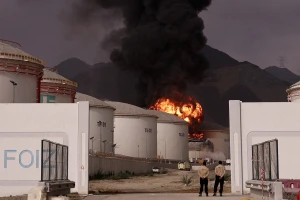
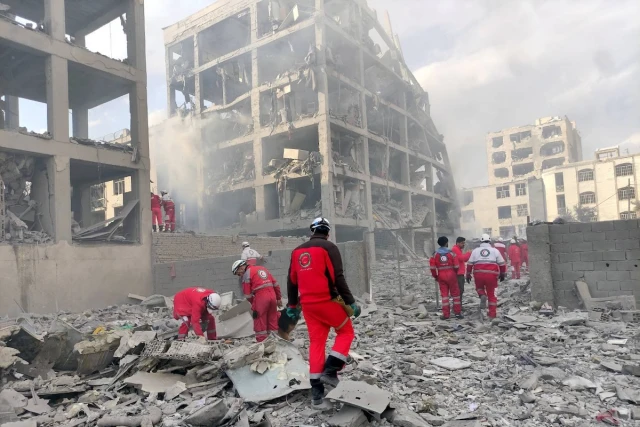
Meanwhile, after almost two weeks of intense U.S. and Israeli bombardment and the advancing destruction of all parts of its military, the Iranian regime has shown no outward signs of collapse.
Reuters cited U.S. intelligence assessments on Wednesday that show the leadership is largely intact, despite losing dozens of officials, and that a “multitude” of intelligence reports consistently showed “that the regime is not in danger” of collapse and “retains control of the Iranian public.”
Dr. Raz Zimmt, head of the Iran and the Shiite Axis Program at the Israeli Institute for National Security Studies (INSS), confirmed this view in an interview with 103FM radio on Wednesday.
“Ultimately, it is not really possible to topple the regime through airstrikes,” he cautioned, adding that the extent of the IRGC’s ability to control the population is difficult to assess.
You might also like to read this: