Lebanon blames Israel for escalating tensions after IDF strikes Hezbollah & Hamas sites in Lebanon
Lebanon set to declare army deployment, Hezbollah disarmament in southern Lebanon as completed



Lebanese President Joseph Aoun accused Israel of intentionally undermining efforts to defuse tensions after the Israeli military launched a series of strikes against Hezbollah and Hamas targets in the country.
In a statement on Tuesday, Aoun said, “Israel's continued attacks aim to thwart all efforts made locally, regionally and internationally to stop the ongoing Israeli escalation, despite the response shown by Lebanon to these efforts at various levels.”
The Israel Defense Forces said on Monday that it had “conducted precise strikes against terror infrastructure sites” not just in southern Lebanon but as deep as the city of Sidon and in the eastern Bekaa Valley.
Ahead of the strikes, the IDF Arabic Spokesman Col. Avichay Adraee called on residents of the villages of Kfar Hatta and Annan in south Lebanon, and the eastern villages of al-Manara and Ain al-Tineh, to evacuate to a safe distance from the sites.
عاجل ‼️ إنذار عاجل إلى سكان لبنان وتحديدًا في القريتيْن التاليتيْن:
— افيخاي ادرعي (@AvichayAdraee) January 5, 2026
⭕️كفر حتا
⭕️ عين التينة
🔸سيهاجم جيش الدفاع على المدى الزمني القريب بنى تحتية عسكرية تابعة لحزب الله الإرهابي وذلك للتعامل مع المحاولات المحظورة التي يقوم بها لإعادة إعمار أنشطته في المنطقتيْن
🔸نحث سكان المباني… pic.twitter.com/tguJ8G4UZM
Despite claims by the Lebanese government and military that it had almost completed the dismantlement of Hezbollah’s infrastructure south of the Litani River, Israel has repeatedly highlighted attempts by the terror group to rebuild across the country, launching multiple airstrikes to thwart them.
The IDF noted that its strikes targeted “several weapon storage facilities and military structures, both above and below ground, that were used by Hezbollah,” as well as “Hamas weapons production sites in southern Lebanon, which were used for the organization’s military buildup.”
Israel also emphasized that the sites “were located within civilian areas, constituting yet another example of the terrorist organizations’ cynical use of Lebanese civilians as human shields for terrorist activity.”
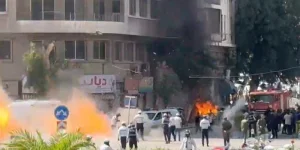
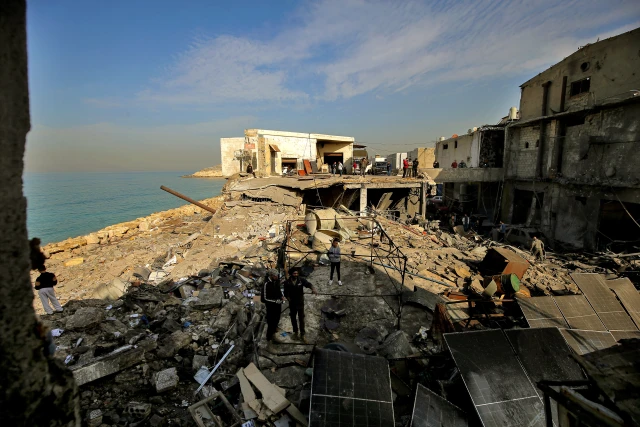
Lebanon’s state-run National News Agency (NNA) reported that the strike in al-Manara caused “the complete destruction of a house and serious damage to surrounding houses, cars and commercial establishments.” The house reportedly belonged to a Hamas leader who was killed by Israel in 2024.
The strike near the city of Sidon also reportedly “leveled” a three-story commercial building.
In his statement, Aoun said Israel’s strikes “raise many question marks regarding their timing on the eve of tomorrow's meeting of the ‘Mechanism' Committee, which is supposed to work to stop hostile actions and investigate practical measures to restore security and stability to the south, including the withdrawal of Israeli forces to the southern borders, the release of Lebanese prisoners, and the completion of the deployment of the Lebanese army in implementation of Security Council Resolution 1701.”
He added that the Israeli strikes came despite “the responsiveness that Lebanon has shown to these efforts at various levels, and the measures adopted by the Lebanese government to extend its authority over the area south of the Litani, which the Lebanese army has implemented with professionalism, commitment and precision.”
The U.S.-backed ceasefire monitoring committee was set to convene on Wednesday to continue talks, which the U.S. hopes will lead to a permanent security arrangement between Lebanon and Israel.
Lebanese media reported that the meeting would focus on discussions about an expected report by the Lebanese military regarding its efforts to disarm Hezbollah.
Lebanese political sources told the Lebanese newspaper Nidaa Al-Watan that the U.S. and Israel are pressing the country to announce a deadline for the disarmament plan.
Later this week, the Lebanese cabinet is set to discuss the Lebanese military’s deployment efforts and is expected to announce that its deployment south of the Litani, which is the first stage of its plan to disarm Hezbollah, has been completed.
Israel has consistently stated that these efforts have not been sufficient, as the terror group’s efforts to rebuild have outpaced the Lebanese military’s deployment, along with Israel’s airstrikes.
The Lebanese newspaper Al-Joumhouria reported that international efforts to prevent a new escalation between Israel and Hezbollah are continuing, adding that one of the goals is “to pressure Israel to stop its strikes and to adhere to the ceasefire agreement.”
Meanwhile, on Tuesday, the IDF announced that another airstrike had killed two Hezbollah operatives in the area of Khirbet Selem in southern Lebanon.
“The two terrorists took part in attempts to reestablish Hezbollah military infrastructure. One of them was an engineering terrorist in a structure that facilitated the organization’s reestablishment efforts. The terrorists’ actions constituted a blatant violation of the ceasefire understandings between Israel and Lebanon,” the Israeli military stated.
Iran’s foreign minister, Abbas Araghchi, is expected to arrive in Lebanon on Wednesday, where he will meet with his Lebanese counterpart, Youssef Rajji, Parliament Speaker Nabih Berri, and Lebanese President Aoun.
According to Nidaa Al-Watan, Araghchi is also expected to meet with Hezbollah’s leadership and convey messages focused on options for escalation or de-escalation.
You might also like to read this: