









Israel’s first civilian-level meeting with Lebanon held ‘in a good atmosphere’, says PM Netanyahu
Lebanon denies that talks could lead to broader agreement or 'normalization'
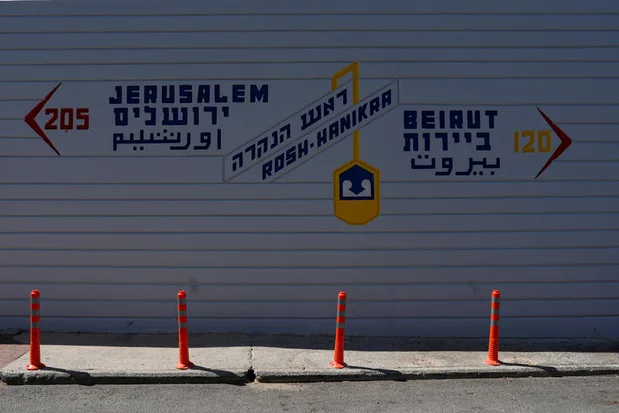
After numerous reports that an escalation could be imminent, Prime Minister Benjamin Netanyahu said on Wednesday that a meeting between civilian representatives of the Israeli and Lebanese governments was held in a “good atmosphere” and that both sides agreed to meet again.
The first civilian-level meeting between the countries in over 40 years came after heavy U.S. pressure and was attended by U.S. envoy Morgan Ortagus, as well as representatives of France and the UN who are part of the ceasefire monitoring mechanism.
In the previous weeks, numerous reports had suggested that Israel was preparing for a new escalation amid the rapid rearmament of Hezbollah, despite ostensible efforts by the Lebanese military to disarm the terror group.
However, more recent reports indicate the U.S. is applying strong pressure on Israel to avoid escalations on several fronts, and President Donald Trump is expected to highlight this message during a visit from Netanyahu set for later this month.
An Israeli official emphasized that “there is no decision to definitely move toward escalation,” explaining that “in the decision-making process, the American factor is significant,” according to Ynet News.
On Wednesday, an Israeli delegation including Israeli academic Dr. Uri Resnick as its civilian representative attended the meeting “in Naqoura, Lebanon, with the US President's advisor on the issue of Lebanon, Morgan Ortagus, and with relevant Lebanese civilian representatives.”
“The meeting took place in a good atmosphere; it was agreed that ideas would be formulated to advance possible economic cooperation between Israel and Lebanon,” the Prime Minister’s Office stated.
“Israel clarified that the disarmament of Hezbollah is obligatory, regardless of the advancement of economic cooperation. The sides agreed to hold a follow-up discussion.”
However, Lebanon’s Prime Minister Nawaf Salam dampened hopes for an agreement, saying that Netanyahu had exaggerated.
“Normalization will follow peace. It cannot precede it,” Salam stressed.
A Lebanese political source told the Emirati outlet The National that Netanyahu’s statement was “the first time we hear any mention of economic co-operation from their end. That is not what the Lebanese are heading towards.”
The source noted that the talks would focus on efforts to “reach a cessation of hostilities. It is not a pathway to normalization.”
An Israeli official told Ynet that the option of a military operation in Lebanon remains "on the table, and among our potential responses is an intensified operation aimed at ‘mowing the grass’—including in southern Lebanon—if Hezbollah has managed to rebuild anything.”
He added that “the terror organization hasn’t achieved much because we strike routinely,” noting a more substantial operation would depend on American approval.
The newspaper L’Orient LeJour reported that Wednesday’s meeting included a discussion about whether to include more civilian experts to find solutions to disputes over the land delimitation along the border, hydrocarbons, and other issues.
The Lebanese government’s inclusion of a civilian representative has drawn criticism, particularly by Hezbollah, as it is being seen as a tacit acknowledgement of Israel and the first step toward normalization.
Lebanese diplomatic sources said that Jerusalem demands that Beirut commit to the disarmament of Hezbollah throughout the country, and to the establishment of a timetable for this process.
Lebanon is said to demand the cessation of Israeli airstrikes, most of which target Hezbollah, and the setting of a timetable for Israel to withdraw from the five positions in Lebanese territory that the IDF continues to hold.
The Hezbollah-affiliated Al-Mayadeen outlet quoted Salam as saying that the Lebanese state would not complete the disarmament of Hezbollah "if Israel does not withdraw from the areas it still occupies."
Asked whether Lebanon would be willing to establish relations with Israel without a resolution to the Palestinian issue, Salam affirmed that “Lebanon adheres to the 2002 Arab Peace Initiative.”
This plan adopted by the Arab League in 2002 called for ending the Arab-Israeli conflict in exchange for an independent Palestinian state, a full Israeli withdrawal from Judea, Samaria and Gaza, as well as “a just and agreed-upon solution to the refugee issue.”
According to Salam, “If Lebanon and Israel adhere to this initiative, normalization will come—but we are still far from that.”
The U.S. embassy in Lebanon praised the inclusion of civilian representatives, saying this “reflects the Mechanism’s commitment to facilitating political and military discussions with the aim of achieving security, stability, and a durable peace for all communities affected by the conflict.”
It added that this was “an important step toward ensuring that the work of the Pentalateral (5 member monitoring committee) is anchored in lasting civilian, as well as, military dialogue.”
The ceasefire monitoring committee is composed of military representatives from Lebanon, Israel, the United States, France and the United Nations Interim Force in Lebanon (UNIFIL).
Popular article:
interview Easter message of resurrection hope amid war at Jerusalem's Garden Tomb

biblical commentary Let my people go: a Passover message for today

4 IDF soldiers killed, 2 wounded in fighting in southern Lebanon, as Israel eliminates dozens of Hezbollah terrorists

Receive latest news & updates
A message from All Israel News
Help us educate Christians on a daily basis about what is happening in Israel & the Middle East and why it matters.
For as little as $10, you can support ALL ISRAEL NEWS, a non-profit media organization that is supported by readers like you.
Latest articles:

More than 1,300 antisemitic posts blame Israel, Jews for French riots – report

Thailand turns to Israeli anti-drone technology to counter growing battlefield threat
Israeli fighter jets flew to Iranian border in ‘power projection,’ deterrence exercise ahead of elections next week
Israel targets nuclear fusion leadership as AI drives soaring energy demand

Israel's Sheba Medical Center climbs to 6th in global smart-hospital rankings