US pressures Israel on Syria, Gaza & Lebanon ahead of PM Netanyahu’s next White House visit
Netanyahu set to travel to Washington after Christmas



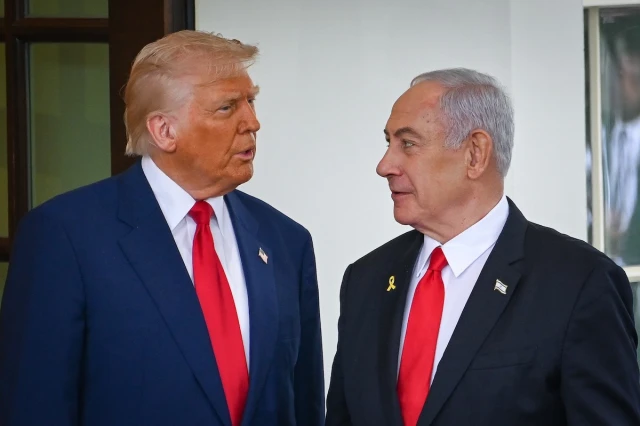
After receiving an invitation from U.S. President Donald Trump during a phone call on Monday, Israel’s Prime Minister Benjamin Netanyahu is set to visit the United States after Christmas, Israeli media reported on Wednesday.
Netanyahu’s office had stated that they had “stressed the importance and obligation of disarming Hamas and demilitarizing the Gaza Strip, and discussed expanding the peace agreements,” and that Trump invited Netanyahu “to a meeting at the White House in the near future.”
This would be fifth time Netanyahu visits the White House since Trump began his second term this January.
However, despite continuing warm relations, the meetings could be more tense this time around as the U.S. has been pressuring Israel in several different arenas these past days.
According to Israel’s Channel 12, the Syrian issue will be the main topic of discussion. There has been some discontent in the U.S. that a security arrangement has still not been reached and reportedly criticized Israel behind the scenes for its recent airstrikes in southern Syria.
Israeli strikes killed at least 13 Syrians when terrorists, some of them reportedly connected to the Syrian intelligence service, ambushed an Israeli raid deep within Syrian territory last week, wounding six IDF soldiers.
Soon afterwards, Trump wrote on Truth Social that “it is very important that Israel maintain a strong and true dialogue with Syria, and that nothing takes place that will interfere with Syria’s evolution into a prosperous State,” while praising Syrian President Ahmed al-Sharaa for his efforts “to make sure good things happen.”
The call between the two leaders followed shortly afterwards, with Trump telling Netanyahu to “take it easy” with military operations in Syria and “not provoke” the Syrians, according to the news outlet Axios.
In a statement after the call, Netanyahu said it was still “possible to reach an agreement” but showed no willingness to compromise on Israel’s security demands.
A senior U.S. official later told Channel 12 that Syria “doesn’t want problems with Israel. This isn’t Lebanon,” adding that “Bibi [Netanyahu] is seeing ghosts everywhere.”
“We are trying to tell Bibi he has to stop this, because if it continues, he will self-destruct, miss a huge diplomatic opportunity and turn the new Syrian government into an enemy,” he added.
In general, the U.S. is reportedly concerned that Israeli actions are endangering diplomatic achievements across several arenas, including Syria, Lebanon, Gaza, and Iran, and sees strategic linkages between quiet on these fronts and broader peace across the region.
In the Gaza Strip, the ceasefire plan remains bogged down in its first phase, as Hamas still holds the bodies of two hostages.
Here, the U.S. is reportedly unhappy with Israel’s rejection of a deal that would have allowed the around 100 Hamas terrorists who were trapped on the Israeli side of the ceasefire line to surrender and leave. By now, most of them have been killed by Israeli troops in the area.
According to Israel Hayom, the Iranian regime, in order to keep the tensions boiling, is egging Hamas on to continue its resistance to handing over its weapons.
The newspaper said that Israel and some U.S. officials estimate that Tehran remains the primary instigator of instability across the region, making its toppling necessary for long-term peace.
A senior diplomatic official told the outlet, “As long as the Iranian regime holds on, it will do everything to prevent a comprehensive arrangement in the Middle East, the expansion of the Abraham Accords to normalization, and the Mega Deal.”
In Lebanon, the U.S. pressured Beirut and Jerusalem to agree, for the first time, to send civilian representatives to a meeting of the ceasefire monitoring committee on Wednesday, as the Trump administration continues trying to push the Lebanese government to disarm Hezbollah.
Another issue that will be on the agenda is normalization with Saudi Arabia.
In this case, recent reports indicated that American pressure is more on the Saudis, as Trump was reportedly angry at Crown Prince Mohammed bin Salman's insistence on conditioning an agreement on ending the war in Gaza and a personal commitment from Netanyahu to a framework for a Palestinian state.
You might also like to read this: