Israel air pollution linked to 5,500 premature deaths, NIS 34 billion in costs – report






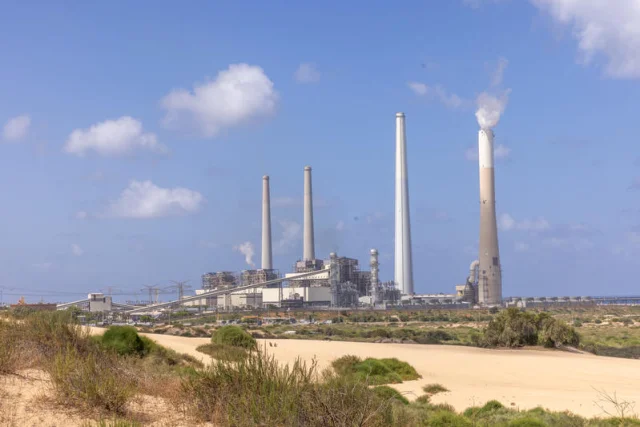
Israel’s air pollution contributed to an estimated 5,500 premature deaths and cost the economy roughly NIS 34 billion ($11.3 billion) in 2025, according to a new report published on Tuesday by the Environmental Protection Ministry.
The report found that concentrations of several major pollutants – including nitrogen oxides, sulfur oxides and particulate matter – were lower in 2025 than in the previous year. However, officials warned that Israelis continue to be exposed to pollutants from a range of sources, including vehicle exhaust, electricity generation, waste, industry and large-scale livestock farming.
The report also highlighted Israel’s continued reliance on fossil fuels for electricity production. While the country has sharply reduced its coal use in recent years, it still produces just 16.7% of its electricity from renewable sources such as solar and wind, leaving roughly 83% dependent on fossil fuels, primarily natural gas.
The pollutants identified in the report include methane, which is released through several processes, including the production and use of natural gas and the decomposition of organic waste in landfills.
At the same time, the report noted several positive developments. Concentrations of nitrogen and sulfur oxides have declined significantly in recent years, which the ministry attributed largely to the steep reduction in coal use for electricity production.
Concentrations of materials suspected or known to be carcinogenic also fell by 36% between 2024 and 2025.
The report attributed some of the year-to-year improvement in air quality to the lower number of wildfires in Israel in 2025. Officials noted that fewer rockets were fired into the country and that those that landed in wooded areas contributed to fewer fires and, consequently, lower levels of some pollutants.
Despite these improvements, the ministry said Israel continues to face significant challenges in reducing air pollution and greenhouse gas emissions.
The data in the report came primarily from two sources. The first was information submitted by the management of 570 large factories operating in Israel in sectors including energy, chemicals, sewage treatment and livestock.
The second was the National Air Emissions Inventory, which combines data from various sources to provide a broader picture of air emissions and pollution levels across the country.
At a press conference on Tuesday to present the report, ministry officials addressed several specific sources of pollution, including the large volumes of methane released when organic waste is buried in landfills.
Elad Amichai, the Environmental Protection Ministry’s head of waste, said plans are underway to separate organic waste before it reaches landfills. Those plans include the construction of Israel’s first waste-to-energy plant at Neot Hovav in the Negev.
The plant is scheduled to become operational by 2030, he said. In the meantime, the first two industrial plants for recycling organic waste are expected to open next year—one at the Shafdan wastewater treatment plant just south of Tel Aviv and another at Daya in the Negev. A third facility is scheduled to begin construction later this year at Ein Hashlosha, also in the Negev.
Amichai also said several new facilities are operating across the country to increase the amount of household waste being recycled, including construction and demolition waste. Those efforts are expected to expand.
Such measures, he added, could also help reduce illegal waste burning, which is common in Judea and Samaria. Smoke from these fires often drifts into Israeli communities, contributing to air pollution and health problems for residents.
During the press conference, Iris Shalit, the ministry’s senior deputy director general for supervision and enforcement, also addressed illegal waste burning. She said a recently passed Knesset bill will allow for expanded enforcement of laws against the burning of waste.
You might also like to read this: