Israel’s water supply under stress as turbidity shuts down desalination plants





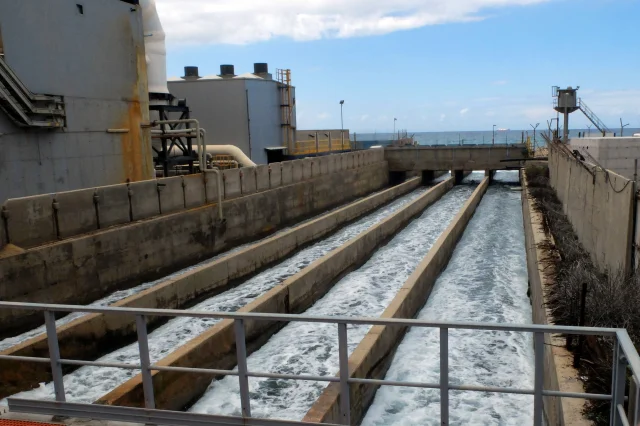
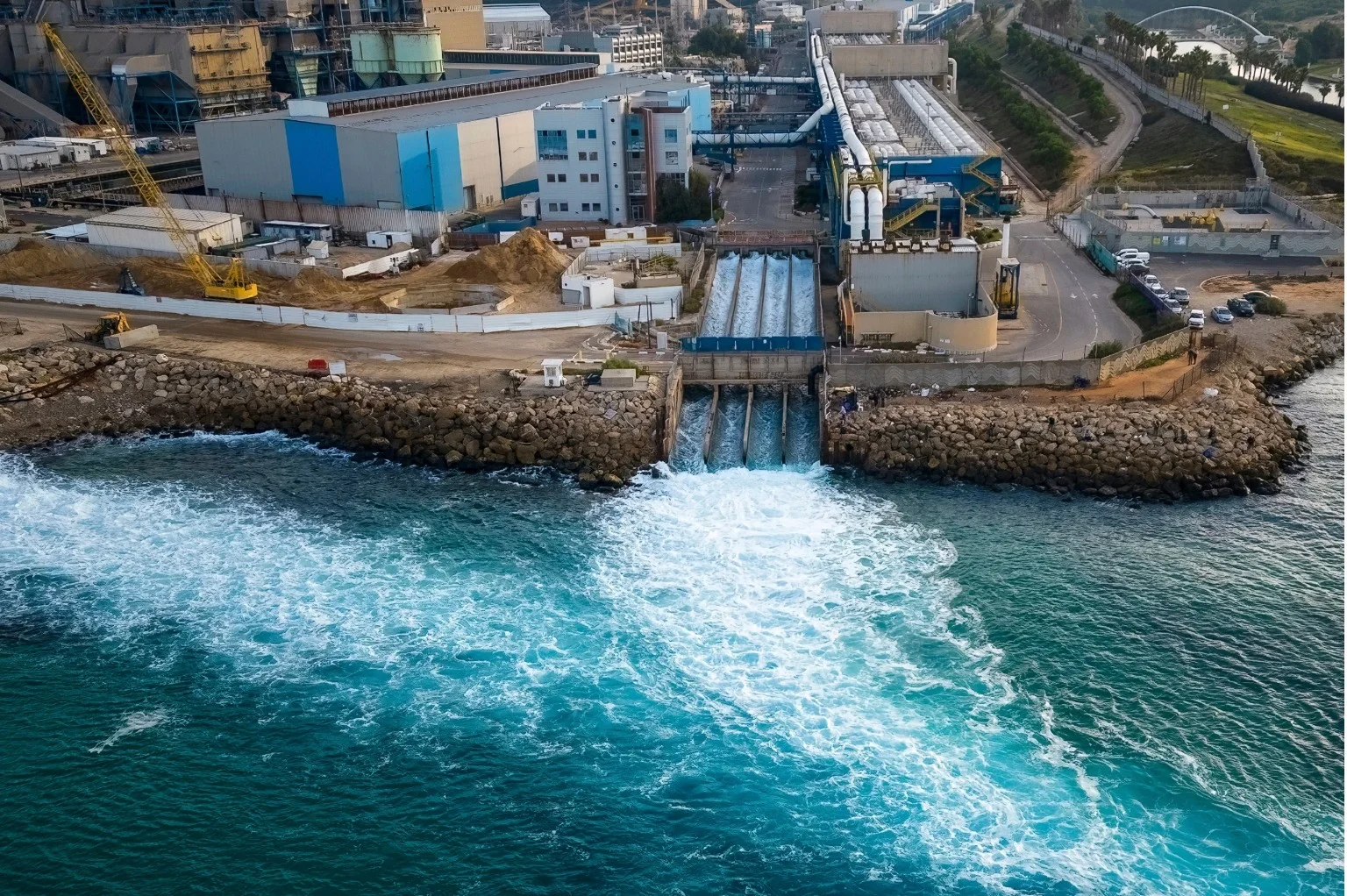
On Saturday evening, some of Israel’s desalination plants began to be shut down and by Sunday morning, five of the six were offline. Within hours, the Gihon national water carrier was warning residents in several communities to conserve water.
By Monday morning, water supplies to farmers in southern Israel had been severely curtailed, while water pressure was falling in several Jerusalem neighborhoods. Mobile water distribution points were set up so residents could access drinking water, while water-intensive activities, such as lawn and garden watering, were discouraged.
On Monday evening, reports surfaced that the Sorek A and Sorek B desalination plants had been partially reactivated and reservoirs in Jerusalem were expected to be refilled by 10 p.m., but as of Tuesday morning, the large desalination plant in Hadera and the much smaller desalination plant in Eilat were the only ones operating, while the facilities in Ashkelon, Ashdod, Palmachim, Sorek A and Sorek B were all offline.
The cause of the shutdown, according to the Gihon National Water Company, is “extreme turbidity” in the seawater off Israel’s coast. Researchers at the Israel Oceanographic and Limnological Research Center have speculated that a microalgal bloom originating near Egypt’s Nile Delta is responsible for the water's condition.
Algal blooms are a regular occurrence in the shallow waters of the Nile River Delta, and ocean currents carry water from this region northward, making it likely that this is what has occurred.
“It would not be surprising if what bloomed in the Nile Delta area also reached southern Israel,” said Alon Zask, CEO of Israel Oceanographic and Limnological Research.
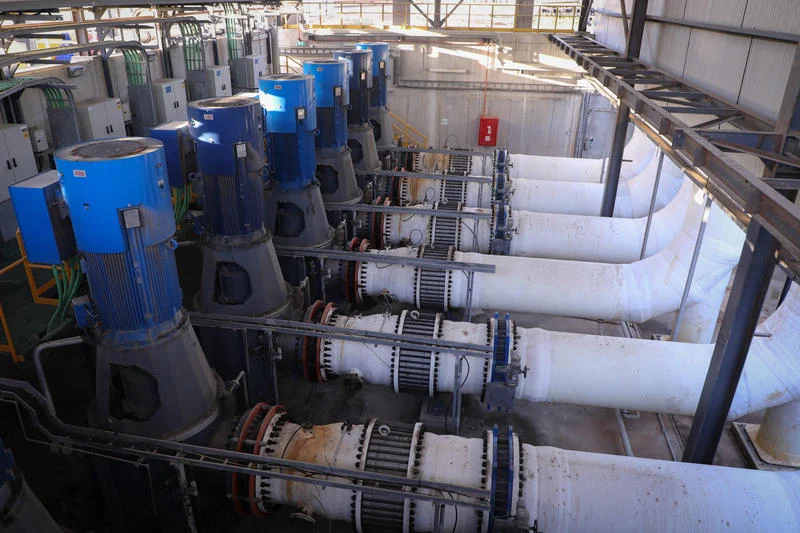
The algae are dangerous for human consumption, but filtering them out of the water is difficult due to their extremely small size.
However, with time, the algae will die and the organic matter that makes up their bodies will decompose and be dispersed in the water. This process is aided by sunlight and the salinity of ocean water, as well as the same ocean currents that brought the algae into the coastal waters of Israel in the first place.
However, researchers warn that this process takes time and it is unclear as of Tuesday morning when the desalination plants will return to full capacity.
The Gihon National Water Company continues to advise residents of several cities to use water judiciously, and municipalities across the country have temporarily suspended watering of public gardens.
This incident, which the Water Authority insisted was not the result of a cyberattack, also comes just a few days after Water Authority Director Yehezkel "Hezi" Lifshitz publicly warned that “It is not something we should take for granted that, at the end of the day, we have water coming out of the taps. We call the desalination plants the Iron Dome of the water sector. They are what make it possible for us to actually have water in the taps.”
According to its website, the Israel Oceanographic and Limnological Research Center is “engaged in research, monitoring, and collecting environmental data in the Mediterranean Sea and in studying natural and unnatural processes. The research topics at the institute include subjects such as: flow and mixing processes; oceanographic models; material cycles; sediment transportation and geological processes; the structure of the seabed; physiology, immunology, and ecology of marine organisms and population dynamics; the biological diversity in offshore waters and deep seas; effects of human activity on the open sea and coastal environment.”
Please take a moment to join believers worldwide praying for Israel right now. Add your light to the live prayer map—and show the world one more watchman praying for the peace of Jerusalem.

You might also like to read this: