Israel’s water demand outpaces desalination capacity





Following two straight years of below-average precipitation, Israel is facing renewed pressure on its water supplies, with demand from a growing population increasingly outpacing the country’s ability to produce fresh water through desalination.
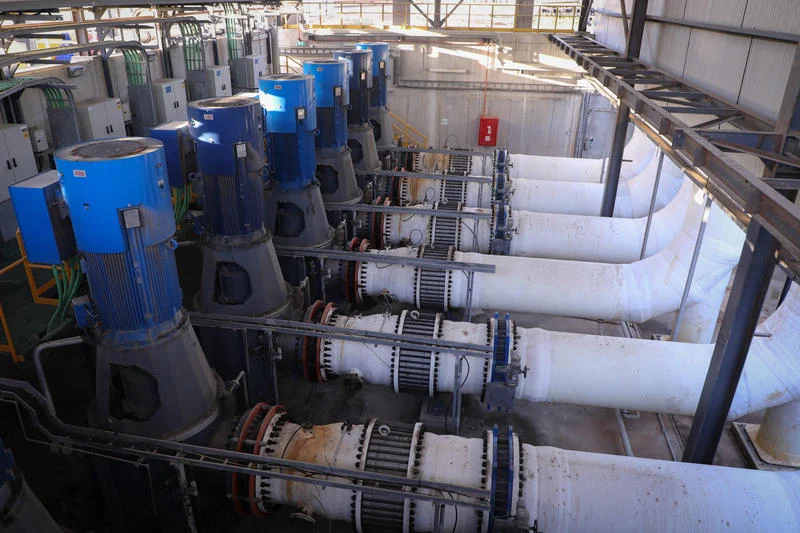
“It is not something we should take for granted that, at the end of the day, we have water coming out of the taps,” said Water Authority Director Yehezkel "Hezi" Lifshitz. “We call the desalination plants the Iron Dome of the water sector. They are what make it possible for us to actually have water in the taps.”
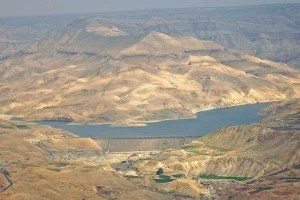
Israel is also obligated to supply 50 million cubic meters of water to Jordan annually as part of the 1994 Peace Accords, and the stability of the Hashemite Kingdom is considered a major strategic objective by Israel’s security establishment.
However, an expanding population, combined with changes in temperatures and precipitation patterns, means that Israel must continue to both expand its water supply and encourage conservation.
“We are in a period of climate change,” Lifshitz said. “This period is characterized by rising temperatures and increasing rainfall intensity, meaning a larger share of the rain falls over shorter periods. Over time, these trends reduce the natural replenishment of water sources. At the same time, there will still be individual years in the future with very high rainfall.”
The coming winter is expected to be among the wetter years, with projections calling for precipitation to reach between 100% and 120% of seasonal averages from October through early January.
There has already been some rain in Jerusalem and other parts of the country earlier this month, and additional showers are expected in the coming days.
But even a wetter winter will not resolve Israel’s longer-term water needs, which are expected to be met primarily through desalination.
Several plants intended to supply desalinated water to Israeli consumers are already behind schedule due to complications in recent years, including the COVID-19 pandemic and the Swords of Iron War, which began with Hamas’ Oct. 7, 2023, attack on Israel.
The war has also disrupted operations at desalination plants, as many workers have been mobilized into IDF reserves for long periods. Foreign specialists who normally travel to Israel to maintain the machinery have also been reluctant to travel during wartime.
“If the desalination plants were working at full production capacity, the situation would be much better,” Lifshitz said.
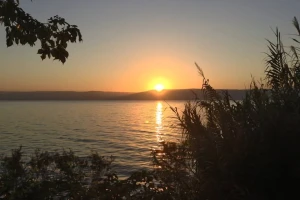
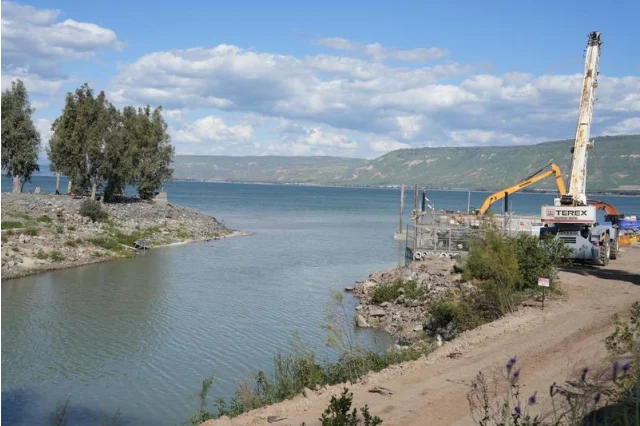
“In 2024, we pumped more than we had planned from the Sea of Galilee because of the shortfall in desalination capacity. In 2025 and again this year, we are pumping the absolute minimum, around 30 million cubic meters. This winter was better than we expected, but in the north it was worse than we hoped, and the Sea of Galilee is now on a downward trend,” he continued.
The effects are already being felt by farmers in the Arava region of southern Israel, where date trees are being damaged by water shortages.
A planned expansion of the Sabkha desalination plant near Eilat would allow it to produce up to 40 million cubic meters of fresh water a year, but the expansion is still several years away at best, according to Lifshitz.
“We are going to double desalination capacity within seven or eight years,” he said. “We want to connect all the regions that are currently disconnected.”
In the meantime, the Water Authority is also planning a public awareness campaign to encourage Israelis to use less water in their daily lives.
“This is not a fear campaign, but an awareness campaign,” said Lifshitz. “Like telling people not to pick wildflowers. Don’t leave the tap running.”
He added that Israeli households consume, on average, around 100 cubic meters of water a year.
“If we managed to save 5% a year, that would be equivalent to half a desalination plant. The Israeli consumer is not wasteful, but consumption can be made more efficient. Water-saving habits have eroded somewhat.”
Support our independent, on-the-ground reporting from Israel. Become a $5/month Ally.

You might also like to read this: