








European militaries show interest in Israel's defense tech despite political tensions
Elbit showcases 'Digital Ground Army' system
Despite growing hostility toward Israel among segments of European publics and longstanding diplomatic coolness from several European governments, Europe’s military, security, and defense sectors remain highly interested in acquiring Israeli-built equipment, much of which has been tested in recent conflicts.
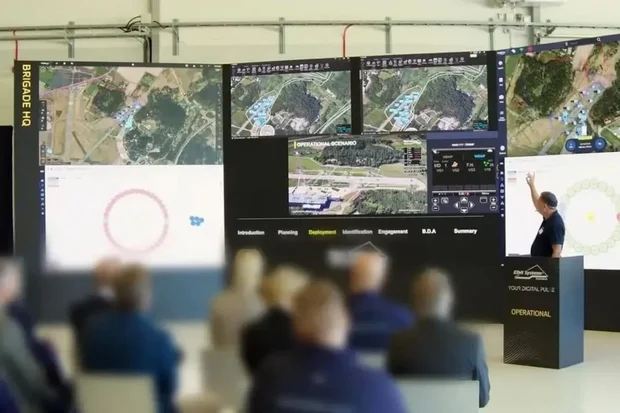
This week, representatives from several NATO militaries, as well as European defense, security, and technology companies, attended a demonstration by Elbit Systems Swedish subsidiary of its new Digital Ground Army system, also known as the IDF's "Tzayad."
The two-week live-fire demonstration was one of the largest of its kind ever held in Europe. Observing military officers reportedly expressed strong interest in the system, which has been used by the IDF for more than 20 years, giving headquarters real-time updates on field deployments across air and ground operations. The most recent upgrades bring new capabilities for combined arms teams which analysts say are particularly relevant in light of the war in Ukraine and potential future conflicts in Europe.
However, European militaries have in many cases seen reduced investment over the past 35 years since the end of the Cold War. For example, the French Army recently acknowledged that while recruitment levels are sufficient, it lacks adequate equipment to fully equip personnel.
“We have completely asymmetrical situations,” French Army Deputy Chief of Staff Gen. Patrick Justel recently told Defense News. “I see in Poland and Germany a huge budgetary and industrial effort to acquire weapons. Now, they face enormous personnel difficulties, and having a lot of weaponry without the fighters behind it, well, that remains problematic. Where we’re in the opposite situation is in terms of equipment, we’re not sufficiently equipped to handle a high-intensity conflict.”
France is not the only European country grappling with this problem.
In recent years, European militaries have stepped up efforts to strengthen their forces amid the ongoing war in Ukraine, while Israeli defense companies have secured large contracts across a range of systems, including air defense batteries, active protection systems for armored vehicles, and cyber defense tools. Elbit reported orders totaling more than $30 billion, with Israel Aircraft Industries and Rafael, the other major Israeli defense firms, also reporting substantial backlogs. Together, the companies’ order books amount to several years of projected work, alongside extensive demand for the hundreds of smaller Israeli companies that supply components and services.
Elbit’s European subsidiary has reportedly been busy as well, with the recent live-fire event increasing the pace of their activities.
"These demonstrations are a significant milestone for Elbit Systems Sweden and for the ongoing digitization process of Europe's ground forces," Elbit Systems Sweden's CEO Tobias Wennberg said. "The ability to connect a wide range of platforms, from sensors and soldiers, to vehicles and command posts, into one fast, flexible, and secure network was demonstrated here successfully."
He added, "The digital capabilities we are presenting are the result of years of accumulated experience and operational know-how gained in several worldwide programs. Elbit is well-positioned to support European and NATO customers seeking to advance modernization and turn their forces into fully digital, networked armies."
In recent years, large numbers of soldiers, police officers, and other security professionals from dozens of countries have traveled to Israel for training and briefings. The relationships formed through these programs, along with growing reliance on Israeli defense suppliers, have at times provided informal channels of cooperation even when official diplomatic ties have cooled.
Popular article:

interview Easter message of resurrection hope amid war at Jerusalem's Garden Tomb

biblical commentary Let my people go: a Passover message for today
4 IDF soldiers killed, 2 wounded in fighting in southern Lebanon, as Israel eliminates dozens of Hezbollah terrorists

Receive latest news & updates
A message from All Israel News
Help us educate Christians on a daily basis about what is happening in Israel & the Middle East and why it matters.
For as little as $10, you can support ALL ISRAEL NEWS, a non-profit media organization that is supported by readers like you.
Latest articles:

North American Jewish organizations to recruit 100 professionals to combat antisemitism

‘No need’ for pre-election Iran strike, IDF chief says as gov’t, opposition trade blame for potential escalation – report
terror attack 2 Israeli soldiers killed, 2 terrorists eliminated in Hebron shooting; IDF says much larger attack was prevented
analysis A people dwelling securely? Israel’s strategic standing, 3 years after Oct 7

Hamas on wheels: What I found in Dearborn reveals a troubling history and a battle over Israel