With Hezbollah violating ceasefire daily, PM Netanyahu acknowledges: Task is incomplete, threats remain
Lebanese President Aoun stresses talks with Israel are 'no treason', DM Katz warns he is 'gambling' country's future





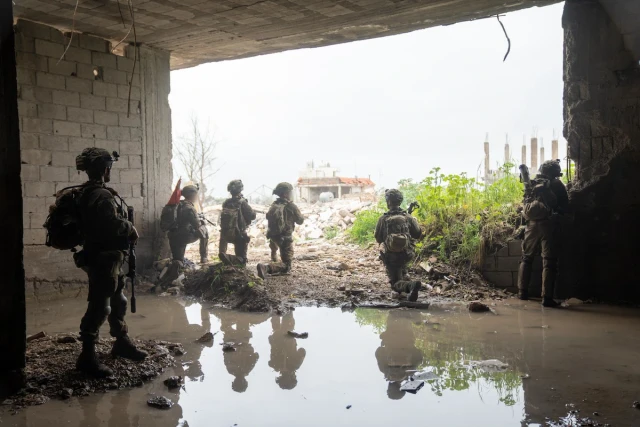
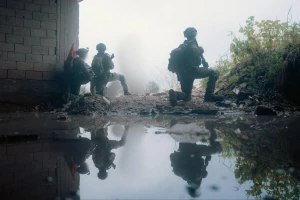
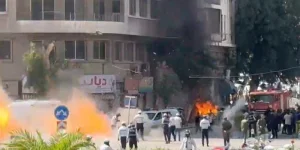
Despite daily violations of the ceasefire by Hezbollah, which continued to attack Israeli soldiers and towns on Monday, the Israeli military has been noticeably hesitant to strike back hard, amid reports that the U.S. has asked Jerusalem to hold back so as not to endanger the ceasefires in Lebanon and Iran.
Further exacerbating the situation for Israel is the fact that the Lebanese government has apparently refused to act against Hezbollah, contrary to its obligations, two Israeli officials told The Jerusalem Post on Monday.
“There have been no arrests, no attempts to prevent attacks on our soldiers, and no effort to stop the rocket fire,” one official said.
This is despite the fact that Israel agreed to the ceasefire under pressure from the U.S., hoping to advance negotiations with the government in Beirut that are aimed at disarming Hezbollah.
Lebanon’s President Joseph Aoun on Monday defended himself against domestic criticism of the direct negotiations with Israel but reiterated that his goal remains to entrench the ceasefire and a withdrawal of Israeli forces, rather than the far-reaching diplomatic agreements Israel and the U.S. plan to achieve.
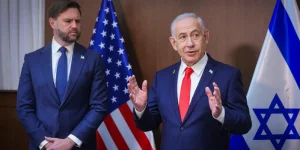
Netanyahu and U.S. President Donald Trump spoke on the phone on Sunday, Channel 12 News reported, saying that Netanyahu told Trump Israel could not continue to stand by while Hezbollah attacked its troops.
“The ceasefire is fragile. Hezbollah is doing everything it can to sabotage the talks between Israel and Lebanon. A lack of response only encourages them to become more daring, thereby further endangering both the ceasefire and the peace negotiations,” Netanyahu said, according to an informed source.
The report noted that Trump acknowledged the Israeli concerns but requested to ensure a “proportionate” response so as not to jeopardize negotiations with Iran.
Speaking to the IDF’s top brass on Monday, Netanyahu asserted that Israel retains “the freedom of action to thwart immediate and emerging threats” per the ceasefire’s terms.
Ahead of airstrikes, the IDF orders 16 villages and towns in southern Lebanon to evacuate due to Hezbollah's repeated attacks on troops amid the ceasefire.
— Emanuel (Mannie) Fabian (@manniefabian) April 28, 2026
The warning covers an area south of the Litani River that is already under a blanket evacuation warning.
"In light of the… pic.twitter.com/ytrr2qFuWV
“We are attacking, as we are doing now, both in the security zone, north of the security zone, and north of the Litani,” he said, praising the “monumental achievements” in Lebanon that include “the elimination of the rocket array that threatened the entire country, the creation of a security zone that prevents the possibility of an invasion into northern Israel and now also prevents direct anti-tank missile fire.”
However, he added: “I am not under the illusion that this will come easily, nor do I think, and I say this honestly, that the task is complete. There are still two major threats from Lebanon, from Hezbollah: The threat of 122mm rockets, and the threat of drones and UAVs.”
“This is what they have left; they have roughly 10% of the missiles they had at the start of the war. However, these still trouble the residents of the North, and I greatly appreciate their resilience and their standing steadfast,” the prime minister said.
Meanwhile, the task of disarming Hezbollah is left to Israel, as Lebanese President Aoun was busy trying to justify the mere act of negotiating with the “Zionist enemy” to his domestic critics, stressing this was “not treason.”
“Treason is the one who takes his country to war for external interests,” said Aoun. “My goal is to reach an end to the war with Israel in accordance with a ceasefire agreement, an agreement that stipulates that Israel will not carry out any offensive military action against Lebanese targets.”
Aoun reiterated he demanded from the U.S. that a ceasefire is a necessary first step before any further negotiations. “We made it clear that Israel will not carry out any attack against Lebanese targets, civilian or military, in any part of Lebanon,” he said.
“Before the negotiations began, there were those who had already leveled accusations of betrayal… wait for the negotiations to begin, and judge the results.”
This followed a meeting between Aoun, Prime Minister Nawaf Salam and Parliament Speaker and Hezbollah ally, Nabih Berri to discuss the continuation of the U.S.-mediated talks.
Hezbollah’s Secretary-General Naim Qassem reaffirmed his group’s total rejection of direct negotiations with Israel, demanding the government return to indirect talks.
The results of such negotiations “are as if they do not exist as far as we are concerned, and they do not concern us, neither closely nor distantly,” said Qassem.
He also demanded the government to “annul their March 2 decision that criminalizes Hezbollah and its people, in order to enable the pursuit of an internal dialogue that places Lebanon’s interest above all considerations.”
Israel’s Defense Minister Israel Katz said Monday that Qassem is “playing with fire” while Aoun is “gambling with Lebanon’s future.”
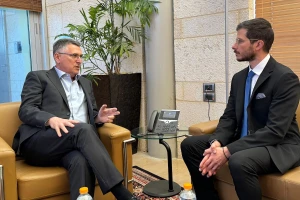
During a meeting with UN special coordinator for Lebanon, Jeanine Hennis-Plasschaert, Katz warned, “There will be no reality of a ceasefire in Lebanon alongside fire on our forces and on the communities of the Galilee.”
“If the Lebanese government continues to shelter under the shadow of the Hezbollah terror organization, fire will burn the cedars of Lebanon… The Lebanese government must ensure that Hezbollah is disarmed, first of all south of the Litani [River]… and afterward throughout all of Lebanon.”
You might also like to read this: