Wings of Dawn: The return of the Bnei Menashe to Israel

Ancient Origins and the Legend of the Lost Scroll
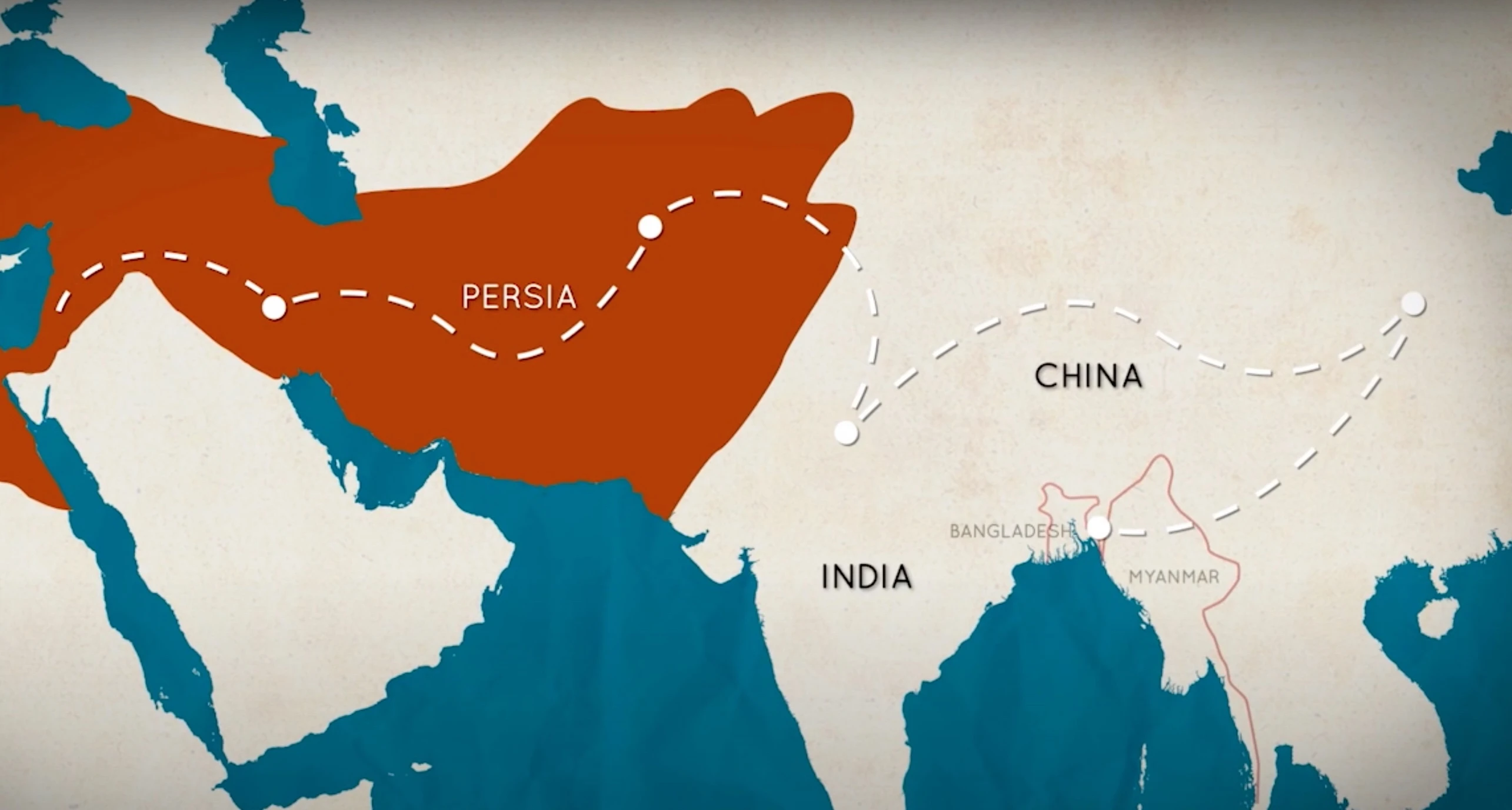
The Bnei Menashe trace their ancestry to the tribe of Manasseh, exiled from the northern Kingdom of Israel after the Assyrian conquest in 722 BCE. According to their oral tradition, the community embarked on a long eastward migration through Persia and Afghanistan, eventually settling in China. Central to their identity is the legend of a sacred Torah scroll confiscated by a Chinese emperor, an event that created a profound spiritual crisis. A prophecy emerged: one day a white man would return the scroll to them. For centuries, this promise sustained their hope and preserved fragments of their heritage, even as they lost literacy and their physical holy texts. They maintained practices strikingly resonant with biblical Judaism, including circumcision on the eighth day, dietary laws akin to kashrut, and observance of a rest day similar to the Sabbath.
Pre-Missionary Identity
Before the late nineteenth century, the Bnei Menashe—living primarily in what are now the northeastern Indian states of Manipur and Mizoram—preserved a unique religious and cultural identity through an unbroken oral tradition. Songs and chants passed down generations recounted the exodus from Egypt and other biblical stories. The Sikpui Hla, a traditional harvest song, sings of a sea splitting, enemies drowning, a pillar of cloud and fire, quail, and water from rocks—motifs that strikingly parallel the biblical Exodus narrative. These customs, maintained in isolation from any known Jewish community, later became a cornerstone of their claim to Israelite descent.
Missionary Pressure and the “Fulfilled Prophecy”
When Welsh Baptist missionary William Pettigrew arrived in 1813 bearing Christian Bibles, many Bnei Menashe initially believed the ancient prophecy of the white man returning their holy book had been fulfilled. Drawn by the shared Old Testament stories, they embraced Christianity in large numbers. However, the missionaries demanded they abandon their ancestral Jewish-like customs, labeling them pagan. This suppression culminated in mass conversion, but a segment of the community continued to observe their traditions in secret. This period of hidden practice forged a clandestine tradition, with each generation receiving sacred ancestral knowledge away from the watchful eyes of missionaries and converts.
The Prophetic Dream of 1951
The modern return movement began not with a political decree but with a dream. In 1951, a Pentecostal church deacon named Challianthanga (also known as Mela Chala) in the village of Buallawn, Mizoram, reported a vision in which God instructed him that his people’s pre-Christian religion was Judaism, and their true homeland was Israel. His testimony, as a respected leader, carried immense weight. Soon a small group of believers attempted to walk the three-thousand-mile journey to Israel. They were intercepted and turned back by police in Silchar, Assam. Though the pilgrimage failed, word of the “lost tribe” reached established Jewish communities in Calcutta and among the Bene Israel in Mumbai, Pune, Ahmedabad, and Delhi. These communities supplied Torah scrolls, prayer books, and practical guidance, providing a lifeline for the Bnei Menashe to begin reclaiming Jewish practice.
The 1970s: “Israel Ihiuve” and the Judaizing Movement
The 1970s witnessed the formal crystallization of the return movement. A pivotal publication, “Israel Ihiuve” (“We are Israel”), appeared in 1974, co-authored by T. Daniel Lhungdim, Jangkhothang Joseph Lhanghal, and Sumthang Samuel Haokip. Drawing over a decade of research, the book argued for the community’s Israelite origins by connecting Kuki customs, culture, and traditions with biblical laws. It galvanized the Judaizing movement among the Kuki-Chin-Mizo people. Lhungdim, the primary pioneer, had begun his research in the 1960s, facing such opposition that he was forced to leave his home in 1968. He continued his work in Calcutta and Bombay. Isaac Thangjom, another key figure of this generation, later contributed to oral history projects documenting the community’s traditions and struggles. Also, during this decade, Israeli rabbi Eliyahu Avichail, who had dedicated his life to searching for the Ten Lost Tribes, began his pioneering efforts to reconnect the Bnei Menashe with Jewish roots, advocating for their recognition.
The 1980s: Formal Identification and First Aliyah
The 1980s marked a transformative shift from relative isolation to official recognition. Rabbi Avichail visited the remote villages of Mizoram and Manipur, studying their customs and oral histories. He formally named the community “Bnei Menashe” (Children of Manasseh), anchoring their identity in Jewish history. Leveraging his organization Amishav, founded in 1975, Avichail coordinated educational support and early logistical efforts. The community began formally re-adopting Orthodox Judaism, integrating mainstream rituals and laws. Crucially, the first members of the Bnei Menashe made aliyah in 1982, officially launching the modern migration process.
The 1990s: The Decade of Aliyah Begins
Throughout the 1990s, small to medium-sized groups arrived in Israel, often facilitated by Amishav. Approximately eight hundred community members were brought to Israel during this period, and by the decade’s end an estimated one thousand Bnei Menashe were living in the country. Many were settled in what they considered their biblical homeland—Kiryat Arba, Beit El in the West Bank, and notably about fifty families in the Gush Katif settlement bloc in the Gaza Strip. A major push came in 1997 when a letter from the Bnei Menashe addressed to Prime Minister Benjamin Netanyahu was read by his deputy communications director, Michael Freund, establishing an official connection. In 1998, Israeli journalist Hillel Halkin traveled to India with Avichail, and his subsequent book, “Across the Sabbath River,” provided widely read journalistic affirmation of the community’s Jewish roots.
The 2000s: Recognition, Setbacks, and Legal Limbo
The 2000s were turbulent. In 2003, Interior Minister Avraham Poraz froze immigration, arguing the Bnei Menashe were economic migrants being used to populate settlements. A pivotal breakthrough came on March 30, 2005, when Sephardi Chief Rabbi Shlomo Amar formally recognized the Bnei Menashe as descendants of the tribe of Manasseh, calling them zera Yisrael (“seed of Israel”). This required formal Orthodox conversion for full recognition but was a long-awaited affirmation. However, a mass conversion in India was halted due to diplomatic tensions with India’s anti-missionary laws. That same year, the Israeli disengagement from Gaza devastated families settled in Gush Katif, who were forcibly evacuated. From 2006 to 2007, a government-wide freeze indefinitely postponed conversions and aliyah, and a new rule required full Cabinet approval for any group entry, creating an impassable bureaucratic barrier. A limited humanitarian gesture by Prime Minister Ehud Olmert in 2008 allowed about 150–200 individuals to immigrate. Meanwhile, Michael Freund founded Shavei Israel in 2002, which became the primary organization advocating for and facilitating the community’s return.
The 2010s: Breakthroughs and Mass Aliyah
The 2010s saw the aliyah shift into high gear. In late 2012, a pilot program approved 275 Bnei Menashe, officially ending the five-year freeze. In 2013, the government approved another 899 immigrants. Steady waves followed: 250 new immigrants arrived in 2015, marking the three-thousandth Bnei Menashe to reach Israel. In 2017, “Operation Menashe” brought over seven hundred in a single year. A record was set in 2018 with approximately 432 arrivals. Organizations like Shavei Israel, under Michael Freund, and the International Christian Embassy Jerusalem, which sponsored flights for over 1,400 olim, were instrumental. By the end of the decade, over six thousand Bnei Menashe remained in India, awaiting their turn.
The 2020s: Crisis, Defense, and “Operation Wings of Dawn”
The 2020s began with the COVID-19 pandemic, which paused regular immigration but prompted emergency airlifts for those already approved. In 2023, severe ethnic violence in Manipur killed a community member and burned a synagogue, adding urgency. The most defining transformation was the Bnei Menashe’s emergence as a vital part of Israel’s defense. After the October 7 massacre, over two hundred recent olim were called up for combat duty; by late 2024, around three hundred young men and women were serving, many in elite units. The community paid a heartbreaking price: Staff Sgt. Geri Gideon Hanghal became the first Bnei Menashe soldier killed in the war, murdered in a terrorist ramming attack in September 2024, followed by Staff Sgt. Gary Lalhruaikima Zolat, killed fighting in Gaza. Their sacrifices were mourned nationally and underscored the urgency of completing the aliyah.
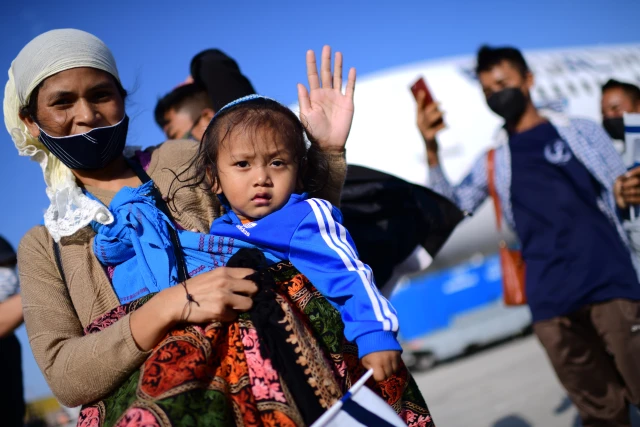
In November 2025, the Israeli government approved a historic, wide-scale initiative to bring the entire remaining community—approximately 5,800 people—to Israel by 2030, with the Jewish Agency overseeing the process. Named “Operation Wings of Dawn,” the plan swung into action on April 23, 2026, when the first flight touched down carrying 240 new immigrants from Mizoram, greeted by dozens of waiting relatives in an emotional family reunion. About 1,200 are expected by the end of 2026, with the remaining 4,800 by 2030.
Key Personalities and Documentation
Several figures have been central to the Bnei Menashe story. Rabbi Eliyahu Avichail (1932–2015) was the visionary founder of Amishav who named the community and spent decades fighting for their recognition. His successor, Michael Freund, built the organizational machinery through Shavei Israel that turned the aliyah into a large-scale reality.. Rabbi Yechiel Eckstein of the International Fellowship of Christians and Jews have provided financial backing. Dr. Khuplam Milui Lenthang meticulously documented the community’s oral genealogies and traditions, publishing the foundational text “Manmasi Chate Thulhun Kidang Masa” in 2005, which provides the most comprehensive internal chronicle of their origin story.
The most authoritative primary source remains the 2022 oral history collection “Lives of the Children of Manasia,” edited by Hillel Halkin and Isaac Thangjom, which preserves the voices of twelve elderly community founders. While genetic studies have failed to find a definitive Middle Eastern link—a point of scientific contention—Halkin and many supporters rest their case on the power of cultural memory: the Sikpui Hla song, the prayer language with Hebrew echoes, and the ancient practices that mirror Mosaic law.
Today, nearly five thousand Bnei Menashe live in Israel, with thousands more on the way. Their journey from a “lost tribe” preserving traditions in secret to a fully integrated part of the Jewish state, with sons and daughters serving and sacrificing in its defense, is an ongoing epic. The final chapter of their aliyah is being written in real time.
You might also like to read this: