









New ‘Likud B’ initiative emerges as right-wing party seek to bypass PM Netanyahu
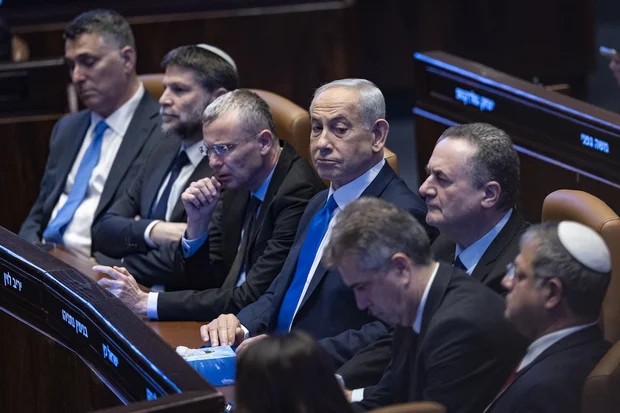
Well-known figures on Israel’s political right said this week they have been quietly sounding each other out on the possibility of forming a new party to challenge the Likud, as the country heads toward elections that must be held by October with the current Knesset nearing the end of its lawfully mandated four-year term.
If completed, the term would mark a rare period of political stability, following years of turbulence in which Israelis went to the polls five times in less than four years. The reverberations from that instability are still being felt as candidates, parties, and pundits gear up for another election season.
The planned new party, according to weekend reports in the Israeli media, has the working title “Likud B,” and some analysts describe it as the latest in a long line of efforts to capitalize on Israel’s natural right-wing majority without having to manage relations with its longtime leader, incumbent Prime Minister Benjamin Netanyahu.
Some of the names mentioned in the reports about this project include Likud Knesset Member Yuli Edelstein, former finance minister Moshe Kahlon, Deputy Foreign Minister Sharren Haskel, and former UN ambassador and minister Gilad Erdan.
These candidates say they aim to form a new party that would allow Israel’s natural right-wing majority to govern without the need to form coalitions with “extreme” parties whose positions most Israelis, across the political spectrum, do not share.
The reports also stated that this “Likud B” party would not commit to automatically supporting or opposing anyone in particular ahead of negotiations to form a governing coalition. This practice has become commonplace in the last several years, primarily in relation to Netanyahu. Some voices in Israel’s political community call it a “bug in the system” that is causing enormous frustration among the voting public.
Another “bug” in the current plan to form a “Likud B” is that it is unclear who would be the party's leader. There have been several attempts to form an alternative to Likud over the years, and this has been the point at which most of them have faltered.
For context, Netanyahu was first elected to the Prime Minister’s Office in 1996 and served until 1999, when he lost an election to Ehud Barak. He spent many years in the opposition before becoming prime minister once again in 2009, where he remained until he lost the 2021 election to a coalition of parties led by Naftali Bennett and Yair Lapid.
That coalition proved highly unstable, triggering several rounds of elections before a more or less stable right-wing coalition was formed in late 2022, returning Benjamin Netanyahu to the prime minister’s office, where he has remained since.
During his many years in power, Netanyahu has both raised up and alienated several political figures, including Bennett, who used to be his chief of staff. Avigdor Liberman, who has been a fixture of Israeli politics for many years as the leader of the Yisrael Beytenu ("Israel is our home") party, was also a former protege of Netanyahu.
The most recent polls published in Israeli media outlets show that a hypothetical party led by Bennett would win more mandates in the next election than Likud, but it is unclear whether Bennett would then be able to form a governing coalition.
As political commentators often remind us, one month is an eternity in an election year, and there are still nearly six months before Israelis will go to the polls to elect their next government.
Popular article:

interview Easter message of resurrection hope amid war at Jerusalem's Garden Tomb

biblical commentary Let my people go: a Passover message for today

4 IDF soldiers killed, 2 wounded in fighting in southern Lebanon, as Israel eliminates dozens of Hezbollah terrorists

Receive latest news & updates
A message from All Israel News
Help us educate Christians on a daily basis about what is happening in Israel & the Middle East and why it matters.
For as little as $10, you can support ALL ISRAEL NEWS, a non-profit media organization that is supported by readers like you.
Latest articles:

North American Jewish organizations to recruit 100 professionals to combat antisemitism

‘No need’ for pre-election Iran strike, IDF chief says as gov’t, opposition trade blame for potential escalation – report

terror attack 2 Israeli soldiers killed, 2 terrorists eliminated in Hebron shooting; IDF says much larger attack was prevented

analysis A people dwelling securely? Israel’s strategic standing, 3 years after Oct 7

Hamas on wheels: What I found in Dearborn reveals a troubling history and a battle over Israel