Israel maintains readiness for new fighting as US-Iran negotiations drag on without success
Rubio: Iranian offer to reopen Hormuz Strait is unaccetable if regime maintains control





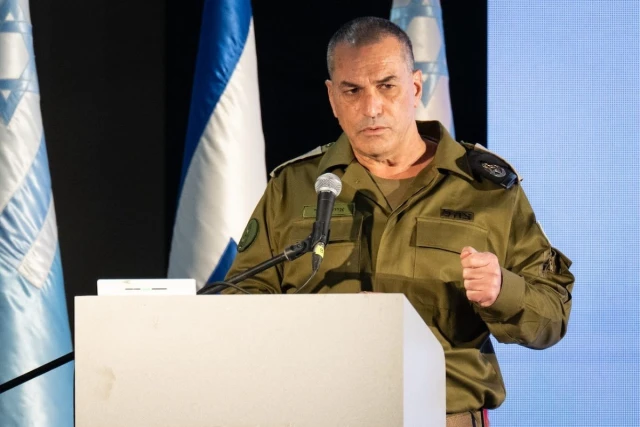
The Israeli military continues to maintain readiness for a resumption of fighting on all fronts, including Iran, the IDF chief of staff said Monday against the background of the ongoing diplomatic stalemate between the Iranian regime and the American Trump administration.
Over the weekend, Iran presented the U.S. with a new proposal to reopen the Strait of Hormuz in exchange for an end to the war, according to a U.S. official and two other sources, who spoke to the news outlet Axios.
This came after U.S. President Donald Trump at the last minute canceled a planned trip to Islamabad by his envoys Steve Witkoff and Jared Kushner to continue the talks, telling the regime to call if it wants to negotiate and leaving Iranian foreign minister Abbas Araghchi to visit Pakistan alone.
Speaking to Fox News on Sunday, Trump said he would maintain the naval blockade on Iranian ports, hoping that the regime would eventually be forced to return to the negotiating table.
U.S Secretary of State Marco Rubio told Fox News Monday that the reported offer from Iran was unacceptable: “What they mean by opening the straits is, yes, the straits are open, as long as you coordinate with Iran, get our permission, or we’ll blow you up and you pay us.”
“That’s not opening the straits. Those are international waterways. They cannot normalize, nor can we tolerate them trying to normalize, a system in which the Iranians decide who gets to use them.”
Meanwhile, the fragile ceasefire in Lebanon is being maintained by Israel at the request of the U.S. in order not to endanger the ceasefire with Iran, despite Hezbollah attacking Israeli forces and towns incessantly over the past few days.
Jerusalem reportedly warned Washington that, given this situation, it might have to escalate its strikes on Hezbollah soon.
On Friday, Prime Minister Benjamin Netanyahu said he had talked to Trump, who told him he “is applying very strong pressure on Iran, both economically and militarily. We are operating in full cooperation.”
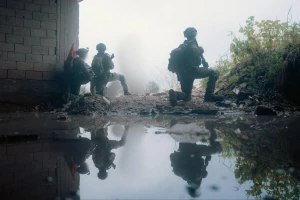
IDF Chief of Staff Lt.-Gen. Eyal Zamir told a conference of senior IDF brass on Monday that the military is “still in the midst of a multi-front campaign.”
“We continue to remain prepared and vigilant for a return to intense fighting on all fronts – 2026 may continue to be a year of combat on each of the fronts,” he warned.
“These days, under the leadership of the political echelon, three negotiations are taking place in different arenas – Iran, Lebanon, and Gaza. These processes are based on the achievements of the IDF, which were made possible thanks to the soldiers and commanders in the air, at sea, and on land,” said Lt.-Gen. Zamir.
Iranian Foreign Minister Araghchi, meanwhile, continued to Moscow on Monday, claiming that the regime was still weighing what he portrayed as Trump’s request to negotiate.
Russian President Vladimir Putin thanked Araghchi for a purported message he recently received from Iranian Supreme Leader Mojtaba Khamenei, adding that Russia would “do everything that serves your interests and the interests of all the peoples of the region to ensure that peace is achieved as quickly as possible.”
The ongoing Iranian blockade of shipping through the Hormuz Strait continues to drive up gas prices in Europe, further putting already-strained relations between the U.S. and its NATO allies to the test.
German Chancellor Friedrich Merz, who has attempted to maintain positive relations with the Trump administration, said on Monday that the Iranian regime is “humiliating” the U.S. and distanced himself from the war.
“The Americans obviously have no strategy,” Merz said at a visit to a school, “At the moment, I do not see what strategic exit the Americans will choose, especially since the Iranians are obviously negotiating very skillfully—or very skillfully not negotiating.”
Merz reiterated that the Europeans were not consulted before the war and would’ve counseled against it. “If I had known that this would continue for five or six weeks and keep getting worse, I would have told him even more emphatically,” he added.
“The Iranians are evidently stronger than expected and the Americans clearly do not have a truly convincing strategy in the negotiations,” said Merz, warning that “this war against Iran has direct effects on our economic performance and therefore must be ended as quickly as possible.”
You might also like to read this: