Why Israeli policymakers should prioritize multinational investments


Only a few weeks ago, the debate surrounding Israel's technology industry centered on rising labor costs. A stronger shekel, artificial intelligence and the rapid improvement of engineering talent abroad were making Israeli software developers more expensive than ever for multinational employers. The concern was not that companies would shut existing operations, but that the next hiring round, the next research center and the next investment would increasingly take place elsewhere.
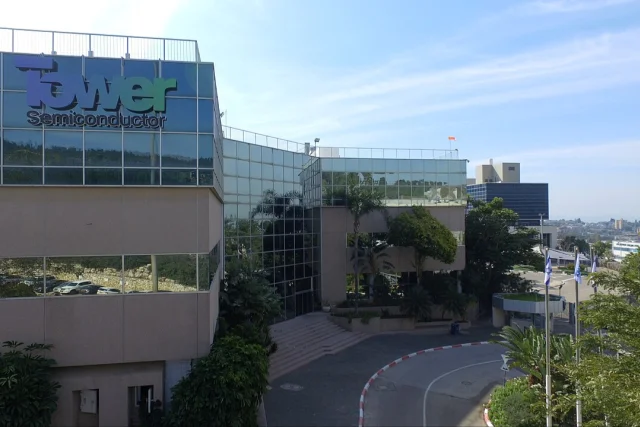
Recent announcements by Tower Semiconductor and Intel suggest that this dynamic now extends well beyond software development.
Both companies remain deeply committed to Israel and continue to operate major manufacturing facilities in the country. Yet when deciding where to deploy billions of dollars of new capital, each chose another jurisdiction. Tower will invest approximately $3 billion to expand production capacity in Japan, supported by roughly $1 billion in Japanese government grants. Intel has announced a further €5 billion ($5.7 billion) expansion of its manufacturing operations in Ireland after regaining full ownership of its Fab 34 facility.
Neither decision represents an exit from Israel. Both illustrate something potentially more significant: where global semiconductor companies believe future growth can be delivered with the greatest combination of economic certainty, government support and execution speed.
Unlike software development, semiconductor manufacturing requires extraordinary levels of capital investment. A modern production facility can cost tens of billions of dollars and often takes years before commercial production begins. Once a location is selected, that decision influences employment, supplier networks, tax revenues and technological capabilities for decades rather than years.
Governments understand this.
The United States has committed over $52 billion through the CHIPS and Science Act to encourage domestic semiconductor manufacturing. Japan has committed substantial subsidies to attract advanced production capacity, including support for both Tower and Taiwan Semiconductor Manufacturing Company (TSMC). Ireland continues to combine competitive corporate taxation, stable regulation and generous investment incentives that have helped attract decades of foreign direct investment from global technology companies.
The global competition is therefore no longer driven solely by engineering talent. Increasingly, it is becoming a competition between governments.
Israel has historically performed exceptionally well under the previous model.
The country's combination of world-class engineering talent, military technology, entrepreneurial culture and close relationships between universities and industry created one of the world's leading technology ecosystems. High-tech now accounts for approximately 18% of Israel's GDP, 58% of exports and employs around 400,000 people. That success attracted multinational companies despite Israel's relatively high labor costs.
Today, however, several structural forces are changing the calculation.
As discussed previously, employment costs measured in dollars have risen sharply following the appreciation of the shekel. Research from the Growth Companies Forum suggests Israeli software engineers now cost more than comparable workers in the United States when measured in dollar terms and approximately 2.4 times as much as engineers in several Eastern European countries. Meanwhile, artificial intelligence is reducing the number of engineers companies require while making globally distributed development teams increasingly practical.
Those same economic pressures inevitably influence manufacturing investment.
A semiconductor company evaluating a new production facility considers far more than wage costs. Electricity prices, water availability, transport infrastructure, planning approvals, tax policy, political stability, government incentives and supply-chain resilience all factor into the calculation. When competing countries are prepared to subsidize billions of dollars of investment, relatively small differences in operating costs can become decisive.
Tower's Japanese expansion demonstrates this clearly.
Rather than constructing an entirely new manufacturing site elsewhere, the company is expanding an existing operation with established infrastructure and experienced personnel while receiving approximately $1 billion in government support. Chief Executive Russell Ellwanger has said the investment will enable Tower to meet customer demand for advanced 300-millimeter wafer production and create a platform for growth beyond 2028.
Intel's decision follows similar logic.
Its Kiryat Gat facility remains one of Intel's most productive manufacturing sites and continues to play an important role within the company's global operations. Yet Intel's newest manufacturing technologies are currently planned primarily for the United States, while Ireland and Arizona continue expanding capacity. The company's previously announced Fab 38 project in Israel remains under review after construction was suspended in 2024 amid broader financial pressures.
None of this necessarily reflects dissatisfaction with Israel itself. Rather, it reflects the reality that multinational corporations allocate capital where expected returns are highest after accounting for risk and costs. The implication is that Israel cannot rely solely on its engineering talent or entrepreneurial reputation. It must increasingly compete through policy – offering a combination of tax certainty, efficient regulation, and targeted incentives that makes multinational technology companies view Israel not merely as an innovation hub, but as the preferred destination for their next wave of investment.
Last month the government announced a NIS 1.6 billion ($5.27 million) support package designed to assist exporters and technology companies facing the stronger shekel. Much of the funding will be distributed through the Israel Innovation Authority, alongside assistance for advanced manufacturing, vocational training and investment incentives. For young technology companies experiencing exchange-rate pressure, these measures may provide meaningful short-term relief.
However, building a factory is not a one-year decision. Companies evaluate expected costs, regulatory stability and government policy over investment horizons extending twenty or thirty years. Temporary support programs are helpful but rarely determine projects whose economics depend on decades of operation.
The issue is therefore not simply how much financial support Israel provides, but whether it can create an investment environment that consistently competes with the world's most attractive technology hubs.
One step would be expanding targeted tax incentives for strategic manufacturing investments, particularly for facilities producing advanced semiconductor technologies. Many competing countries already offer preferential tax treatment specifically linked to long-term capital investment and job creation.
Another would involve creating a faster regulatory framework for nationally significant industrial projects. Reducing planning uncertainty and accelerating infrastructure approvals may be almost as valuable as direct financial support when companies compare jurisdictions.
Finally, policymakers may need to adopt a more strategic approach to attracting large anchor investments. Several countries now negotiate bespoke investment frameworks for projects they consider strategically important, combining predictable regulation, infrastructure commitments, workforce development and long-term tax incentives rather than relying on one-off grants.
None of this implies that Israel should attempt to outbid every competing jurisdiction. It cannot eliminate structural disadvantages such as geopolitical risk or higher labor costs, nor would indiscriminate subsidies represent good economic policy. The objective should instead be to narrow the gap sufficiently so that Israel's existing strengths – its engineering talent, innovation ecosystem and deep technological expertise – become decisive once again.
That requires a shift in thinking. For years Israel largely competed on human capital, while governments elsewhere focused on attracting manufacturing through industrial policy. Today, those two advantages increasingly go hand in hand. Semiconductor companies are choosing not only between engineers, but also between national investment strategies.
Tower's decision to expand in Japan and Intel's investment in Ireland should therefore be viewed less as isolated corporate announcements than as evidence of a changing competitive landscape. Future semiconductor investment is likely to flow toward countries that combine technological capability with long-term policy certainty. If Israel wants to remain at the center of the global technology industry, it will need to compete on both.
You might also like to read this: