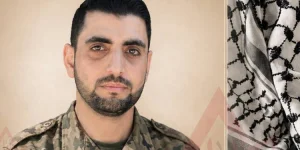
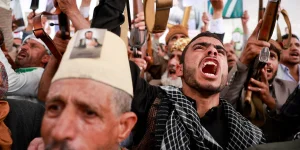
Hamas announces Khalil al-Hayya as new overall leader and successor of Yahya Sinwar
Al-Hayya is expected to continue Hamas’ close ties to the Iranian regime
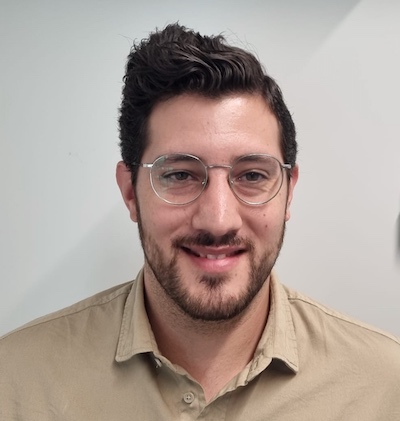



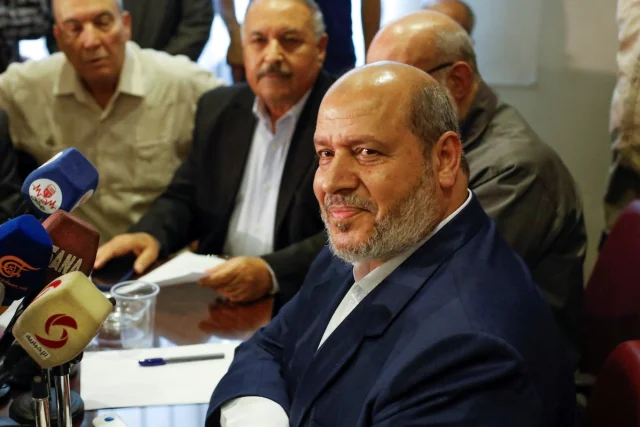
Hamas announced that Khalil al-Hayya, formerly the deputy leader of the terror group’s Gaza branch, will take over the leadership of the group’s political bureau and, therefore, its overall leadership.
Hamas had been led by a five-member committee since the October 2024 killing by Israel of Yahya Sinwar, mastermind of the Oct. 7 invasion.
Despite residing in Qatar since shortly before Oct. 7, the 65-year-old al-Hayya had already been the de facto leader of the Gaza branch, and headed the negotiations with the Board of Peace and mediators from Qatar and Egypt.
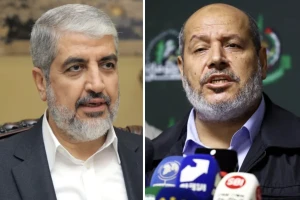
Hamas official Mahmoud Mardawi told the New York Times that al-Hayya was elected in a “tight race” against former political leader Khaled Mashaal, though an unnamed senior official told AFP that he won “by an overwhelming majority.”
Hamas has announced the election of Khalil al-Hayya as head of its Political Bureau. Khaled Mashaal was the other candidate for the position.
— Joe Truzman (@JoeTruzman) July 20, 2026
In the short term, I don't expect a significant shift in how Hamas operates. I assess that the group will continue prioritizing the… pic.twitter.com/vVYVi0m5of
“The political bureau will meet in Istanbul within days to form committees and begin restructuring Hamas’s leadership bodies,” the official added. “The election process was conducted through a highly complex and secretive mechanism because of the difficult security situation and the occupation’s assassination of several political and military leaders.”
The election was reportedly held among Shura council members based in Gaza, the West Bank, Qatar, and even in Israeli prisons.
Mashaal had been identified as advocating more independence vis-à-vis the Shiite Iranian regime, and closer ties with the fellow Sunni regimes in Qatar and Turkey.
Al-Hayya, on the other hand, is expected to continue the course of his predecessor Sinwar and keep Hamas’ close ties to the Iranian regime and its “Axis of Resistance,” including Hezbollah and the Houthis, while keeping the organizational center of gravity in the Gaza Strip, rather than Qatar or Turkey.
He was the head of a Hamas delegation that mended ties with the Assad regime in 2022, signaling Hamas’ full integration into the Iranian axis.
Leadership of the Gaza branch is expected to be given to media chief Ali al-Amoudi, while Turkey-based Zaher Jabarin, who served alongside al-Hayya on the leadership committee, is expected to retain leadership of the West Bank branch.
Al-Hayya has been among the most visible senior leaders of the terror group in recent years, defending its conduct in numerous media interviews.
While he has claimed that the Oct. 7 massacre was only intended as a limited operation that escalated when Hamas terrorists didn’t encounter Israeli military opposition, internal Hamas documents have shown that Sinwar specifically sent him outside of Gaza ahead of the invasion to coordinate the assault with the group’s allies abroad.
He then served as the Gaza branch’s representative and led the negotiations with Israel throughout the war, traveling back and forth between Qatar and Egypt and even visiting Iran last year.
Despite not being a senior “military” operative of Hamas, al-Hayya is a veteran member of the movement, reportedly meeting its founder Sheikh Ahmad Yassin years before the formal launch of Hamas.
Al-Hayya reportedly holds a doctorate in Sunnah and Hadith sciences from the Holy Quran and Islamic Sciences University in Khartoum, Sudan, as well as additional degrees in Islamic studies from universities in Jordan and Gaza.
In the 1990s, he was arrested and imprisoned in Israel several times. Like most senior Hamas leaders, al-Hayya lost numerous family members in Israeli airstrikes targeting him or family members who also joined the terror group.
An airstrike that hit his family home in 2007 killed several of his relatives, while another strike killed his son Hamza the next year. During the 2014 war, al-Hayya's eldest son Osama and his family were killed.
Last September, an airstrike targeting al-Hayya and the rest of the Hamas leadership assembled in Doha killed his son Hammam and the director of his office. Another son, also a Hamas operative, was reportedly killed in an Israeli airstrike in Gaza in early May.
“In the short term, I don't expect a significant shift in how Hamas operates,” wrote Joe Truzman, research analyst at the Foundation for the Defense of Democracies, in a post on 𝕏.
“I assess that the group will continue prioritizing the reconstruction of its military capabilities while showing no intention of giving up its weapons. A leadership change does not necessarily signal a change in Hamas' core strategic objectives,” he added.
Palestinian political analyst Reham Owda told Al-Monitor that al-Hayya's victory “indicates that negotiations related to disarmament [in the Gaza Strip] are likely to face significant difficulties and obstacles.”
You might also like to read this: