UNESCO set to declare Beaufort Castle & Sebastia as sites ‘endangered’ by Israel
UN agency doesn't mention Hezbollah's use of castle, Palestinian vandalism as threats



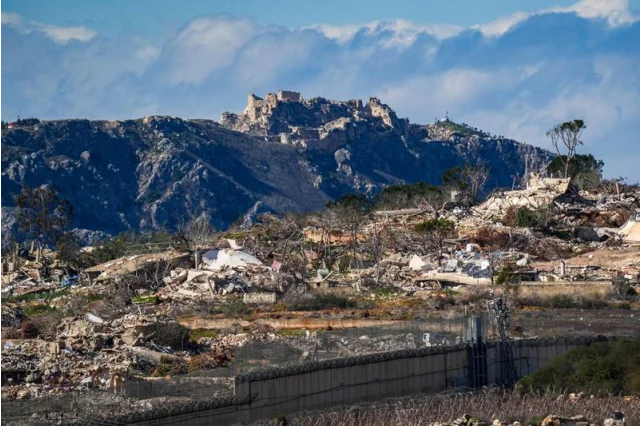
UNESCO is set to declare Beaufort Castle in Lebanon and the archaeological site of Sebastia as endangered cultural heritage locations this week, in the latest hostile move of the UN agency, which Israel quit in 2019 over its consistently anti-Israeli position.
At the time, Israel’s Ambassador to the UN Danny Danon told the Times of Israel that UNESCO is “corrupted and manipulated by Israel’s enemies and continually singles out the only Jewish state for condemnation.”
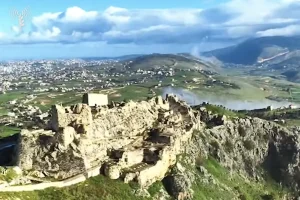
This week, the agency is expected to declare Beaufort Castle (and four other crusader-era castles in the area) as endangered sites – notably, shortly after Israeli forces captured the fortress and revealed the massive military infrastructure built by Hezbollah and stretching beneath the entire Beaufort Ridge, which construction appeared not to fall under the “endangered” classification.
Representatives of UNESCO’s 196-member states will vote on new additions to the World Heritage List and the "List of World Heritage in Danger" on Friday, during a conference being held in Busan, South Korea.
In a video filmed in February 2025 by a Lebanese resident from Beaufort Castle, the strategic significance of the ridge is clearly visible. From this elevated vantage point, one can observe Israeli territory, including the town of Metula and the Mount Hermon area.
— Israel-Alma (@Israel_Alma_org) June 4, 2026
The video is… pic.twitter.com/5YLGtlw2A1
“We may not have the means to deploy peacekeepers, but we can send a message to the entire world,” Lazare Eloundou Assomo, director of UNESCO’s World Heritage Center, told AFP.
“These sites matter, and everything must be done to prevent their destruction,” he said.
Beaufort Castle, as well as the site of Sebastia, the former capital of the biblical Northern Kingdom of Israel, are expected to undergo an expedited process and be added to the endangered list immediately – heavily suggesting that the Israeli presence is the trigger for the classification.
Last month, Lebanese Culture Minister Ghassan Salameh sent a letter to UNESCO requesting an “immediate and urgent intervention to activate all global mechanisms to prevent the destruction of Beaufort Castle.”
“Israeli media have recently published reports, widely shared on social media, about the possibility of the destruction of this major cultural site, which leads us to fear that action may be taken very soon,” he said referring to reports about possible Israeli military action at the site, where Israeli forces have said they uncovered Hezbollah infrastructure.
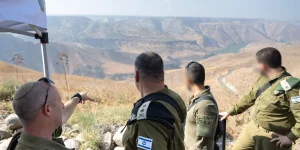
The IDF has taken control of the Beaufort Ridge—and this is far more than just another hill in southern Lebanon.
— Israel-Alma (@Israel_Alma_org) June 3, 2026
The IDF's capture of the Beaufort Castle area undermines one of Hezbollah’s most important strategic and symbolic assets: a region that for years served as a hub for… pic.twitter.com/BT6COQORY6
In its description of the five “castles of Mount Amel” on the tentative list, which include the Beaufort, UNESCO did not mention the site’s use as a military position by armed groups, including the PLO in the 1980s and Hezbollah in subsequent years.
Instead, it says, “The castle sustained significant damage, particularly during the Israeli occupation of South Lebanon,” before noting that the Lebanese state launched “a major conservation project” after its “liberation” in 2000.
Similarly, the description for Chama Castle laments “partial damage during the 2024 conflict” without mentioning the presence of Hezbollah.
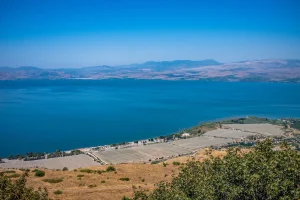
Beaufort Castle, known in Arabic as Qal’at al-Shaqif, is located on a ridge around 680 meters (2,230 feet) above sea level, overlooking the Litani River and large parts of southern Lebanon, as well as northern Israel.
After being used by the PLO, the IDF captured the hill and made it one of its most important outposts during the occupation of southern Lebanon, from 1982 to 2000. In the aftermath of the Israeli withdrawal, Hezbollah constructed a massive underground base beneath the ridge, large enough to house hundreds of terrorists for several months, according to the Israeli military.
On June 3, we wrote about the IDF’s takeover of the Beaufort area and noted that this is not just another hill in southern Lebanon…
— Israel-Alma (@Israel_Alma_org) June 7, 2026
The important part of the story lies in what Hezbollah built— with direct Iranian assistance—inside the ridge, beneath the Beaufort fortress.
This… pic.twitter.com/4XASVQCHjA
The IDF reported that approximately 400 rockets were fired at Israel from positions connected to this complex.
During a tour with reporters two weeks ago, an IDF officer told the Times of Israel, “The tunnels were intended for two purposes: first, to fire directly toward Israel. The moment you exit the tunnel, you can see Metula right in front of you.”
“And its second purpose is to defend against an IDF ground maneuver to the Beaufort Ridge, in which, as you can see, we defeated them.”
The construction of the terrorist complex was a massive undertaking which took over a decade. “Building such an underground system in the rocky terrain here in southern Lebanon is an undertaking that requires major investment and a great deal of time,” the officer said. “The process here involves drilling, blasting along the route, and then removing the excavated earth.”
The underground complex included water and electricity infrastructure, as well as living quarters equipped with showers, toilets, kitchenettes, and even a fully equipped operating room.
History feels different when you're standing where it happened. ✨
— Israel ישראל (@Israel) July 19, 2026
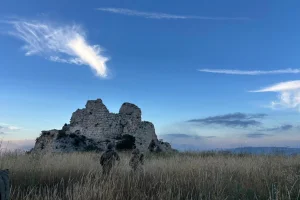
Welcome to Sebastia, a place that is more than just an archaeological site. First named Shomron, it was the capital of the Kingdom of Israel. Later it became a central city in Judea and according to Christian… pic.twitter.com/V2qAlZiLqG
UNESCO is also expected to declare Sebastia, the biblical city of Samaria, as an endangered site. This comes shortly after the Knesset in May advanced a bill to create a new civilian authority to manage archaeological and heritage sites in Judea and Samaria, including some located in the Palestinian-controlled Areas A and B.
Activist groups like Peace Now allege that this move is intended to expand settlements under the guise of archaeology, while supporters argue that core biblical sites like Sebastia or the tomb of the Patriarchs in Hebron need to be under Israeli protection.
The construction of a road through sections of the ruins by the Palestinian Authority in 2023 did not trigger an inclusion of Sebastia in UNESCO’s endangered list.
To walk through these ruins is like walking through the pages of the scriptures.
— Israel ישראל (@Israel) July 19, 2026
Shomron (Samaria) was the capital of the Kingdom of Israel from 880-722 BCE and was renamed Sebastia by King Herod of Judea in the first century BCE.
For Christians from around the world, this… pic.twitter.com/Xlj6MlMccb
In late 2025, Israel announced a plan to seize about 1,800 dunams (445 acres) near Sebastia to develop the site – which has suffered fires and vandalism in recent years – into a center for archaeology and tourism.
The move appears to have contributed to concerns over the site’s status and its subsequent inclusion on the endangered list. The listing states that proposed development and preservation efforts could affect nearby Palestinian communities.
Local residents told AFP that they fear that Israel could restrict their access to the site, potentially affecting income they receive from visitors.
You might also like to read this: