Iran moved nuclear centrifuges to 'Pickaxe Mountain,' intel reveals as US carries out 10th round of strikes
Trump weighing new ceasefire or intensification of strikes, to bring Iran back to negotiations






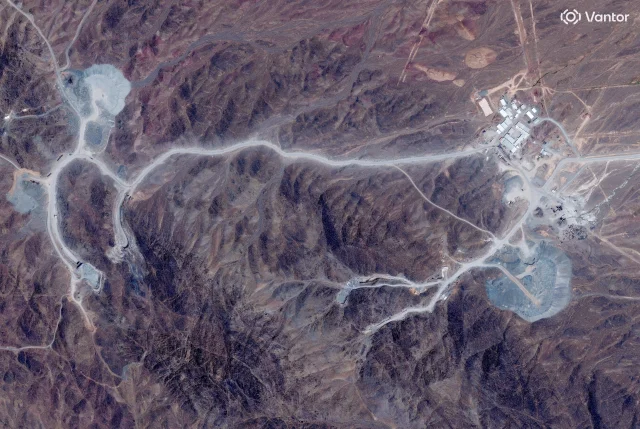
Israeli intelligence assessed that Iran moved thousands of nuclear centrifuges to tunnels deep inside the "Pickaxe Mountain" site near Natanz in an attempt to protect them from aerial strikes, the Wall Street Journal reported on Tuesday, as U.S. airstrikes on Iranian targets entered the 10th night in a row.
According to the report, which cites U.S. and Israeli sources, Israeli intelligence believes the transfer came after the 12-day war last June, and after the U.S. joined the war effort with Operation Midnight Hammer, striking three Iranian nuclear sites: Isfahan, Natanz (but not Pickaxe Mountain), and Fordow. Israel passed the intelligence findings to U.S. agencies, WSJ reported.
Iran’s development of the Pickaxe Mountain site has long attracted attention from the intelligence community, as it was believed to be related to Iran’s nuclear weapons program. It sits about 2 kilometers (roughly 1 mile) south of the Natanz nuclear enrichment plant, which both the U.S. and Israel struck in the June 2025 conflict.
Construction at the site has been ongoing since the Fall of 2020, with intelligence indicating the facility is intended to replace the Natanz enrichment plant, which was too exposed to aerial attacks, as the June 2025 strikes demonstrated. The main facility is believed to be at least 100 meters (nearly 330 feet) below the mountain's rock, accessible only by tunnels carved into the sides.
At that depth, it sits further below ground than the site at Fordow, which the U.S. struck with bunker-buster bombs in June 2025.
The construction of uranium enrichment facilities in such a hardened location belies Iran’s claims of a purely civilian nuclear program. Iran claims the site will be a centrifuge manufacturing and assembly plant. But the regime has denied requests by the International Atomic Energy Agency to inspect the site.
President Donald Trump recently indicated that the U.S. could target Iran’s Pickaxe Mountain facility, which is believed to be a nuclear weapons-related facility.
“Pickaxe is a possible target for a nice big fat shot right near the front door,” Trump said in an interview with conservative talk show host Hugh Hewitt last week.
He also said the U.S. is monitoring the site, which is still under construction: “We’re watching Pickaxe Mountain very closely. We don’t see any activity there.” It is not clear whether his comments resulted from intelligence shared by Israel.
The Journal also noted that Israel and the U.S. have different war goals. Prime Minister Benjamin Netanyahu has tried to convince President Donald Trump to resume a large-scale attack on Iran, intending to further degrade Tehran's weapons programs and its reconstruction efforts, the report claimed.
Over the past ten days, U.S. Central Command (CENTCOM) has carried out strikes primarily on Islamic Revolutionary Guard Corps targets, especially those related to naval attack infrastructure used to target vessels in the Strait of Hormuz.
CENTCOM said it completed a tenth round of strikes overnight, targeting “Iranian military command centers, maritime capabilities, missile and drone launch sites, and air defense systems to degrade Iran's ability to continue attacking commercial vessels flowing through the Strait of Hormuz.”
CENTCOM said its forces “have helped facilitate the transit of approximately 900 commercial vessels and 450 million barrels of crude oil.”
Following those strikes, the IRGC said it targeted U.S. military facilities in Kuwait in retaliation. According to a statement on regime news site IRNA, the IRGC claimed it “successfully destroyed multiple US military assets, including an early warning radar, a missile defense radar, an FPS-117 surveillance radar, a Patriot air defense battery, and the satellite communications infrastructure supporting the air defense network.”
The regime militia also targeted another two tankers attempting to traverse the strait outside of the IRGC-approved route, hitting both with cruise missiles. The IRGC said the strait would remain closed as long as the U.S. continues to strike Iran.
The Iranian military also said it launched drone attacks against multiple U.S. targets in the region.
A report in Israel’s Channel 12 News claimed that President Trump is weighing either a new 10-day ceasefire, aimed at restarting the stalled negotiations, or intensifying strikes in an attempt to force the regime to accept certain compromises, particularly related to Hormuz.
However, the report added that the Trump administration still does not want Israel to get involved, believing it would lead to a resumption of large-scale war, with the potential to ignite additional hotspots, such as the Bab al-Mandeb Strait, connecting the Gulf of Aden and the Red Sea. Such a move would cause further economic strain, particularly among the U.S.’s Western allies.
On Monday, Iranian President Masoud Pezeshkian, in a statement released by his office, claimed “The reality is that today the Islamic Republic of Iran is engaged in a full-scale war” with the United States.
Amid the heightened tensions, the U.S. State Department issued a global travel warning, urging American citizens in the Middle East to exercise extreme caution and prepare for possible flight disruptions, airspace closures, and other traffic disruptions.
It also warned that US diplomatic facilities, including those outside the Middle East, could be targeted, and advised American citizens to reconsider travel to and through the Middle East.
You might also like to read this: