Syria calls Hezbollah terrorist militia as it works with Iraq to prevent arms smuggling



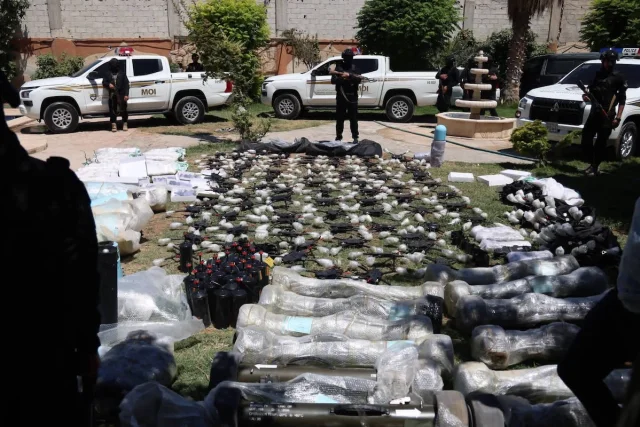
Syria's Interior Ministry publicly described the Iranian-backed Lebanese proxy Hezbollah as a "terrorist militia" on Tuesday, marking a sharp break from the policies of the former Assad regime as Damascus said it had recently thwarted an attempt to smuggle advanced weapons to the group through Syrian territory.
The designation underscores the new Syrian government's effort to distance itself from both Hezbollah and Iran after years in which Syria served as a key transit route for Iranian weapons destined for Lebanon.
Under the Iran-backed Assad regime, Syria functioned as a central hub for Iranian arms transfers to Hezbollah, while the Lebanese group played a major role in supporting Assad during the Syrian Civil War.
In contrast, the current government led by Ahmed al-Sharaa has positioned itself in opposition to both Hezbollah and Iran's regional ambitions.
Speaking to The Media Line on condition of anonymity, a Syrian Interior Ministry source described the intercepted shipment as "an exceptional and highly significant operation" that prevented the covert transfer of arms to Hezbollah.
The official added that Damascus would share intelligence and cooperate with Iraq as part of broader regional efforts to dismantle arms-smuggling networks.
"The investigation treats this as a cross-border network rather than an isolated incident," the source stated. The weapons-smuggling attempt reportedly took place at the al-Tanf border crossing between Syria and Iraq.
Mazen Alloush, head of Syria's General Authority for Land and Sea Border Crossings, said the weapons were concealed inside an oil tanker officially registered as transporting black fuel oil. According to Alloush, Iraqi customs authorities had sealed the tanker after processing the cargo as a conventional fuel shipment.
The shipment also carried instructions prohibiting inspectors from opening and inspecting its contents until it reached its destination in Lebanon, with the restrictions presented as standard delivery procedures.
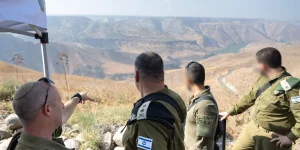
Alloush said the shipment contained a large quantity of missiles and drones. Hezbollah drones have in recent months killed and injured multiple Israeli soldiers.
Hezbollah rejected the accusations as "fabricated claims with no basis in fact" and claimed Damascus was attempting to undermine the jihadist group's reputation.
Meanwhile, the Iraqi Security Media Cell confirmed its cooperation with Syrian authorities and vowed to hold negligent parties accountable "to safeguard the security and stability of the shared border and prevent any attempts to undermine national security."
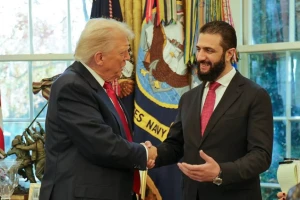
The developments come as the United States has sought to build ties with Syria's new leadership. U.S. President Donald Trump has developed close ties with Syrian leader Ahmed al-Sharaa despite al-Sharaa's past as an anti-American al-Qaida-affiliated jihadist terrorist.
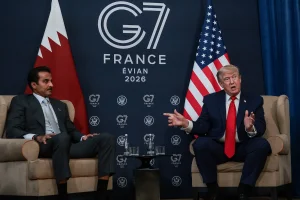
At the G7 summit last month in France, Trump suggested that Syria, rather than Israel, should confront Hezbollah. Trump argued that he is "close to giving this to Syria because he [al-Sharaa] would do a more precise job."
Al-Sharaa later rejected that characterization, saying the "statement was misinterpreted, as if Syria were about to invade Lebanon tomorrow morning."
"President Trump expressed his concern regarding what is happening in Lebanon and wants to stop the war there. He spoke about Syria's role in finding a secure solution… Syria is very concerned about Lebanon's security and stability because they are linked to Syria's own security and stability," al-Sharaa told the Arab news outlet Al Mashhad.
Although Syria once dominated neighboring Lebanon, analysts say the country's new leadership is pursuing a fundamentally different approach.
Daoud al-Sayed, a Syrian researcher specializing in political science and international relations, said "The new Syrian administration has consistently emphasized that relations with Lebanon should be conducted through state institutions rather than armed groups. The ministry's statement reflects that policy."
Al-Sayed said Syria's official view of Hezbollah as a terrorist militia could signal a broader strategic shift.
"If this rhetoric is followed by additional security and political measures," he argued, "it could signal a broader restructuring of Syria's policy toward non-state armed groups and a new framework governing relations with Lebanon and border security."
You might also like to read this: