Ukraine intelligence: Russia assisted Iran in targeting Israeli energy infrastructure



Ukrainian intelligence has reported that Russia provided Iran with a list of 55 key Israeli energy sites, according to The Jerusalem Post. The list, reportedly organized into three priority tiers, highlights the Orot Rabin power station in Hadera as Israel’s main energy target and includes major industrial and urban energy hubs in densely populated centers, as well as smaller local infrastructure. Ukrainian officials say the information was intended to help Iran carry out precision missile strikes on Israel’s civilian energy grid.
Russian intelligence reportedly assessed that, “unlike many European nations, Israel’s power grid is characterized by a high degree of isolation” because Israel functions as an “energy island,” without relying on electricity imports from neighboring countries. Moscow reportedly believed that even partial damage to Israel’s energy infrastructure could trigger a broader energy collapse.
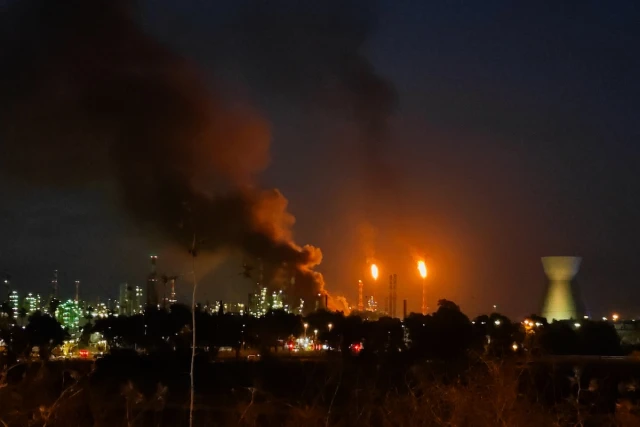
Last month, the Bazan oil refinery in the northern Israeli city of Haifa sustained some damage following an impact from an Iranian missile attack, however, the refinery has remained operational.
U.S. officials also revealed in March that Russia shared intelligence about U.S. military positions throughout the Middle East with the Iranian regime.
White House Press Secretary Karoline Leavitt did not deny the report but stressed that the Russia-Iran intelligence cooperation had not undermined U.S. and Israeli military operations against Iran.
“It clearly is not making a difference with respect to the military operations in Iran because we are completely decimating them,” Leavitt told media representatives. “We are achieving the military objectives of this operation and that is going to continue.”
Ukrainian President Volodymyr Zelenskyy has warned that Russia and Iran’s growing cooperation includes sharing battlefield experience and intelligence, a dynamic which, he says, could have broader implications for regional security.
“The Russians also helped them, like the Iranians helped [Russia] at the beginning of the (Ukrainian) war when they gave them Shaheds,” Zelenskyy told The Jerusalem Post two weeks ago. “They gained big knowledge on the battlefield and this (is) impacting and will have an impact on other regions.”
He continued, “We saw some components; they had Russian details. We know it because Iranians didn’t produce it.”
Speaking anonymously, Ukrainian officials said Russia’s intelligence sharing with Iran is intended both to bolster its ally and to divert international attention and resources away from the war in Ukraine.
Russian Ambassador to Israel Anatoly Viktorov dismissed the allegations, saying Russia and Israel have longstanding security contacts, and he categorically rejected claims that Moscow provides intelligence to Iran.
“Russia and Israel established contacts to discuss national security issues long ago. These contacts have been intensively maintained between relevant Russian and Israeli agencies. The most pressing issues have been discussed at the highest level. We value the track record that has been accumulated in this area," Viktorov said.
"Representatives of the Russian political leadership have repeatedly dissented from the ' accusations' that our country allegedly provides intelligence data to Iran. This issue continues to be artificially inflated in the media. Though the coordinates of locations of military bases in the region, not to mention civilian facilities, are public information, which everyone is aware of," he argued.
Viktorov rejected Zelenskyy's claims, saying Moscow maintains active security contacts with Israel and suggested that the Ukrainian statements are intended to draw international attention back to Kyiv amid shifting focus in global media.
You might also like to read this: