Trump declares strikes on Iranian power plants ‘postponed’ after ‘ongoing, constructive’ talks with ‘respected’ regime leader
High-level meeting with parliament speaker Ghalibaf could be set for next week in Pakistan



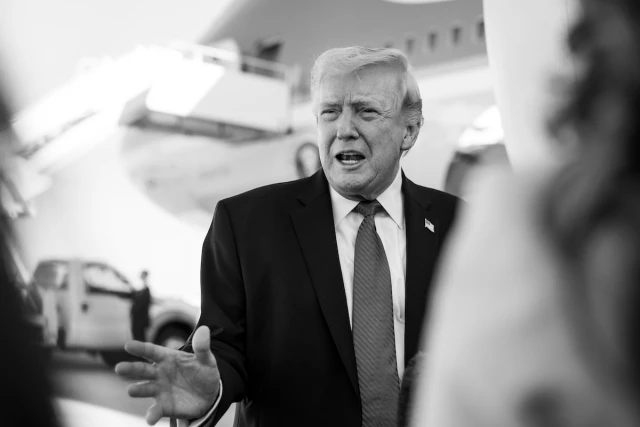
In a surprising move, U.S. President Trump declared that he would postpone strikes on Iranian power plants after “constructive conversations” with the Iranian regime, revealing later Monday that he had talked with a “respected” leader and adding that Iran wants to make a deal “badly.”
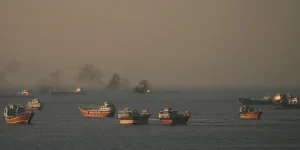
On Sunday, Trump had presented a 48-hour ultimatum for Iran to open the Strait of Hormuz, or he would begin “obliterating” the regime’s power plants.
On Monday morning, he wrote on Truth Social, “I am please [sic] to report that the United States of America, and the country of Iran, have had, over the last two days, very good and productive conversations regarding a complete and total resolution of our hostilities in the Middle East.”
🚨 President Donald J. Trump calls for a pause on all military strikes against Iranian power plants and energy infrastructure for a five-day period, subject to the success of the ongoing meetings and discussions. pic.twitter.com/N15CTRvikT
— The White House (@WhiteHouse) March 23, 2026
“Based on the tenor and tone of these in depth, detailed, and constructive conversations, which will continue throughout the week, I have instructed the Department of War to postpone any and all military strikes against Iranian power plants and energy infrastructure for a five day period, subject to the success of the ongoing meetings and discussions.”
Trump did not name the leader with whom he has been in contact. Over the past few days, several reports have suggested that Washington and Jerusalem are no longer certain who is leading the regime, as the newly announced supreme leader, Mojtaba Khamenei, has still not been seen in public since his appointment.
A source later told The Jerusalem Post that Iranian Parliament Speaker Mohammad-Bagher Ghalibaf is leading the talks with the United States. According to UANI Policy Director Jason Brodsky, he is “a former IRGC terrorist commander and wildly corrupt.”
In another post on 𝕏, Brodsky noted that Ghalibaf “has been a longtime ally of Iran's regime's Supreme Leader Mojtaba Khamenei. Mojtaba has protected him in the past amid corruption scandals. He is very ambitious, and sees this as an opportunity to become president eventually.”
No negotiations have been held. Not ruling out the future though. https://t.co/vaQEqFUAuj
— Jason Brodsky (@JasonMBrodsky) March 23, 2026
Ghalibaf later wrote on 𝕏, “No negotiations have been held with the US, and fakenews [sic] is used to manipulate the financial and oil markets and escape the quagmire in which the US and Israel are trapped.”
Iranian-born Israeli Iran expert, Dr. Meir Javedanfar, assessed, "Qalibaf has zero experience in negotiations with foreign powers... He is extremely corrupt. His lack of experience will benefit the U.S. This is an important reason Larijani was killed. So that the incompetent and untalented assume control, leading to the regime's gradual collapse."
.@POTUS: "We're dealing with the man who, I believe, is the most respected and the 'leader.' It's a little tough — we've wiped out everybody."
— Rapid Response 47 (@RapidResponse47) March 23, 2026
REPORTER: "Is that the Supreme Leader?"@POTUS: "No." pic.twitter.com/cdAgT4jljP
Speaking to reporters, Trump said, “We are dealing with a man that I believe is the most respected… not the supreme leader, we have not heard from him,” noting that airstrikes had “wiped out” several ranks of Iranian leaders so far.
The president said there were “major points of agreement” on “almost all points.”
When asked about the Strait of Hormuz, Trump said it would be opened “immediately” if a deal is reached, and could be under joint control: “Maybe me and the ayatollah – whoever the ayatollah is… And there will also be some form of regime change, very serious regime change.”
With reports the U.S. is negotiating with #Iran's regime's speaker of parliament Mohammad Bagher-Ghalibaf, I've written a profile of him for @UANI. He's a former #IRGCterrorists commander and wildly corrupt. Ghalibaf hasn't been sanctioned by the U.S. yet and is not on the…
— Jason Brodsky (@JasonMBrodsky) March 23, 2026
An official Iranian source later confirmed to Reuters that the U.S. had requested to hold a meeting with Ghalibaf on Saturday, adding that Tehran had not yet responded.
Trump said that his envoys Steve Witkoff and Jared Kushner had been leading the talks, while Axios reported that they, and possibly U.S. Vice President JD Vance, could meet Ghalibaf later this week.
The meeting may take place in Islamabad, Pakistan, a source familiar with the details told the Post.
"What exactly are you looking for in these talks, Mr. President?"@POTUS: "We want to see no nuclear bomb, no nuclear weapon — not even close to it — low key on the missiles, we want to see peace in the Middle East. We want the nuclear dust... I think we're going to get that." pic.twitter.com/iNvONgeTGZ
— Rapid Response 47 (@RapidResponse47) March 23, 2026
Speaking about potential terms of the agreement, Trump said, “We want to see no nuclear bomb, no nuclear weapon – not even close to it – low key on the missiles, we want to see peace in the Middle East. We want the nuclear dust... I think we're going to get that, we’ve agreed to that… and we also want no enrichment.”
Trump’s comment about “nuclear dust” was in reference to the stockpile of enriched uranium that is reportedly buried under Iran’s demolished nuclear sites. Asked about how he plans to “get” it, Trump said, “It's very easy. If we have a deal with them, we're going down and we'll take it ourselves.”
Such a deal would be “also great for Israel and it’s great for the other Middle Eastern countries,” he added.
The U.S. president concluded, “We have a very serious chance of making a deal. That doesn't guarantee anything... We are in the throes of a real possibility of making a deal... But again, I'm not guaranteeing anything.“
You might also like to read this: