With Iran ignoring Trump's Hormuz ultimatum & threatening regional power plants, president warns: ‘It’s gonna work out very good’
Gulf states swing fully behind continuation of the war and possible regime change





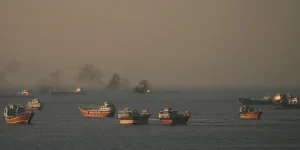
With U.S. President Donald Trump’s 48-hour ultimatum ticking down, the Iranian regime is showing no sign of preparing to open the Hormuz Strait but rather doubling down on its threats to strike power plants across the region.
Iran’s escalating threats appear to be pushing the Gulf states to back the U.S. and Israel even more firmly, and to support the continuation of the war until the threat is ended.
Trump had vowed to “obliterate” the regime’s power plants if it didn’t allow traffic to pass through the strategic waterway.
Asked by Israel’s Channel 13 about the ultimatum and whether the regime would cave, Trump said, “You’ll find out what’s gonna happen,” and continued, “You’re gonna find out soon. It’s gonna be very good. Total decimation of Iran. It’s gonna work out very good.”
“They’ve been very bad for 47 years. Now they’re getting their comeuppance,” he added.
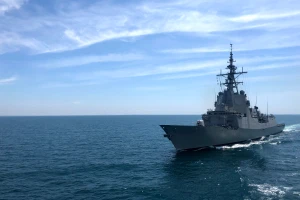
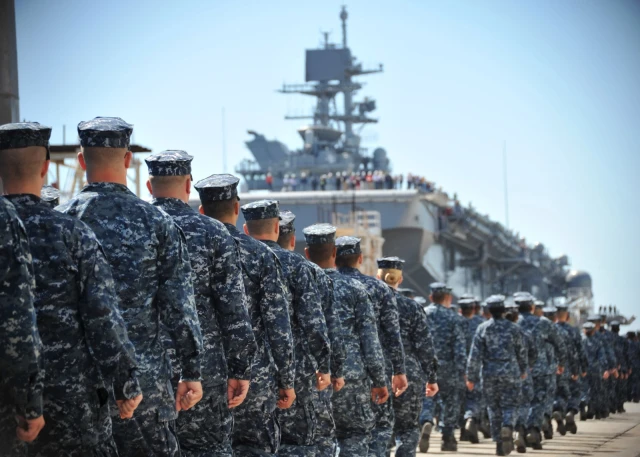
The Washington Post reported on Sunday that the push to reopen the strait for all shipping traffic could become the main focus of the war. The U.S. recently deployed a naval task force led by the USS Boxer, a Wasp-class amphibious assault ship, that is en route to the Middle East carrying the 11th Marine Expeditionary Unit and around 4,500 U.S. sailors and marines.
On Monday, Iran’s Revolutionary Guards (IRGC) warned that “if power plants are attacked, Iran will retaliate by targeting the power plants of the occupying regime and those of regional countries that supply electricity to U.S. bases, as well as economic, industrial and energy infrastructure in which Americans have stakes.”
In addition, Parliament Speaker Mohammed-Bagher Ghalibaf, whom experts see as one of the top regime leaders remaining, warned on 𝕏 that if power plants are attacked, “critical infrastructure, energy infrastructure, and oil facilities throughout the region will be considered legitimate targets and will be destroyed in an irreversible manner, and the price of oil will remain high for a long time.”
On Sunday, Iran’s Mehr news outlet warned Gulf states to “say goodbye to electricity,” publishing a map of power plants across the United Arab Emirates, Qatar, Kuwait, and the Gulf coast that could be targeted.
But rather than cowing the Gulf countries into pushing the U.S. to end the war, the regime’s ongoing blockade and escalating threats have appeared to push the Gulf nations closer toward the U.S., as well as Israel.
“The Gulf was against this war from the beginning, but Iran is crossing every red line,” a “well-connected person in the Gulf” told the Washington Post. “Now, the Gulf might be willing to go all the way.”
On Saturday, Saudi Arabia ordered Iran’s military attachés and four other embassy staff members to leave the country.
We will never be blackmailed by terrorists https://t.co/gMSjGOII8V
— عبدالله بن زايد (@ABZayed) March 22, 2026
UAE presidential advisor, Anwar Gargash, said Iran’s attacks on Gulf countries “cement the Iranian threat as a central pillar of Gulf strategic thinking,” adding they would lead to the “strengthening of our security partnerships with Washington,” and calling it the “price of Iran’s miscalculations.”
When a former French ambassador to Israel commented on Gargash’s statement by saying this deepened the UAE’s “dependence on a country that has led yours into a disastrous conflict without caring about your interests,” Foreign Minister Abdullah Bin Zayed hit back in a rare public rebuke on 𝕏, writing, “We will never be blackmailed by terrorists.”
In another statement on 𝕏, Gargash signaled that the UAE would not be satisfied with a ceasefire but seeks the dismantlement of the Iranian regime.
“As we confront the brutal Iranian aggression and discover our steadfast strength in resilience and endurance, our thinking does not stop at a ceasefire, but rather turns toward solutions that ensure lasting security in the Arabian Gulf, curbing the nuclear threat, missiles, drones, and the bullying of the straits. It is inconceivable that this aggression should turn into a permanent state of threat,” he said.
Meanwhile, Israel’s ambassador to the U.S., Michael Leiter, told CNN on Sunday that a potential strategy to destroy Iran’s infrastructure depends on whether the regime survives.
“If we are going to take down this regime, we want to leave everything in the country intact so that the people who come after this regime are going to be able to rebuild and reconstitute,” Leiter explained, adding, “If we leave this regime in place, we want to take down all the infrastructure.”
You might also like to read this: