MBS told Trump he would support war with Iran, but Saudis did not lobby for attack
Washington Post story exaggerates Saudi role, ALL ISRAEL NEWS learns





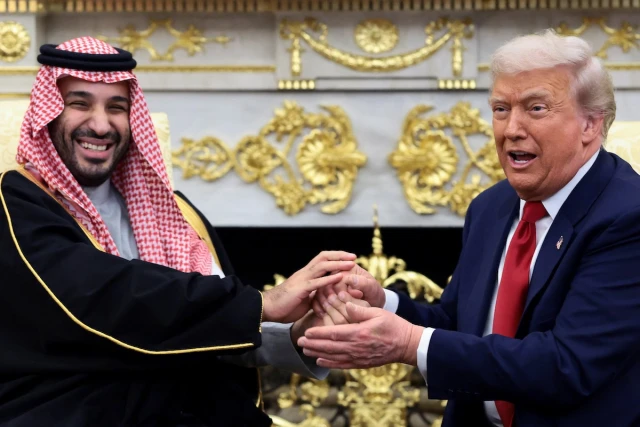
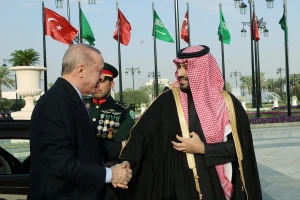
A Washington Post story asserting that Saudi Crown Prince Mohammed bin Salman (MBS) lobbied the White House to attack the Iran regime is not accurate.
ALL ISRAEL NEWS has learned from a well placed source that during a phone call between the two leaders, MBS told U.S. President Donald J. Trump that he would support whatever decision Trump made, be that a strong and verifiable diplomatic agreement with Tehran or going to war with the Iranian regime.
But characterizing the call as MBS pushing Trump to attack Iran would be to exaggerate the Saudi role, we have learned.
The Washington Post had cited “four people familiar with the matter” for its report, who stated that MBS had made “multiple private phone calls to Trump” over the past month, warning that Iran would end up strengthened if the U.S. did not enforce its threats and deadlines.
While the Kingdom of Saudi Arabia and the Islamic Republic publicly smoothed over their differences in recent years, after rapprochement and the restoration of diplomatic ties in 2023, behind the scenes Saudi Arabia has continued to view Iran as its primary regional rival.
According to the Washington Post report, MBS' phone calls to Trump were reinforced by meetings between his brother, Saudi Defense Minister Khalid bin Salman, and his U.S. counterparts in January, during which he also warned of the consequences of not striking.
The Saudi Kingdom's public stance against military action was largely an attempt to prevent an Iranian retaliatory strike on Saudi oil infrastructure, as happened in 2019, during the attacks on the Abqaiq and Khurais oil refineries.
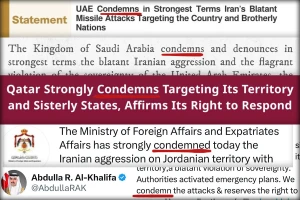
That strategy appears to have proven effective for the kingdom, with only a limited strike targeting the capital, Riyadh, reported on Saturday as part of a broader wave of attacks on Gulf states. Saudi authorities said the attack was intercepted, and state media reported no casualties.
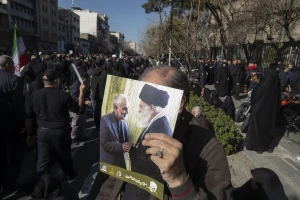
Meanwhile, the Wall Street Journal (WSJ) reported that the joint Israeli-U.S. strikes, which killed Iranian Supreme Leader Ayatollah Ali Khamenei, were moved forward based on intelligence indicating that Khamenei was engaged in meetings with key aides on Saturday morning.
According to the WSJ, the U.S. and Israel had been waiting for Khamenei and other senior officials to be gathered together in close proximity, providing an opportunity to carry out a “decapitation” attack on the regime's top leadership.
That opportunity came on Saturday morning, when Israeli intelligence discovered that three such high-profile meetings would be taking place simultaneously. Recognizing the rare opportunity, the two allies immediately took action, with Israel Air Force jets dropping 30 bombs on Khamenei's compound in Tehran.
Along with Khamenei, Israel is reported to have killed other senior officials, including Ali Shamkhani, a senior security advisor to Khamenei; Mohammad Pakpour, commander of the powerful Islamic Revolutionary Guard Corps; and Defense Minister Amir Nasirzadeh.
Their deaths were later confirmed by the Iranian regime.
Amos Yadlin, a former head of Israeli military intelligence, said that the recent strikes differed from those that launched Operation Rising Lion last June, which were carried out under “cover of darkness.
“Everybody waited for a target at midnight, when there is cover of darkness,” Yadlin told the WSJ. Carrying out the attack during daylight hours “was a tactical surprise,” he added.
Both the U.S. and Israel have indicated that the strikes against the Iranian regime would continue “as long as necessary.”
You might also like to read this: