Netanyahu’s confidant returns: Ron Dermer says peace with Lebanon ‘possible’ but Hezbollah must be disarmed
Dermer says agreement with Saudi Arabia remains possible, advocates for broad unity gov't in Israel





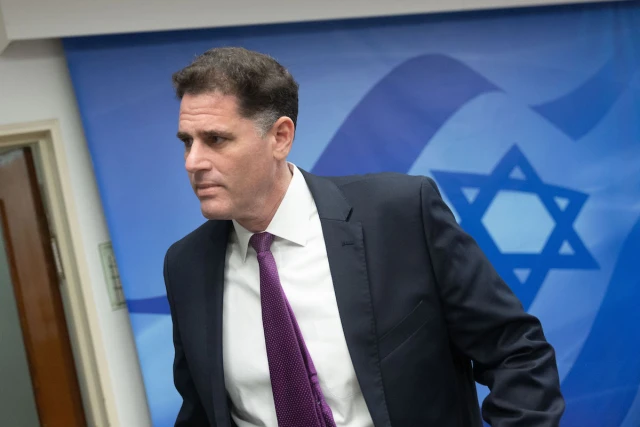
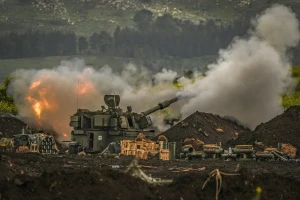
Ron Dermer, the former Strategic Affairs Minister widely seen as the prime minister’s closest confidant and advisor, has recently returned to duty after Benjamin Netanyahu appointed him to lead the Lebanon File, being responsible for the diplomatic track while the IDF continues to escalate its operations on the ground.
On Tuesday, Ynet News cited comments Dermer made on Monday at a New York synagogue, where he spoke about the chances for peace in Lebanon, the war in Iran, and the upcoming elections in Israel.
Dermer reportedly discussed the situation in Lebanon with Saudi officials in Riyadh last week. While the IDF has launched a new ground operation in southern Lebanon, Israel reportedly sees a chance to reach agreements with the Lebanese government.
“The dispute over the border between us and Lebanon is very small. There are 13 points of disagreement along the border, seven have already been resolved,” Dermer said, adding he was already “making progress with Lebanon” toward a political agreement.
“It is possible to talk about a potential peace agreement, but for a deal to be implemented, Hezbollah will have to be disarmed. We will not sacrifice our security,” he stressed.
The Lebanese government has made several unprecedented declarations and moves against the terror group in recent months; however, Hezbollah remains the most powerful military force in the country, despite claims that the Lebanese army had removed its presence from the area south of the Litani River.
On Monday, Israel's Ambassador to the United Nations, Danny Danon, showed a map detailing how Hezbollah recently launched 213 rockets at Israel from the same area in just 16 hours.
Dermer also spoke about concerns that the war had derailed the potential peace with Saudi Arabia. “I feel very confident about continuing the process we were in before October 7, because a whole new regional security architecture is taking shape right before our eyes,” he said.
“Arab states are being attacked by Iran. Israel is helping defend them in ways many people don’t even know—but they know. They see Israel now as serving their long-term security interests.”
“Given that the United States wants to pivot to Asia and leave the Middle East in the long term, what you are seeing is the beginning of a completely new strategic alliance with Israel at its center. For me, this is very encouraging,” Dermer said.
He also argued that the existential threat posed by Iran had already been removed by recent strikes. “Look where Iran was on October 7 and where it is today. They had a terror axis, and today their military nuclear capability is gone. Those ‘octopus arms’ are now ‘T-Rex arms’ because of what Israel has done.”
“The only thing they have left is a stockpile of enriched uranium, but they don’t have centrifuge enrichment facilities or conversion facilities. It’s not like they can suddenly turn it into a bomb.”
Addressing growing criticism that the war is not reaching its goal of toppling the regime, Dermer said it was “ridiculous” to define the war as a failure if that doesn’t happen immediately. “You don’t know. Ultimately, it will have to come from within.”
“There are very few examples where bombing alone brings down a regime. In the case of [Serbian dictator] Milosevic, the bombing stopped, and only months later, he collapsed amid protests.”
“We are in a much safer position today than before. Israel’s greatest enemy is being worn down day by day. We want to leave Iran in a situation where it cannot project power beyond its borders.”
Despite not being a politician anymore, Dermer also spoke on the upcoming elections in Israel in the fall, predicting that “the next Knesset will be more right-wing than the current one.”
“You are going to see a Knesset that reflects October 7 and its consequences—a kind of new security doctrine in Israel.”
He also called for unity and expressed hope for a broad, national government without boycotts against Prime Minister Netanyahu.
“I think this is a moment we need to seize. I have always supported a government with a very broad base—a kind of national unity government. And frankly, who is in the coalition is less important than who can bring it down. The broader the government, the less any single party can topple it.”
You might also like to read this: