Why there can be no ceasefire negotiations with Lebanon

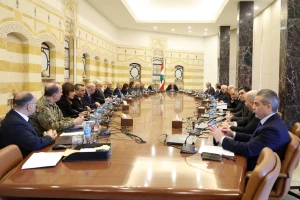
Lebanon says that they want negotiations to end the war, which is why they’ve called on Israel to dismantle Hezbollah.
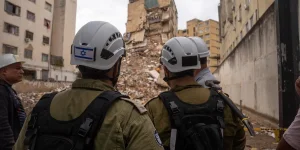
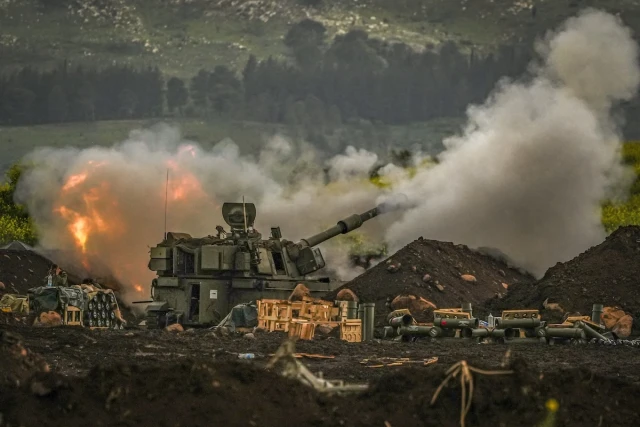
But stubbornly, continuing in their role as Iran’s proxy fighters, Hezbollah has made it clear that they will not stop launching their rockets into Israeli cities. This puts Lebanon in the crosshairs, taking the incoming fire from the IDF, as they endeavor to topple what remains of the terrorists.
The timing couldn’t be worse for Lebanon’s new government which has only been in control for a year, following the election of Prime Minister Nawaf Salam last February.
Still not recovered from a devastating war, initiated by Israel, in retaliation for the 2023 massacre, they have barely had a chance to enact all the reforms they outlined, most notably to disarm Hezbollah, which has done its best to mortally wound the country.
But here’s the problem. While there had been a ceasefire between the terror group and Israel, until the outbreak of the Iranian War, it was clearly only a matter of time before they would resume their rocket launches, because that is what they live to do.
Sadly, short of killing each member of Hezbollah, Lebanon will never be able to successfully negotiate any kind of lasting agreement with Israel, because these die-hard Islamic loyalists will not put down their weapons, learn a trade and engage in gainful employment. They are simply not wired that way.
That’s why there’s no use in sitting down at the negotiating table with Lebanon. It is the same reason that Hamas terrorists cannot be rehabilitated, because their ingrained hatred will not allow them to set aside their deep-seated indoctrination which is already part of their psyche.
In fact, if it was possible to ask one of these men what they would do with their free time, once they commit to ending their fighting with Israel, they most likely would be bewildered to come up with a response as they would by the question, itself.
That’s because warring is all they know. Since their childhood, it’s what they’ve been prepared to do. No one ever asked them if they wanted to pursue a career in law, medicine or technology, nor did they dream about such things. Having a family, purchasing a house or achieving the things, which most of us hope for, were never a momentary reflection for these men.
All they knew was that their mission was to strap on the green headband, put on the uniform of a warrior and train for the future battle, likely resulting in their death, but when you’re told that martyrdom is the highest honor one can achieve, all those other worldly pursuits pale in comparison.
This is the immense cultural divide between their civilization and that of the West, where parents work tirelessly to provide the best education possible for their children, hoping that their lives will be even more prosperous and successful than their own.
It is this loving commitment which is normal and honorable, but one which clearly escapes the fathers and mothers whose children are brought into the world for the purpose of being a killing machine.
Reflected in one of former Prime Minister Golda Meir’s more famous quotes, “We will only have peace with the Arabs when they love their children more than they hate us,” is the realization that the origin of this ongoing conflict is one which could be solved by parents.
Expressed by her, was the need for mothers and fathers to value their offspring in a way which was not happening. To Meir, true parental love would prohibit sending their young children off to training camps at tender ages when they should, instead, be planning for their future in productive ways.
As other children from Western cultures, they should be having fun, celebrating birthdays with friends, playing sports, learning an instrument and, most of all, being nurtured and protected by those who brought them into the world.
But none of this is happening, and the blame can be squarely placed on the shoulders of those who see their children as expendable throwaways rather than an extension of themselves, furthering the hopeful destiny which they were unable to complete.
It is, indeed, a problem of skewed perspective where, until that focus shifts, peace will continue to be elusive and humanity will be split into two camps – one that values and cherishes life, while the other sees young people as lethal instruments for the purpose of inflicting pain, death and suffering on those who refuse to conform to their way of thinking.
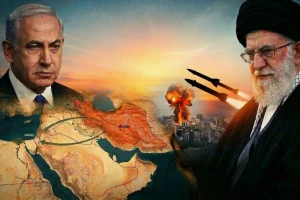
This sad reality is the great gap which cannot be closed at a negotiating table, making it the obvious impediment to preventing the Iranian war which would, predictably, pull in the dormant Hezbollah terror group, who’d been waiting for the right moment to strike again.
Now that the sleeping giant has re-awakened, the official government of Lebanon is pleading with Israel to be the ones to liberate them from the brutal enemy within.
But with an estimated 50,000 of these operatives, still ready to battle it out, what should Israel do, knowing, in advance, that even if they succeed in another ceasefire, it will only be a temporary measure which will need to be revisited at a later time?
This is where the questions of morality enter. A great part of the world will look upon the deaths of 50,000 as a genocide, despite the irrefutable argument that this is a matter of self-defense – kill or be killed. Nevertheless, the accusatory voices will be heard, as if they had some better, alternative way to bring about a viable solution.
But when you fully grasp the impossibility of two diabolically opposing sides coming together, as a result of their unbridgeable life perspectives, then the only thing to do is to consider what is best for humanity as a whole. Is it plucking out the cancer which threatens the entirety or continuing to treat it with a temporary fix that never offers a permanent cure?
We’ve already been in this never-ending marathon for much too long. To return to the negotiating table, at this point, knowing how it will end if we, once again, shake hands, will only bring a repeat of an unwinnable cycle.
This time, something new must be tried, and that’s the reason why negotiations with Lebanon cannot happen!
You might also like to read this: