Israeli woman killed as Hezbollah continues rocket & drone attacks on northern Israel
Lebanon grapples with fallout from expulsion of Iranian ambassador






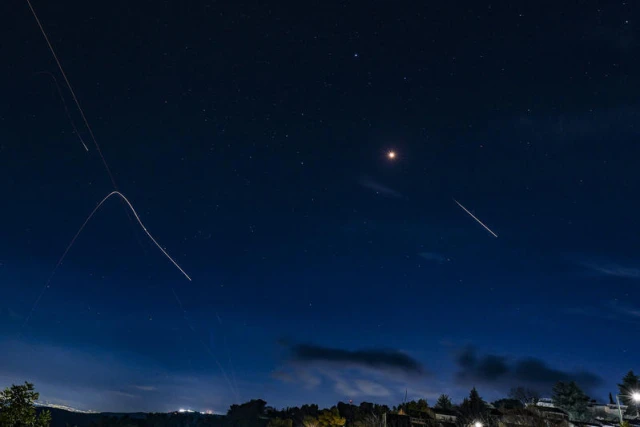
Hezbollah rocket fire killed an Israeli woman in the Galilee on Tuesday evening, as the terror group kept up a near-constant firing of rockets and drones on Israeli troops in southern Lebanon and civilians in northern Israel.
Nuriel Dubin, 27, was critically wounded and pronounced dead on the scene after a rocket impact near the Mahanayim Junction.
The municipality of Margaliot in the Upper Galilee later stated that Dubin is survived by her parents, Yoram and Shoshana, her brother Aviram, her sister Sapir and her fiancé Yadid.
Two others suffered light shrapnel wounds in the same attack.
The IDF said that Hezbollah has been launching an average of about 150 rockets per day at Israel since joining the war, including large-scale barrages like a 30-rocket volley at the Rosh Pina area on Tuesday. Another 30 rockets were fired at Israel on Wednesday morning, followed by several more rocket and drone attacks throughout the day.
Several Hezbollah operatives, including one wielding an RPG, were killed amid ongoing ground operations in southern Lebanon, the military says.
— Emanuel (Mannie) Fabian (@manniefabian) March 25, 2026
In one incident, a Hezbollah weapons depot was destroyed by troops of the 7th Armored Brigade. A short while later the military says… pic.twitter.com/Ffis9vm1S9
Defense Minister Israel Katz had vowed on Tuesday that Israel would control a security zone up to the Litani River if the attacks don’t stop. In a post on 𝕏 in the evening, he reiterated, “Israel's policy in Lebanon is clear: where there is terror and missiles – there are no homes and no residents – and the IDF will control the security zone up to the Litani.”
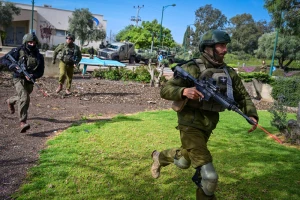
Israeli troops continued their slow advance in southern Lebanon, the military said, dismantling infrastructure and killing several Hezbollah terrorists.
Near the town of Bint Jbeil, soldiers of the 91st Division killed a cell of five anti-tank operatives in a command center, while another anti-tank command post was also destroyed.
Troops have also found and dismantled various weapon storage facilities over the past few days.
During a wave of airstrikes in Lebanon overnight, the Israeli Air Force struck a Hezbollah command center in Beirut and gas stations owned by the terror group.
— Emanuel (Mannie) Fabian (@manniefabian) March 25, 2026
The Hezbollah headquarters in Beirut's southern suburbs was targeted following fresh evacuation warnings for the area.… pic.twitter.com/b6Gak8mEtF
Meanwhile, the air force and navy have continued to carry out strikes across the country. On Wednesday morning, the IDF said overnight strikes hit a command center in the Dahiyeh district of Beirut, more gas stations belonging to the “Al-Amana” company, which is controlled by Hezbollah, and an Iranian IRGC Quds Force terrorist.
Meanwhile, the Lebanese government continues to grapple with the fallout from the decision to expel the Iranian ambassador from the country, a move that Hezbollah stridently opposes.
The Lebanese newspaper Al Akhbar, which is affiliated with Hezbollah, claimed that the understanding between Lebanon’s president, Joseph Aoun, and Foreign Minister Youssef Raggi had been limited to summoning the ambassador to warn him – not to inform him of an expulsion.
The report claimed that Aoun was so angry with Raggi (for expelling the ambassador) that his voice was heard throughout the presidential palace. The same newspaper also said that Parliament Speaker Nabih Berri, a veteran Shiite leader allied with Hezbollah, asked Aoun to retract the decision, and told the Iranian ambassador not to leave the country in the meantime.
A Hezbollah rocket-launching squad was targeted in an overnight airstrike after they fired projectiles at troops in southern Lebanon, the military says.
— Emanuel (Mannie) Fabian (@manniefabian) March 25, 2026
According to the IDF, an Israeli Air Force drone identified the operatives after they launched rockets at troops, and a short… pic.twitter.com/I9ClLXYz6d
Overnight, a sign was hung on an overpass on a central road to Beirut airport, reading, “The Iranian ambassador must not leave. The dogs in Awkar [location of the U.S. embassy] and the traitors are the ones who must leave – before our missiles reach you.”
The anti-Hezbollah newspaper Nidaa Al Watan had claimed that a missile that was intercepted near Beirut on Tuesday had been aimed at the U.S. embassy, though this hasn’t been confirmed.
Hezbollah demanded in an official statement that the decision to expel the ambassador should be reversed immediately “because of its dangerous repercussions,” calling it a “national and strategic sin.”
A source from Hezbollah told AFP that the “decision violates the most basic diplomatic norms and is an insult to the Shiite community in Lebanon,” adding the group will ask the ambassador to stay and “consider the decision null and void.”
The Foreign Ministry clarified late that the decision was meant as a personal measure against the ambassador and not as a severing of relations with Iran.
It said the ambassador had violated “diplomatic protocol” and made statements “interfering in Lebanon's internal politics and evaluating the decisions taken by the government.”
Raggi had given the ambassador until Sunday to leave the country.
You might also like to read this: