FM Smotrich urges moving border to Litani River as DM Katz vows Lebanese residents won’t return south until Israelis are safe
Lebanon expels Iranian ambassador from the country




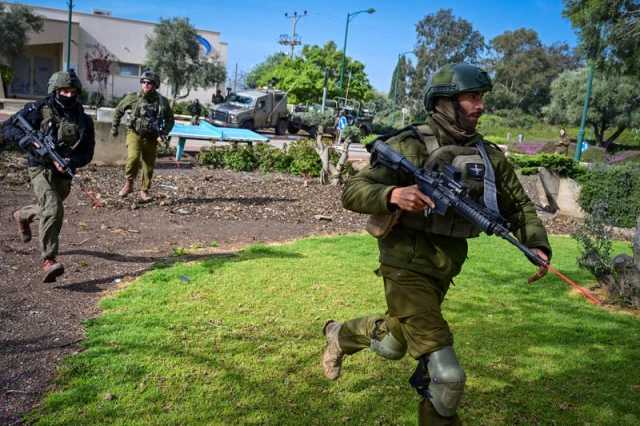
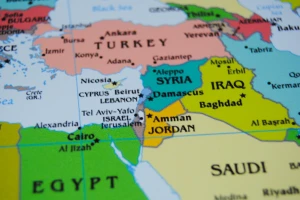
Israel's Finance Minister Bezalel Smotrich demanded that the border with Lebanon be moved to the Litani River, which is around 30 kilometers (nearly 19 miles) north of the current border in some areas, as IDF troops continue to fight Hezbollah terrorists on the ground and the terror group launches hundreds of rockets at northern Israel.
Hezbollah has reportedly fired an average of around 150 rockets at Israel every day since joining the war to support its Iranian patrons. Meanwhile, the government in Beirut took another step to free itself from Iranian influence, announcing that the Iranian ambassador was asked to leave the country by Sunday.
Speaking at a faction meeting on Monday, Smotrich demanded that the war end “with a radical change, beyond the vanquishing of the terror group Hezbollah.”
“The Litani must be our new border with the state of Lebanon, just like the ‘Yellow Line’ in Gaza and like the buffer zone and peak of the Hermon in Syria,” he added.
Israel has not declared that the Syrian buffer zone, nor the de facto buffer zone in the eastern half of the Gaza Strip, will be permanent.
Smotrich argued that, as a lesson from the Oct. 7, 2023, invasion, Israel must push its enemies “away on all fronts and create a sterile security cordon that will separate the enemy from our citizens.”
Despite Smotrich’s calls, an Israeli military official told Reuters that Israeli ground troops are currently limiting their raids to areas near the border.
Meanwhile, the IDF said it struck two more bridges over the Litani River on Monday, further cutting off southern Lebanon from the rest of the country after calling on residents to flee north of the Zahrani River.
On Tuesday, Israel’s Defense Minister, Israel Katz, said during a situation assessment that the “hundreds of thousands of residents of southern Lebanon who evacuated northward will not return south of the Litani River until security for the residents of the north (of Israel) is ensured.”
“All the bridges over the Litani that were used by Hezbollah to transfer militants and weapons have been destroyed — and the IDF will control the remaining bridges and the security zone up to the Litani. The principle is clear: where there is terror and missiles — there are no homes and no residents — and the IDF is inside,” Katz declared.
The Israeli military stated that troops of the 810th “Mountains” Brigade (810), under the command of the 210th Division, are operating in the Lebanese section of Mt. Dov. They recently located there a tunnel shaft, and also destroyed a Hezbollah weapons compound.
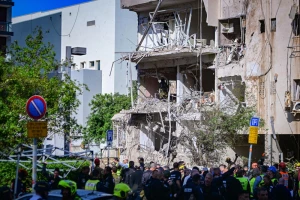
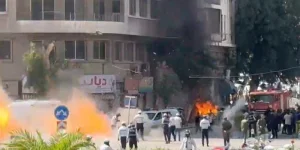
Overnight, Israeli airstrikes hit several Hezbollah headquarters in Beirut, including a headquarters of the elite Radwan Force, “from which terrorists operated to advance and execute terror attacks against IDF soldiers and Israeli civilians.”
“Additionally, the IDF struck a headquarters of Hezbollah’s intelligence directorate,” a Radwan command post hidden inside the radio broadcasting station of the ‘Nur’ Radio in a-Tiri, and another gas station of the Al-Amana company, which is “controlled by Hezbollah and constitutes fundamental economic infrastructure that supports Hezbollah's military capabilities,” according to the IDF.
According to a report by the Lebanese newspaper Nidaa Al Watan, a Lebanese political source says that talks between Beirut and Jerusalem have not achieved any progress, despite “intensive contacts” between Beirut, Washington, and Paris.
The Lebanese source said Israel believes negotiating directly with the government in Beirut is not possible as long as Hezbollah is the strongest power in the country, and could effectively counter any decision to achieve a political arrangement.
Later on Tuesday, Lebanon’s Foreign Minister, Youssef Raggi, declared that Iran’s ambassador would be expelled by Sunday, indicating efforts by the government to free itself from Iranian and Hezbollah influence.
Raggi wrote on X that he instructed the Secretary-General of his ministry to inform the Iranian Ambassador, Mohammad Reza Shibani, of the decision to “declare him persona non grata, and request that he leave Lebanese territory no later than 29 March 2026.”
Ali Safari, a senior official in Iran’s Foreign Ministry, told Al Jazeera that any ceasefire with Iran would need to be coordinated with the Lebanese front, as Tehran believes there can be no stability in the region as long as attacks continue on other fronts.
He added that “Hezbollah in Lebanon is the one that makes the decisions and can conduct negotiations, and we in Iran will not negotiate on behalf of others, because we are the decision-makers on the Iranian front and not the decision-makers on the Lebanese front.”
However, on Tuesday, Iran’s Islamic Revolutionary Guard Corps (IRGC) in a statement threatened Israel over its actions in Lebanon:
“The army of the Zionist entity, which kills children, is carrying out widespread war crimes against civilians in Lebanon and Palestine. All red lines have been crossed in the context of genocide…. We warn the army of the criminal Zionist entity that if it continues its crimes against civilians in Lebanon and Palestine, concentrations of enemy forces in northern occupied Palestine and in the Gaza Strip will, without exception, be subject to intensive missile and drone attacks by Iran and the Islamic Revolutionary Guard Corps."
You might also like to read this: