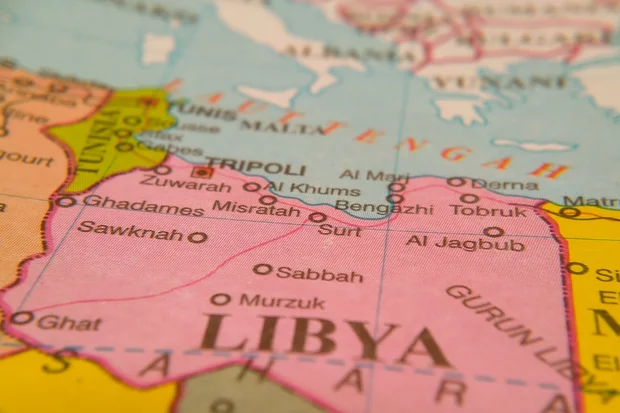









ANALYSIS Iranian strikes on Azerbaijan risk more than a new front to the war – but complications among allies
'Alliances get complicated,' one analyst tells ALL ISRAEL NEWS
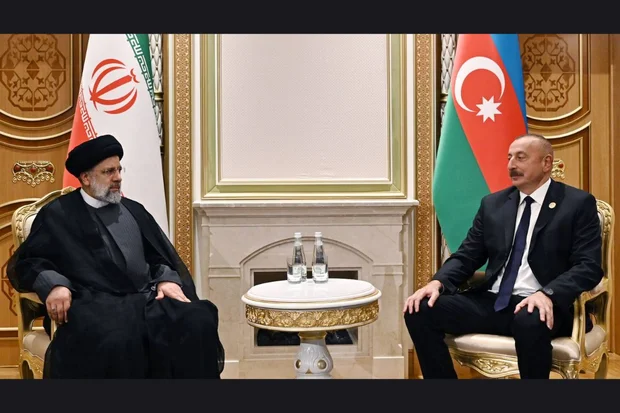
An Iranian drone strike on Azerbaijan on March 5 could open more than a new geographic front in the expanding war – shifting alliances could play a pivotal role during the war and on the ground in a post-war scenario.
An escalation involving Azerbaijan would likely drag in its close ally Turkey, not only broadening the battlefield but reshaping alliances both during the war and potentially in a post-war struggle over Iran’s future.
Though he believes that escalation into the Caucasus will be limited for now, one analyst warns that a “regional spillover” remains a risk.
“Israel has intelligence cooperation with Azerbaijan – but alliances get complicated,” said Michael Pregent, former U.S. Army intelligence officer and expert on the Islamic Revolutionary Guard Corps (IRGC). “Countries can align on one issue and oppose each other on another. Turkey is a good example – it’s opposed to Israel in many ways, but cooperates with it in certain strategic contexts.”
If Azerbaijan or Turkey were drawn into a conflict with Iran, the key question would be which forces they support on the ground in any campaign aimed at weakening or toppling the regime.
“If Turkey becomes involved, it would likely be on a different side than Israel. But even then, it would probably mean providing material support to groups on the ground rather than directly trying to topple the Iranian regime,” Pregent told ALL ISRAEL NEWS. “What we’ll likely see instead is increased covert activity by Turkey and others against Kurdish groups, particularly if the Kurds receive support from the U.S. or Israel. The problem with the Kurds is that our NATO ally, Turkey, sees them as enemies.”
The role of Azerbaijan itself is equally complex. Azerbaijan is closely aligned with Turkey, which has taken an increasingly hostile stance toward Israel since the outbreak of the Oct. 7 attacks and the subsequent war in Gaza.
Also, while the Kurds make up 10-15% of the population, at 16-24%, Azeris comprise one of the largest minority groups in Iran. Any conflict involving Azerbaijan could therefore carry sensitive internal implications for Iran, particularly in regions with large Azeri populations.
With reports circulating that Kurdish militia have been selected to lead a ground invasion against the Islamic Revolutionary Guard Corps (IRGC), and that Turkey will likely oppose it, how will its ally, Azerbaijan, respond?
At the same time, Azerbaijan maintains close defense and intelligence cooperation with Israel. Iranian officials have long accused Azerbaijan of hosting Israeli intelligence infrastructure along Iran’s northern border. Since the drone attack, Iranian military officials issued warnings that Azerbaijan must expel “Zionist assets” from its territory or risk becoming a target.
Officials in Azerbaijan condemned the attack as a violation of sovereignty and warned of a military response. President Ilham Aliyev called the strike a “terrorist act.”
Israeli journalist Amit Segal reported that Iran officially accused Israel of attacking Azerbaijan to make it appear that Iran was responsible.
Azerbaijan recalled its diplomatic personnel from Iran’s embassy in Tehran and its consulate in Tabriz, a major city located in Iran’s Azerbaijani-populated northwest. Its military reportedly canceled leave for many soldiers and placed its armed forces on heightened alert. Artillery units were deployed near the Iranian border, according to regional reporting and monitoring accounts.
Pregent said that if the U.S.-Israeli strikes have managed to degrade the IRGC, leaving commanders killed or incapacitated, they may have disrupted its chains of command. With command-and-control networks damaged, operational decisions could be made at lower levels by field officers.
“If command structures are degraded, you start seeing one-off actions,” Pregent said. “That’s how mistakes happen.”
Iran denies the attack was intentional.
Nevertheless, should the war expand into the Caucasus, it could drag with it NATO, Turkey and Russia – and possibly trigger a global energy crisis. Azerbaijan sits at the crossroads of several geopolitical fault lines and is a key corridor for energy exports to Europe. Azerbaijani oil and natural gas pipelines have become an alternative to Russian fuel.
The country’s airspace has also become strategically important in recent weeks. As commercial airlines avoid flying over Russia and Iran during the conflict, many Europe-to-Asia flights have been rerouted through Azerbaijan.
An attack near that corridor could disrupt global aviation traffic and create ripple effects for international travel and logistics, as well as regional alliances with the West.
Popular article:

interview Easter message of resurrection hope amid war at Jerusalem's Garden Tomb

biblical commentary Let my people go: a Passover message for today
4 IDF soldiers killed, 2 wounded in fighting in southern Lebanon, as Israel eliminates dozens of Hezbollah terrorists

Receive latest news & updates
A message from All Israel News
Help us educate Christians on a daily basis about what is happening in Israel & the Middle East and why it matters.
For as little as $10, you can support ALL ISRAEL NEWS, a non-profit media organization that is supported by readers like you.
Latest articles:
ANALYSIS North American Jewish organizations to recruit 100 professionals to combat antisemitism

ANALYSIS ‘No need’ for pre-election Iran strike, IDF chief says as gov’t, opposition trade blame for potential escalation – report
terror attack 2 Israeli soldiers killed, 2 terrorists eliminated in Hebron shooting; IDF says much larger attack was prevented
analysis A people dwelling securely? Israel’s strategic standing, 3 years after Oct 7
ANALYSIS Hamas on wheels: What I found in Dearborn reveals a troubling history and a battle over Israel