IDF Chief Zamir, Arab counterparts hold emergency talks on regional defense as Iranian attacks escalate



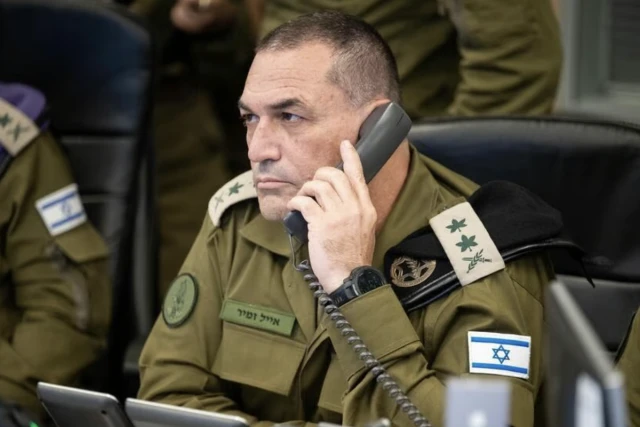
Israeli military chief Lt. Gen. Eyal Zamir spoke on Sunday with his counterparts in Arab Gulf states amid continued Iranian missile and drone attacks on Israel, U.S. military bases and several Gulf countries. The talks reportedly focused on strengthening regional defenses against further Iranian aggression.
A regional defensive framework against Iran first took shape in 2024 during Tehran’s previous missile and drone attacks on Israel, which also affected Arab airspace. Saudi Arabia, the United Arab Emirates, Qatar and Bahrain have condemned the latest Iranian strikes, calling them unacceptable.
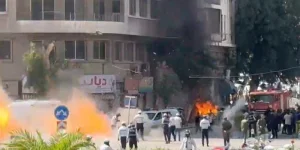
The United Arab Emirates closed its embassy in Tehran and recalled its diplomats after Iranian attacks on Emirati civilian infrastructure, including Dubai Airport, prominent hotels, ports, and various service facilities.
The Emirati foreign ministry blasted the Iranian regime for violating international law and its territorial sovereignty.
“The decision reflects the state’s firm and unwavering position rejecting any aggression that threatens its security and sovereignty,” the foreign ministry in Abu Dhabi said.
Dr. Yoel Guzansky, a senior fellow how leads the Gulf Program at the Institute for National Security Studies at Tel Aviv University, predicted that the UAE would likely proceed with more measures against Tehran due to the Iranian attacks on the country. However, he assessed that the UAE would likely hesitate to use military force against Iran.
“The UAE has military capabilities on paper, but it is not certain it would want to strike Iran because the response would be far harsher. The balance of forces is not equal,” Guzansky said.
The UAE military is far smaller than its Iranian counterpart. While the UAE military is equipped with modern American weapons, its capabilities are unclear given its limited battle experience.
Looking ahead, Guzansky predicted that other Arab Gulf states could follow suit and close their respective embassies in Tehran in protest of the ongoing Iranian attacks. Bilateral ties between the UAE and Iran are complex. While the UAE is considered a regional ally of the United States, many Iranian expats reside and work in the Gulf state. Furthermore, despite political differences, there has been extensive trade between Iran and the UAE.
Ties between Saudi Arabia and Iran are also complex. The two countries have historically viewed each other as regional rivals amid tensions between Shia and Sunni Islam. In 2023, China brokered talks between Iran and Saudi Arabia, which led to the reestablishment of diplomatic relations between the two countries. The Saudis reportedly embraced diplomacy in order to reduce tensions with its Iranian neighbor.
Former Israeli Prime Minister Naftali Bennett argued at the time that this diplomatic development undermined the regional coalition against the ayatollah regime in Tehran.
“It represents a critical blow to efforts to build a regional coalition against Iran,” Bennett assessed.
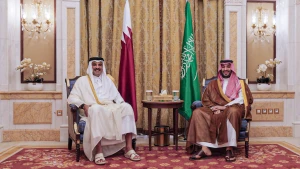
Like other Gulf states, Saudi Arabia officially opposed military strikes on Iran due to concerns of retaliatory Iranian attacks on its soil. However, behind closed doors, the Saudi Crown Prince Mohammed bin Salman (MBS) privately urged U.S. President Donald Trump to strike Iran.
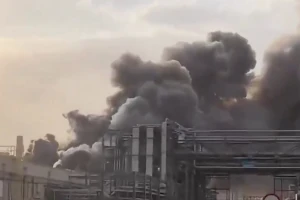
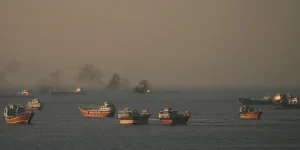
On Sunday, the Iranian regime launched attacks on oil facilities in the Arab Gulf states and threatened to close the strategically important Strait of Hormuz. One Iranian drone hit a Saudi oil refinery.
Saudi Arabia, which is the most powerful Arab Gulf state, warned the Iranian regime on Monday that it would strike Iranian oil facilities if Iran mounts a concerted attack on Aramco.
You might also like to read this: