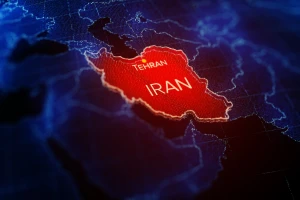
Iran’s revolutionary vision: The story that needs to be told

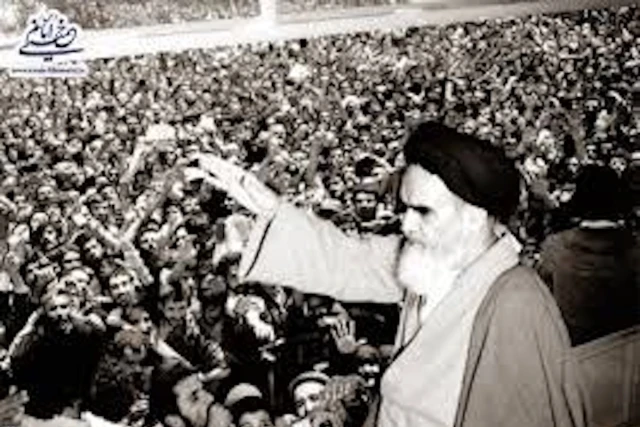
In 1979, the political landscape of the Middle East changed dramatically when Ruhollah Khomeini led the revolution that transformed Iran into the Islamic Republic of Iran. What emerged was not merely a new government but a system built upon Islamistic religious ideology and revolutionary ambition. The new regime introduced doctrines that would shape Iran’s regional strategy for decades to come.
One of the central ideas promoted by Khomeini was the doctrine of Vilayat al-Faqih—the rule of the Islamic jurist. According to this concept, political authority should ultimately rest in the hands of a religious leader rather than a secular government. In practice, this established a system in which the Supreme Leader holds ultimate power over the state.
The second key principle was even more consequential for the Middle East: the commitment to export the Islamic Revolution beyond Iran’s borders. From the perspective of the new regime, the revolution was not intended to remain confined within Iran. Instead, it was meant to inspire and influence political movements throughout the region.
Over the following decades, Iran built a network of regional allies and proxy groups designed to extend its influence. Shiite organizations such as Hezbollah in Lebanon, militias in Iraq, and the Houthi movement in Yemen became key elements of this strategy. This network has often been referred to as a “ring of fire” surrounding Israel. From Tehran’s perspective, confronting Israel is part of a broader ideological struggle. Iranian leaders frequently describe the United States as the “Great Satan” and Israel as the “Little Satan,” viewing both as representatives of Western influence in the region.
Interestingly, Iran has also supported Sunni movements such as Hamas and Palestinian Islamic Jihad. Despite the theological divide between Sunni and Shiite Islam, shared hostility toward Israel has enabled strategic cooperation. Through financial assistance, training, and weapons support, Iran has helped strengthen these groups as part of its broader regional strategy.
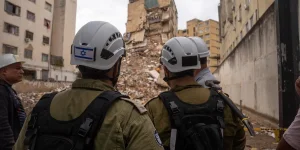
The events of October 7 marked a turning point in this geopolitical landscape. The attack launched by Hamas against Israel triggered a series of developments that many analysts now describe as a domino effect throughout the region. The conflict expanded beyond Gaza and exposed the fragile balance that had existed among Iran’s network of allies.
In the years that followed, several significant changes occurred. Hezbollah suffered serious setbacks, while the Syrian regime of Bashar al-Assad collapsed in 2024 amid renewed internal and regional pressures. These developments weakened parts of Iran’s regional axis and opened the door to new alignments.
At the same time, competing Sunni blocs have become more prominent. One axis, associated with the Muslim Brotherhood, includes countries such as Turkey and Qatar. Another bloc—often described as more moderate—includes states like Saudi Arabia and the United Arab Emirates. These countries share concerns about Iran’s ambitions but remain cautious about direct confrontation.
Inside Iran, pressure has also been mounting. Waves of protests over recent years have revealed deep dissatisfaction among segments of the population. Demonstrations have been met with harsh repression, and thousands of activists have been arrested or killed. Some analysts believe that if change eventually comes to Iran, it will most likely emerge from internal pressure rather than external military action.
Meanwhile, Iran continues to pursue strategic capabilities that concern much of the international community. The future of its nuclear program remains one of the most critical questions facing the region. As long as the current leadership remains committed to its revolutionary vision, many experts believe Iran will continue striving for greater strategic leverage.
Today, the Middle East stands at a moment of significant transformation. Long-standing alliances are shifting, proxy networks are evolving, and new regional blocs are taking shape. Whether these changes will ultimately weaken Iran’s revolutionary project or lead to a new phase of regional competition remains uncertain.
What is clear, however, is that the balance of power in the Middle East is undergoing a profound shift—one that will likely shape the region’s political landscape for years to come.
You might also like to read this: