As Israel tries to create conditions for regime change, some Iranians are wary after 3 weeks of bombings
War deaths indicate Israel and U.S. taking care to minimize civilian casualties



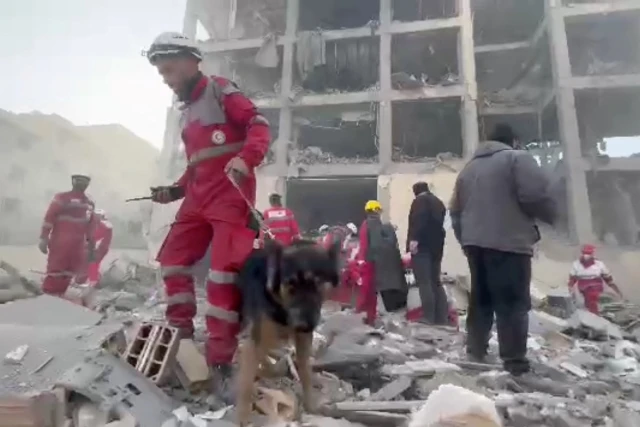
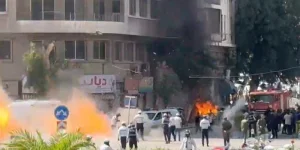
As the U.S.-Israeli war on the Islamic Republic has entered its third week, Israel has begun shifting some of its targets to the parts of the regime responsible for the suppression of anti-regime protests and the oppression of the Iranian people.
An example of that was the killing of both Iranian National Security Council Secretary Ali Larijani on Monday evening, and Basij militia forces commander, Gholamreza Soleimani. Both men oversaw the brutal repression of protesters during the recent anti-regime protests, which began in December 2025.
In a shift that Israeli officials hope could be a sign of things to come, the elimination of Soleimani was enabled by intelligence provided by Iranian citizens. While Israeli Prime Minister Benjamin Netanyahu and the IDF leadership have consistently stated that regime change is not one of the official goals of Operation Roaring Lion, they have also stated that they hope to create the conditions that would allow the Iranian people to rise up and take control of the country from the regime.
Last week, during a news conference, Netanyahu said, “I’m telling the Iranian people, the moment you can come out for freedom is getting closer. We are standing beside you and helping you. But at the end of the day, it’s up to you.”
Part of that strategy is the elimination of most of Iran’s senior regime leadership, particularly focusing on officials from the Islamic Revolutionary Guard Corps, and those close to former Supreme Leader Ayatollah Ali Khamenei.
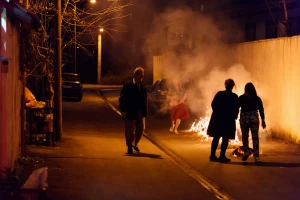
On Tuesday, Netanyahu sent a greeting to the Iranian people on the occasion of the upcoming festival of Nowruz, a celebration of the Persian New Year (Zoroastrian), often accompanied by fire rituals known as the Festival of Fire (Chaharshanbe Suri).
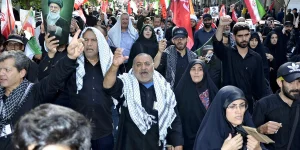
Netanyahu, along with exiled Crown Prince Reza Pahlavi, encouraged the Iranian people to celebrate the festivals publicly, despite calls from the regime to avoid doing so.
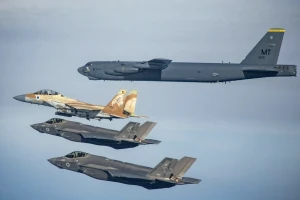
“Our aircraft are hitting the terror operatives on the ground, in the crossroads, in the city squares. This is meant to enable the brave people of Iran to celebrate the Festival of Fire. So celebrate and Happy Nowruz. We're watching from above,” Netanyahu said.
However, according to a BBC report, some Iranians are concerned as U.S. and Israeli airstrikes continue.
A woman identified by the alias 'Baran' told the BBC, “I fear tomorrow. I fear the person I will be tomorrow. Today, I survive somehow, but how will I get through tomorrow? That is the real question. Will I even live through tomorrow?”
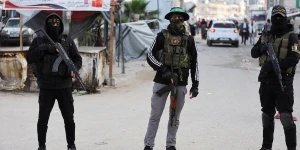
The BBC reported that Iranians inside the country say regime security forces continue to patrol cities at night in an effort to deter potential uprisings.
A man identified as Ali said that some people still maintain hope.
“The skies of your country are controlled by enemy forces. But at the same time, there is always a hope in people's hearts,” he states. “It's not that we are supporting America or Israel. But hoping simply that for one moment, something might happen that ends the current Iranian regime, and that the people will be able to create change.”
Despite the thousands of weapons launched by both the U.S. and Israel, the number of civilian casualties has remained lower than some analysts expected.
Hengaw, an organization that covers human rights violations in Kurdistan and across Iran, has attempted to keep track of the number of civilian deaths since the start of the operation.
It estimates that during the first two weeks of the war, 310 civilians were killed in airstrikes, along with approximately 2,090 members of Iran’s military and security forces.
This ratio indicates that both Israel and the U.S. are targeting regime officials and minimizing civilian casualties in an effort to keep the Iranian population from being viewed as the enemy.
Some analysts say the chances of this plan succeeding are also dependent on the destruction of the Basij militia.
IDF Brig.-Gen. Eran Ortal, a former senior Israeli military official, told The New York Times that despite the challenges, there is “a logic” to Israel’s plan.
“The logic is that the internal collapse of the regime, which has already started, will be accelerated if these suppression forces are weakened,” Ortal said.
He said that the majority of Basij forces, estimated at up to one million members, follow orders from their commanders. Breaking the chain of command could degrade their ability to function effectively, he stated.
You might also like to read this: